Merging Pilates with strength training creates a fusion workout that not only builds lean muscle and resilience but also improves movement quality, alignment, balance, and functional fitness. While traditional strength training emphasizes external load and muscle overload, Pilates brings core precision, control, posture awareness, and breathing technique — elevating strength gains and reducing injury risk.
This fusion style — especially when guided by high‑quality videos — helps you move better and stronger, blending muscular strength with dynamic stability and intentional motion.
This guide explains:
- What Pilates + Strength Training fusion is
- Why this combination works so well
- How to use guided videos safely
- Sample workout structures
- Key exercises and cues
- FAQs and best practices
🏋️♂️ What Is Pilates + Strength Training Fusion?
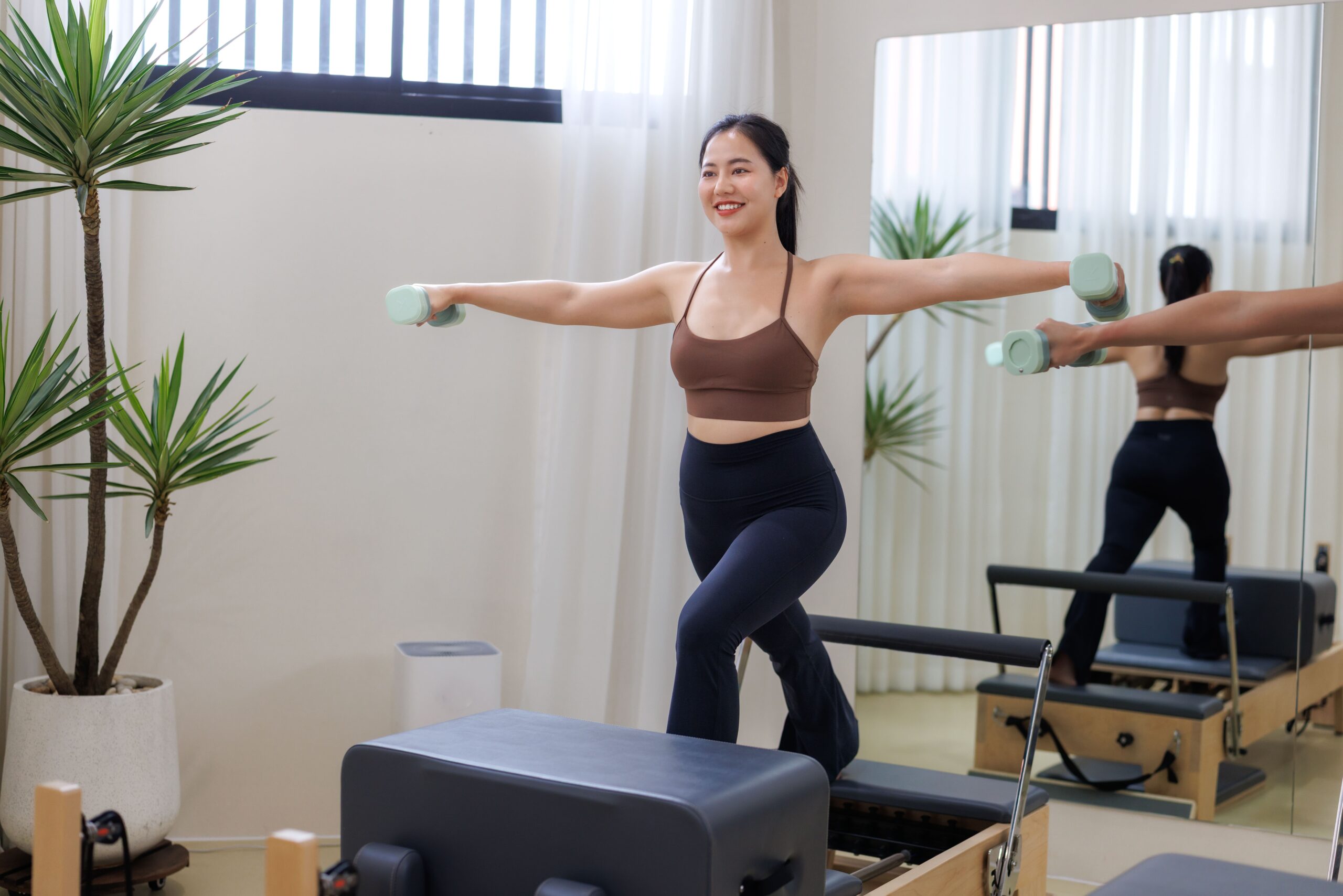 Pilates + Strength Training fusion integrates Pilates fundamentals with traditional and functional strength exercises — typically using:
- Free weights (dumbbells, kettlebells)
- Resistance bands
- Strength circuits
- Bodyweight strength moves
Unlike strength workouts that focus primarily on load and volume, Pilates + Strength fusion videos emphasize:
- Core engagement throughout every movement
- Postural alignment first
- Controlled motion over speed
- Breath‑driven effort
- Functional movement patterns
Fusion workouts deliver true strength adaptation while preserving movement quality and long‑term joint health.
💪 Why Combine Pilates With Strength Training?
This combination is effective because it layers:
- Strength + Stability — stronger muscles with refined control
- Alignment + Power — better biomechanics enhance force output
- Core Integration — deep abdominal support throughout strength work
- Functional Movement — strength that translates to daily life
- Reduced Injury Risk — controlled execution protects joints
In fusion workouts, traditional strength exercises (e.g., squats, presses, deadlifts) are modified with Pilates cues to ensure efficient mechanics and safety, even at high intensity.
🧠 How Fusion Strength Videos Are Structured
Guided Pilates + Strength training videos often follow this pattern:
 🔹 Warm‑Up (3–5 min)
Pilates‑inspired breath work and mobility.
🔹 Pilates Activation (5–8 min)
Core stabilization and postural engagement (e.g., Pilates bridges, planks).
🔹 Strength Blocks (10–20 min)
Strength movements incorporating Pilates alignment cues:
- Weighted squats with neutral spine focus
- Deadlifts with core brace
- Rows that emphasize scapular control
🔹 Pilates Stabilization (5–10 min)
Low‑impact control sequences to reinforce neuromuscular engagement.
🔹 Cool‑Down (5 min)
Stretch and length based on Pilates mobility principles.
Search terms that help you find video content include:
- “Pilates strength fusion workout”
- “Strength training with Pilates cues”
- “Pilates + weights full body”
- “Functional Pilates strength flow”
- “Pilates core with strength circuit”
📍 Who Benefits Most From This Fusion?
This hybrid style is ideal for:
- Intermediate to advanced exercisers seeking strength gains without compromising alignment
- Beginners (with modifications) for safe strength introduction
- Athletes needing functional, integrated strength
- Busy fitness fans who want strength and control in one session
- Anyone focused on posture, balance, and muscle tone
If you have recent injuries or specific clinical conditions, consult a healthcare professional before beginning high‑load strength work.
📹 How to Use Guided Pilates + Strength Videos Safely
✔ Focus on Alignment
Even when lifting heavier loads, keep ribs down, pelvis neutral, and core braced.
✔ Start With Lighter Weights
Prioritize control and form before increasing load.
✔ Use Breath Strategically
Inhale before effort, exhale during exertion — this supports core and stability.
✔ Modify When Needed
Most instructors offer regressions — use them to maintain safe mechanics.
✔ Warm Up Thoroughly
Activation sets the stage for safer strength work.
🔁 Sample Pilates + Strength Training Workouts
Here are two ready‑made templates you can follow or use when selecting guided videos.
⭐ Beginner Pilates + Strength Routine (20–25 Minutes)
| Time | Segment |
| 0–3 min | Warm‑Up: Breathwork + joint mobility |
| 3–6 min | Pilates Core Activation (bridges, plank holds) |
| 6–10 min | Strength Block 1: Bodyweight squats with Pilates cues |
| 10–14 min | Pilates Stabilization: Side‑lying leg lifts |
| 14–19 min | Strength Block 2: Dumbbell rows with core brace* |
| 19–23 min | Pilates Cool‑Down: Cat‑cow, gentle stretches |
| 23–25 min | Deep breath + release |
*Use light dumbbells or bands.
Focus: Foundational strength with controlled core emphasis.
💪 Intermediate Pilates + Strength Circuit (30–40Minutes)
| Time | Segment |
| 0–5 min | Warm‑Up + breathing prep |
| 5–10 min | Core Activation (pilates hundred, planks, glute bridge) |
| 10–18 min | Strength Circuit Round 1: |
| • Weighted squats with Pilates cue | |
| • Single‑arm row | |
| • Deadlift pull (light–medium weight) | |
| 18–22 min | Pilates Stabilization Flow |
| 22–30 min | Strength Circuit Round 2: |
| • Overhead press with breath cue | |
| • Reverse lunges with stability focus | |
| • Pilates roll‑down with controlled tempo | |
| 30–35 min | Pilates Cool‑Down: gentle stretches |
| 35–40 min | Breath + relaxation |
Focus: Strength progression with integration of Pilates control and stability.
💡 Popular Exercises in Pilates + Strength Training Fusion
Below are common moves you’ll see in guided videos, along with Pilates‑informed cues.
 🔹 Pilates‑Informed Squats
Perform a squat with hips back and down — ribs down, pelvis neutral, core braced.
Benefits: Builds quadriceps, glutes, and core strength with safe mechanics.
🔹 Pilates Row (with Dumbbells or Bands)
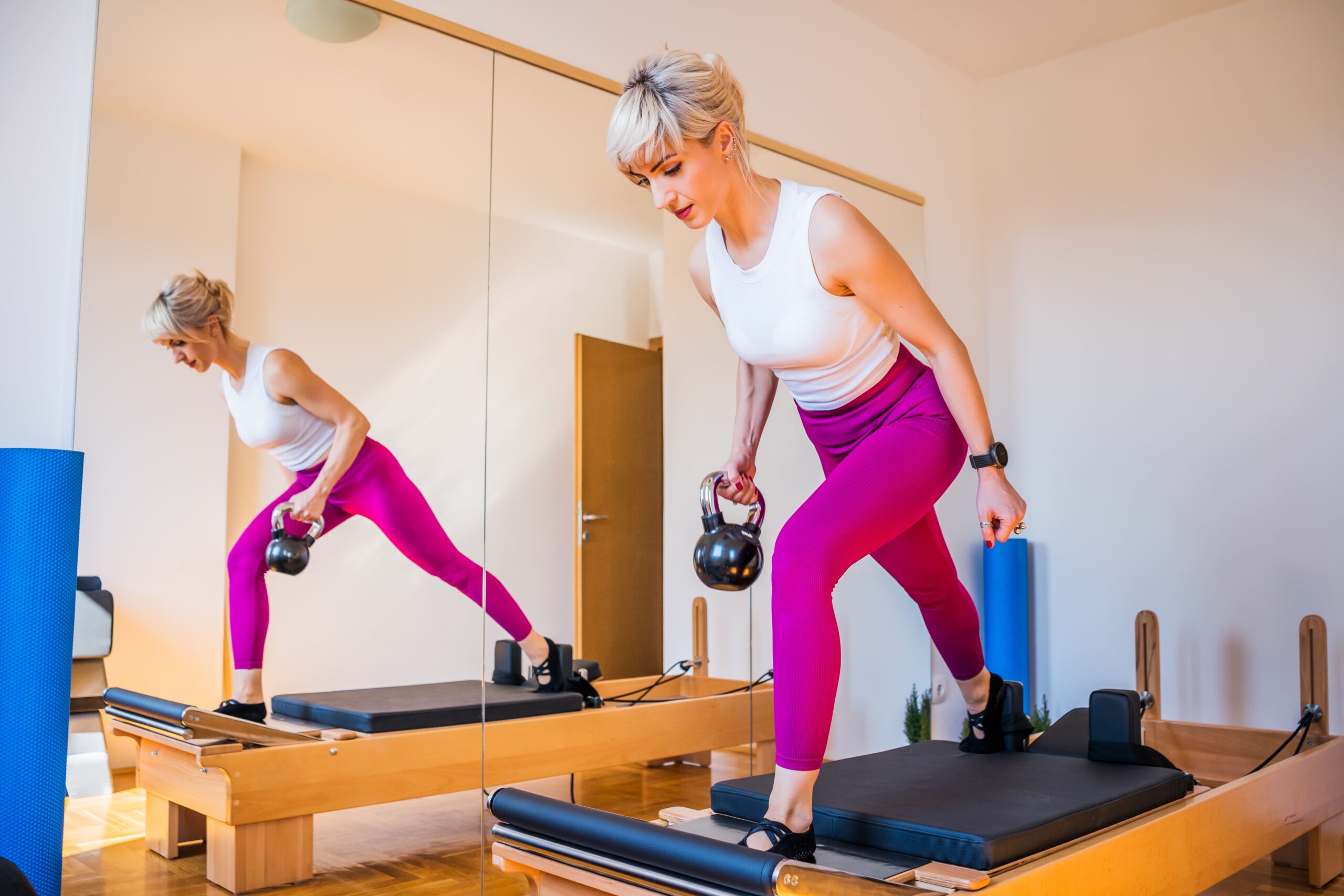
In a hip‑hinged position, row while keeping shoulder blades reinforced and core engaged.
Cue: Exhale on the pull, inhale on the release.
🔹 Pilates Deadlifts
Hip‑hinge with dumbbells or kettlebell — lift with control, then hinge back with spine long.
Benefits: Strengthens posterior chain with emphasis on neutral alignment.
🔹 Pilates Overhead Press
Standing or seated, press weights up while keeping ribs down and core active.
Benefits: Builds shoulder strength while stabilizing the trunk.
🔹 Bridge Variations with Weights
Add light weight to bridge top position, pulse gently, then release.
Benefits: Glute, hamstring, and lower back stability.
🏋️ Equipment That Enhances Fusion Training
While not required, these tools add dimension to guided videos:
| Equipment | Use |
| Dumbbells | Strength circuits and presses |
| Kettlebell | Functional lunges and swings (with control) |
| Resistance Bands | Rowing, squats, leg resistance |
| Pilates Ring | Core integration with strength moves |
| Chair | Support for balance or modified presses |
Keep weights light to start — a guided video often includes recommended weight ranges.
🛠 Progressions & Modifications
Progressions (as you get stronger):
- Increase weight gradually
- Add more sets or rounds
- Introduce compound moves (e.g., squat‑press)
Modifications (if new or rehabbing):
- Use bodyweight only
- Reduce range of motion
- Slow tempo for alignment focus
❌ Avoid These Common Mistakes
 ❌ Arching the back during strength moves — keep core engaged
❌ Holding breath during exertion — exhale during effort
❌ Rushing reps — prioritize controlled motion
❌ Skipping warm‑up or cool‑down
❌ Using weights that are too heavy before mastering form
Other Fusion Workouts
➡️ Pilates and Yoga
➡️ Pilates and Barre
➡️ 4-Week Pilates And Strength Training
❓ FAQs: Pilates + Strength Training Fusion
- Is this style good for beginners?
Yes — especially with guided videos that offer modifications and Pilates cues to maintain alignment.
- Will this help build strength and muscle tone?
Absolutely — the fusion emphasizes both muscular engagement and functional control.
- How often should I do Pilates + Strength workouts?
2–4 sessions per week, with rest or mobility days in between.
- Do I need a gym to practice?
Not at all — guided videos using light dumbbells, bands, or even bodyweight are effective.
- Will this help my posture?
Yes — Pilates alignment cues woven into strength moves improve posture over time.
Pilates + Strength training fusion delivers a powerful, functional, and sustainable way to build muscle, refine alignment, and enhance athletic performance — all with intentional, mind‑body integration. Guided video workouts make this fusion accessible, structured, and enjoyable, whether you’re working toward strength goals, improved posture, balanced movement, or resilience.
Move with intention. Breathe with control. Strengthen with precision. This fusion isn’t just about lifting more — it’s about lifting better.