Your complete guide to using the Pilates ring (magic circle) with follow‑along workouts.
The Pilates ring — often called the magic circle — is one of the most versatile and beginner‑friendly pieces of Pilates equipment. Light and affordable, this circular prop adds gentle resistance and alignment cues that help deepen your movement, enhance muscle engagement, and support mind–body connection.
This page teaches you how the Pilates ring works, why it’s so effective, how to use guided Pilates ring videos safely, and how to structure ring‑focused workouts from beginner to advanced. You’ll also find sample routines and tips on choosing the right ring.
🌀 What Is the Pilates Ring?
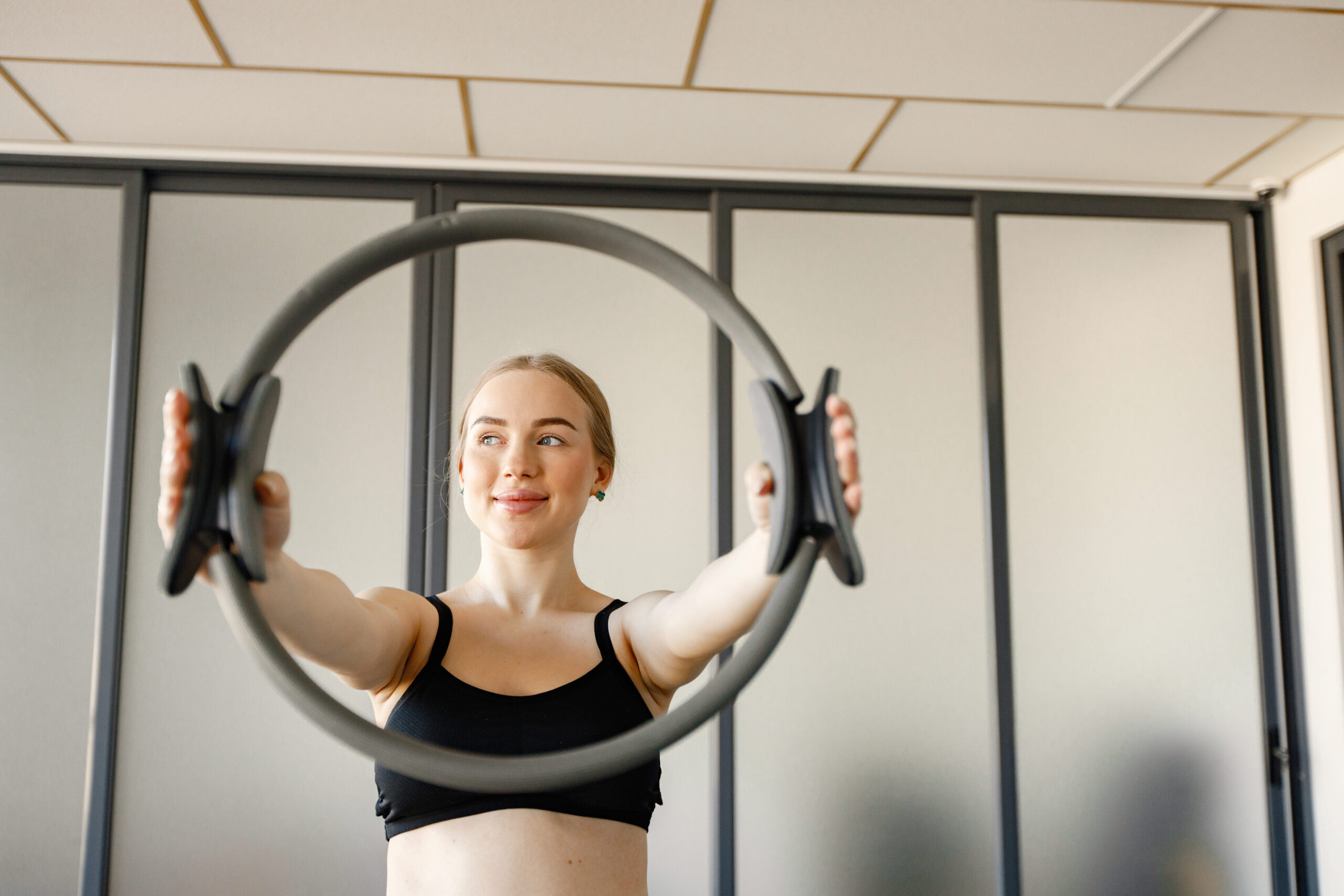
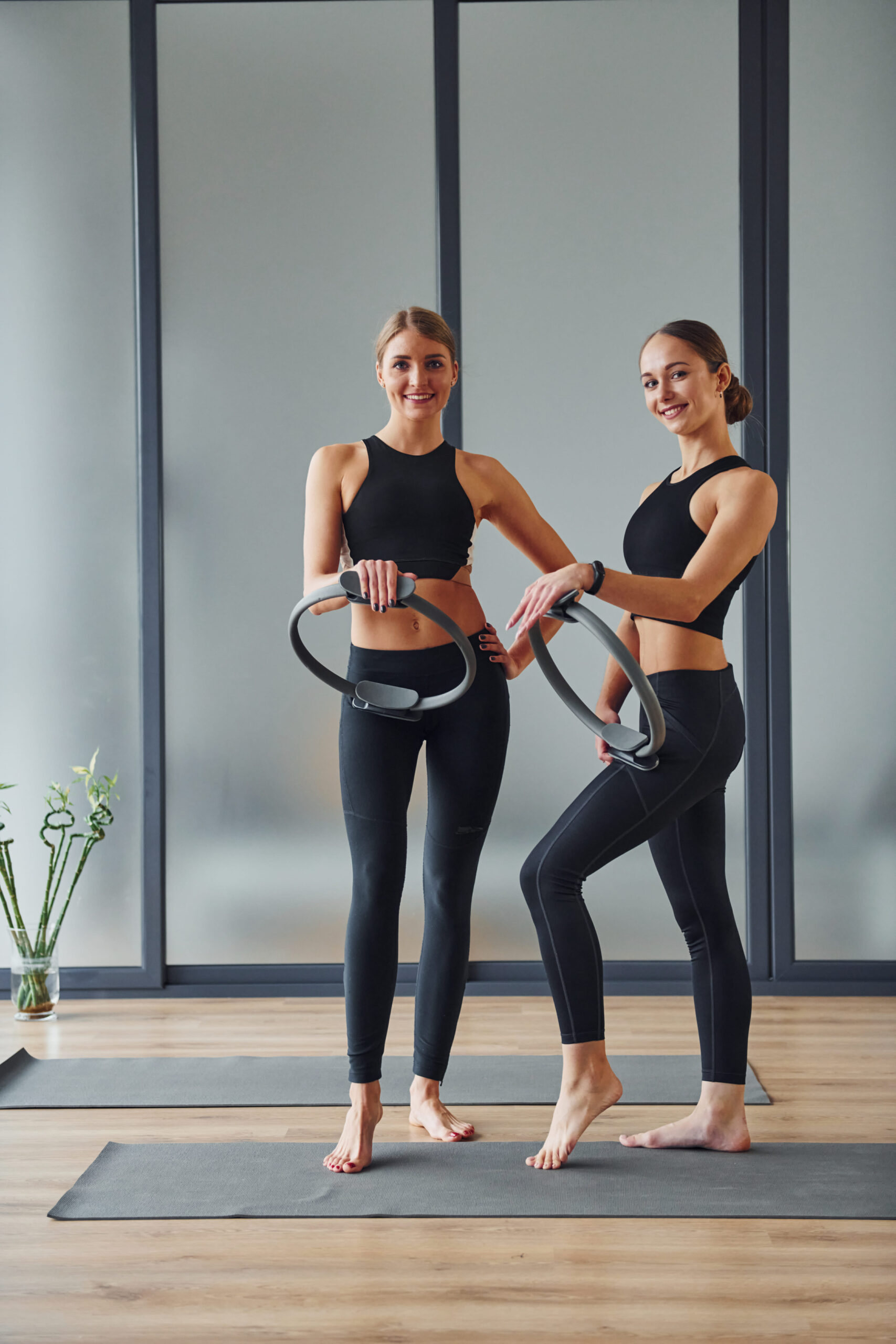
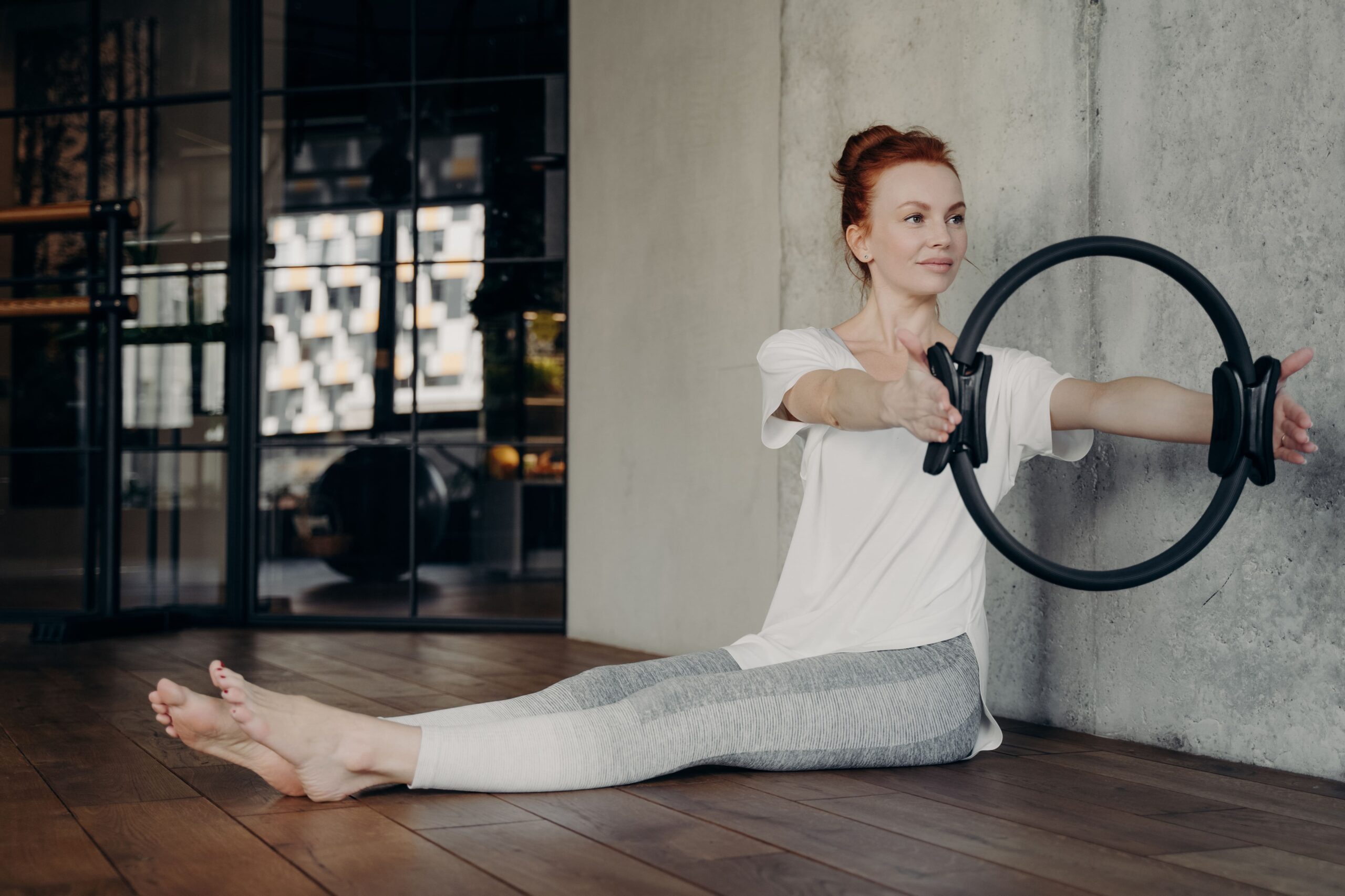 The Pilates ring is a flexible circular ring (usually 13–15 inches in diameter) made of lightweight metal or plastic with padded handles on opposite sides. It provides light resistance that enhances many traditional Pilates exercises.
The ring is used to:
- Create resistance for toning arms, legs, and core
- Provide tactile feedback for alignment
- Challenge stabilizing muscles
- Cue deeper muscle engagement
- Add variety and progression to Pilates flows
Because it’s portable and inexpensive, the Pilates ring is often the first “tool” people use when moving beyond mat‑only practice.
📌 Why Use the Pilates Ring in Videos?
Pilates ring workouts are especially effective because they:
✔ Add Gentle Resistance
The ring provides a safe, controlled challenge without heavy weights — perfect for toning smaller muscles around arms, hips, and inner thighs.
✔ Improve Alignment
Placing the ring between legs or arms helps develop coordinated effort and refined alignment cues.
✔ Enhance Muscle Awareness
Light resistance combined with breath and control teaches you to feel the muscles working — not just move through space.
✔ Offer Progressions for All Levels
From basic squeezes to dynamic flows, ring exercises can be modified or intensified based on your comfort and goals.
✔ Expand Traditional Pilates Movements
Ring work makes classic exercises like the Hundred, bridge, or side‑lying series more engaging and effective.
🎯 Who Can Benefit From Ring Pilates Videos
 Virtually anyone can benefit from Pilates ring work — including:
- Beginners learning alignment and muscle activation
- Intermediate practitioners adding resistance and challenge
- Those rehabbing under guidance (when cleared by a clinician)
- People focused on toning arms, inner thighs, or core
- Busy movers who want a compact, travel‑friendly tool
As with any Pilates practice, make modifications when needed and listen to your body.
🎥 How to Use Pilates Ring Videos Safely
Videos help you follow timing, form cues, and sequencing — but to use them well:
✔ Check Instructor Credibility
Prefer videos led by certified Pilates instructors (e.g., STOTT, Balanced Body, BASI, PMA‑certified).
✔ Follow Alignment Cues
Good teachers cue spine position, rib stabilization, pelvic neutrality, and breathing — not just rep counts.
✔ Progress Gradually
Start with shorter clips and easier variations before advancing to complex sequences.
✔ Modify on the Spot
If a movement feels uncomfortable, reduce range, reposition the ring, or switch to a supported variation.
✔ Breathe With Effort
In Pilates, exhale during effort and inhale during release — this supports core engagement and control.
🎬 What Ring Pilates Videos Focus On
Here’s what you’ll find when you search for Pilates ring workout videos online:
 🟡 Full‑Body Ring Pilates Classes
Balanced sessions using the ring throughout — usually 15–30 minutes.
🟡 Core & Ab Focus
Ring variations of Hundred, roll‑downs, and side‑sits.
🟡 Lower Body Sessions
Inner and outer thigh toning using ring placement between knees or ankles.
🟡 Upper Body Workouts
Arm circles, chest presses, and shoulder stabilization with the ring.
🟡 Posture & Alignment
Videos that use the ring for tactile feedback in standing or neutral spine positions.
Search terms that help you find video content include:
- “Pilates ring full class”
- “Pilates magic circle abs”
- “Pilates ring inner thigh”
- “Ring Pilates beginner”
- “Pilates ring upper body”
🧠 Choosing the Right Pilates Ring
Pilates rings come in a few variations:
| Type | Best For |
| Soft / Flexible Ring | Beginners, rehabilitation, gentle resistance |
| Medium Ring | Most users, balanced resistance |
| Firm Ring | Stronger resistance, advanced toning |
| Smaller Ring | Focused arms and thumbs‑width work |
| Larger Ring | Inner thigh and full‑body flow |
Choose a ring that provides challenge without pain — you should feel a controlled effort, not strain.
📍 How the Ring Enhances Common Pilates Moves
Here’s a look at classic Pilates moves with ring integration:
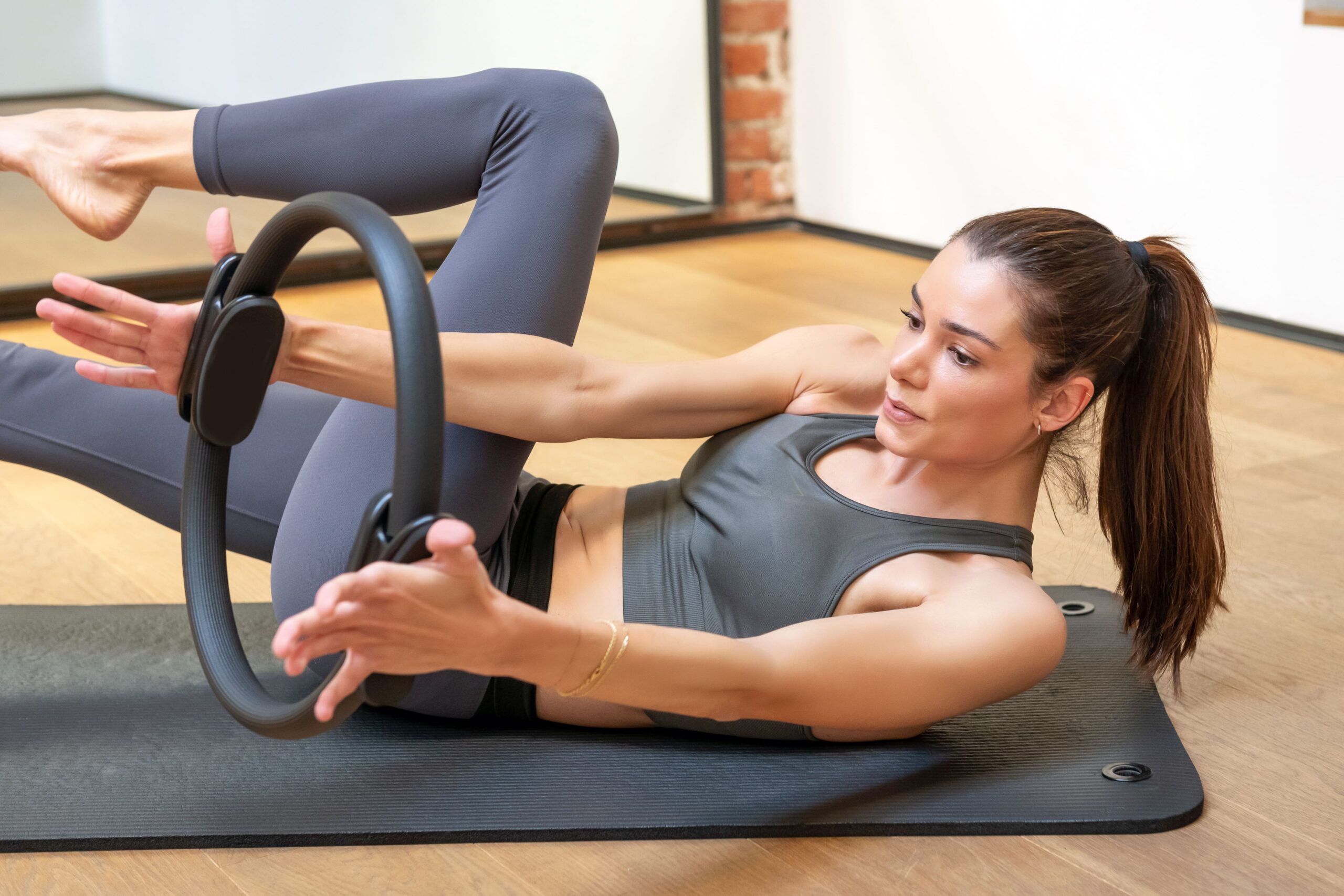
🔹 Ring Between Thighs — Adductor Focus
- Place ring between the inner thighs
- Squeeze lightly to engage adductors during movements like bridges and leg lifts
Benefits: Stability, inner thigh toning, coordinated breath + pressure
🔹 Ring Over Chest — Upper Body Resistance
- Hold ring between palms at chest height
- Exhale to squeeze with arms, inhale to release
Benefits: Strengthens pectorals, arms, and upper back
🔹 Overhead Ring Press
- Hold ring overhead with straight arms
- Exhale to press gently, inhale to return
Benefits: Shoulder mobility and upper body stability
🔹 Ring at Ankles — Outer Thigh Focus
- Place ring around ankles in side‑lying or supine positions
- Exhale to press legs apart, inhale to return
Benefits: Gluteus medius and hip stabilizer engagement
🔹 Ring in Hands — Core Engagement
- Hold ring in front of sternum
- Exhale while performing core moves (e.g., seated twists)
Benefits: Integrates upper chest posture with core strength
🔁 Sample Pilates Ring Workouts
Below are two sample ring Pilates routines you can follow — or use as templates when choosing videos.
⭐ Beginner Pilates Ring Routine (20 Minutes)
| Time | Exercise |
| 0–3 min | Breathwork + Shoulder Rolls |
| 3–7 min | Ring at Chest — Gentle Squeezes (20 reps) |
| 7–12 min | Ring Between Thighs — Bridges (3 × 10) |
| 12–16 min | Seated Side Twists with Ring (8/side) |
| 16–20 min | Standing Ring Overhead Presses (3 × 12) |
💪 Full‑Body Pilates Ring Challenge (30 Minutes)
| Time | Exercise |
| 0–5 min | Warm‑Up + Mobility |
| 5–10 min | Ring Between Thighs — Leg Lifts (10/side) |
| 10–15 min | Ring at Chest — Plank Variations (3 × 30s) |
| 15–20 min | Ring Overhead Press — Shoulder Flow |
| 20–25 min | Ring Around Ankles — Side‑Lying Series |
| 25–30 min | Cool‑Down Stretches + Breath Focus |
💡 Tips for Success With Ring Pilates
🔸 Focus on quality, not quantity
 Controlled movement matters more than high reps.
🔸 Breathe on effort
Exhale during ring compression (the work) — inhale on return.
🔸 Use the ring as feedback
Let it cue where your muscles should engage, not as a “force tool.”
🔸 Progress slowly
Start with shorter routines (10–15 minutes), then build structure.
🔸 Combine with mat work
Follow ring sessions with mat Pilates for balanced training.
❓ Common Mistakes to Avoid
❌ Using too much force — the ring is resistance, not a weight
❌ Rushing reps without breath coordination
❌ Allowing ribs to flare or back to arch
❌ Using inappropriate ring size
❌ Neglecting neutral spine in pursuit of speed
Always prioritize alignment and control — especially when adding resistance.
Other Equipment Videos
➡️ Pilates Equipment Videos
➡️ Resistance Band Pilates
➡️ Pilates Ball Sequences
➡️ More Pilates Ring Workouts
📌 FAQs: Pilates Ring Workouts
- How often should I use the Pilates ring?
3–5 times per week — mix with mat or other equipment work. - Will the ring help build muscle?
Yes — it enhances engagement of stabilizers and toners (especially arms, core, and hips). - Can beginners use the Pilates ring?
Absolutely — start with light pressure and guided routines. - Do I need other props to use the ring?
No — the ring itself is effective and pairs well with a mat at minimum. - Is the Pilates ring good for posture?
Yes — ring work cues alignment and encourages deeper core stabilization.
Pilates ring workouts are a fun, effective, and accessible way to deepen your Pilates practice. From gentle alignment work to full‑body toning flows, the ring supports stability, resistance, and mindful motion.
Use guided videos to learn form, explore variety, and stay motivated. Whether you’re brand new to Pilates or mixing equipment into an advanced routine, this versatile tool adds a new dimension of challenge, awareness, and strength.