Not everyone has space for a full Pilates setup — and that’s exactly why Chair Pilates is such a valuable practice (Read More: Chair-Based Pilates). With just a sturdy chair and a good guided video, you can gain improved posture, core strength, mobility, and overall body awareness. Chair Pilates is ideal for beginners, people with limited mobility, busy schedules, or anyone seeking a low‑impact, effective movement session.
This guide explores what Chair Pilates is, how it enhances traditional Pilates, safe ways to follow chair‑based videos, sample routines, common exercises, and FAQs. Whether you’re entirely new to Pilates or looking to add variety to your practice, chair workouts offer accessibility without sacrificing results.
🪑 What Is Chair Pilates?
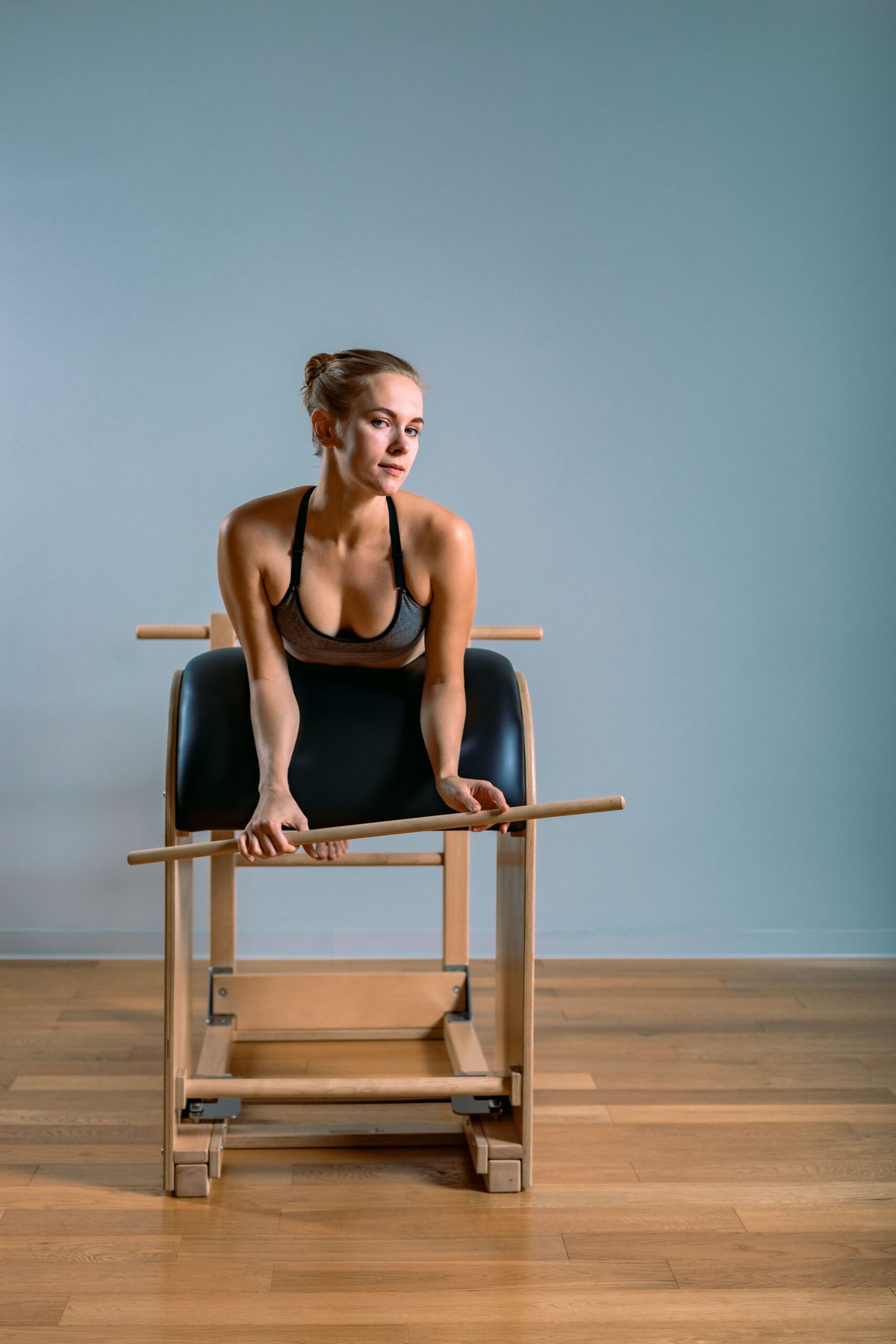
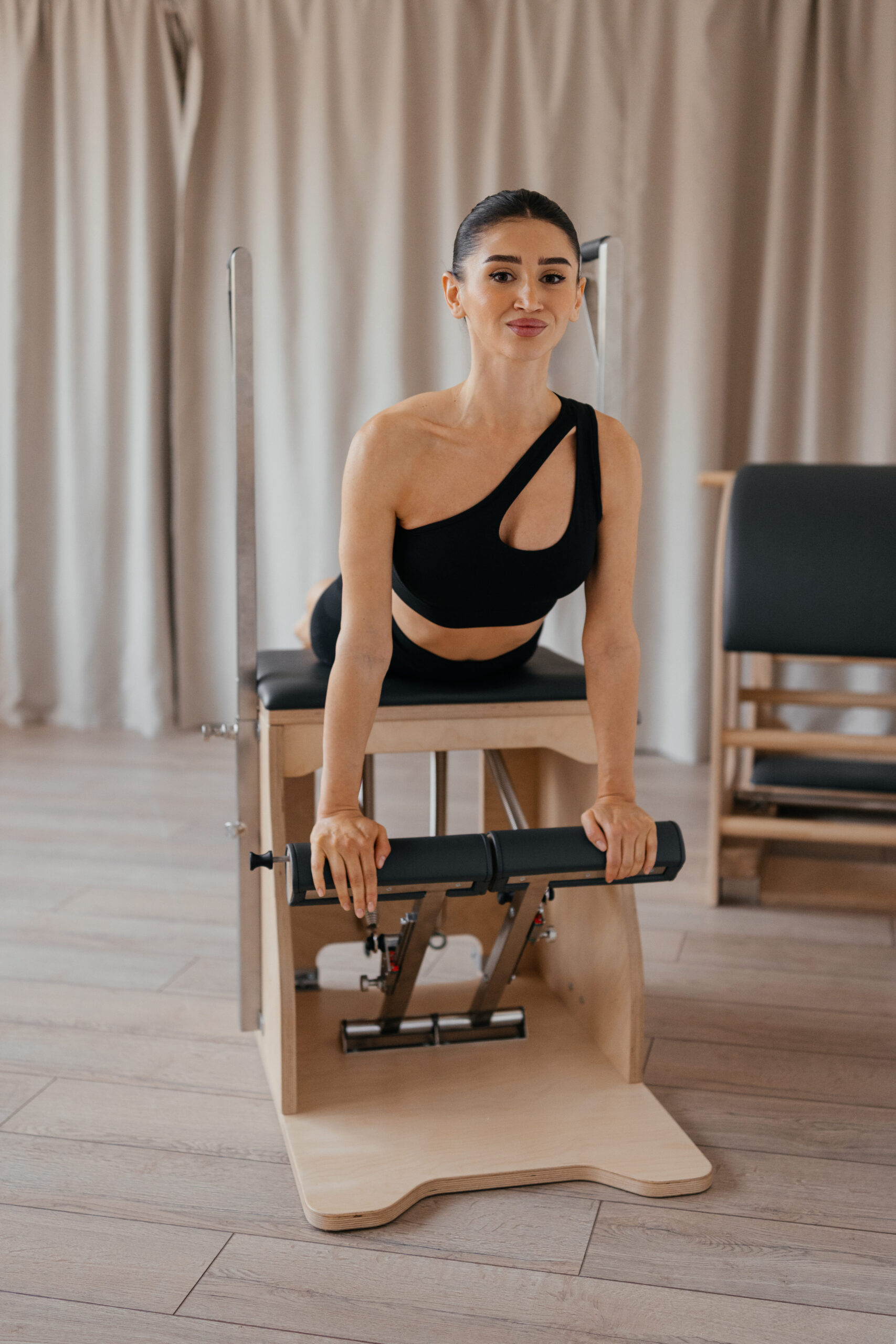
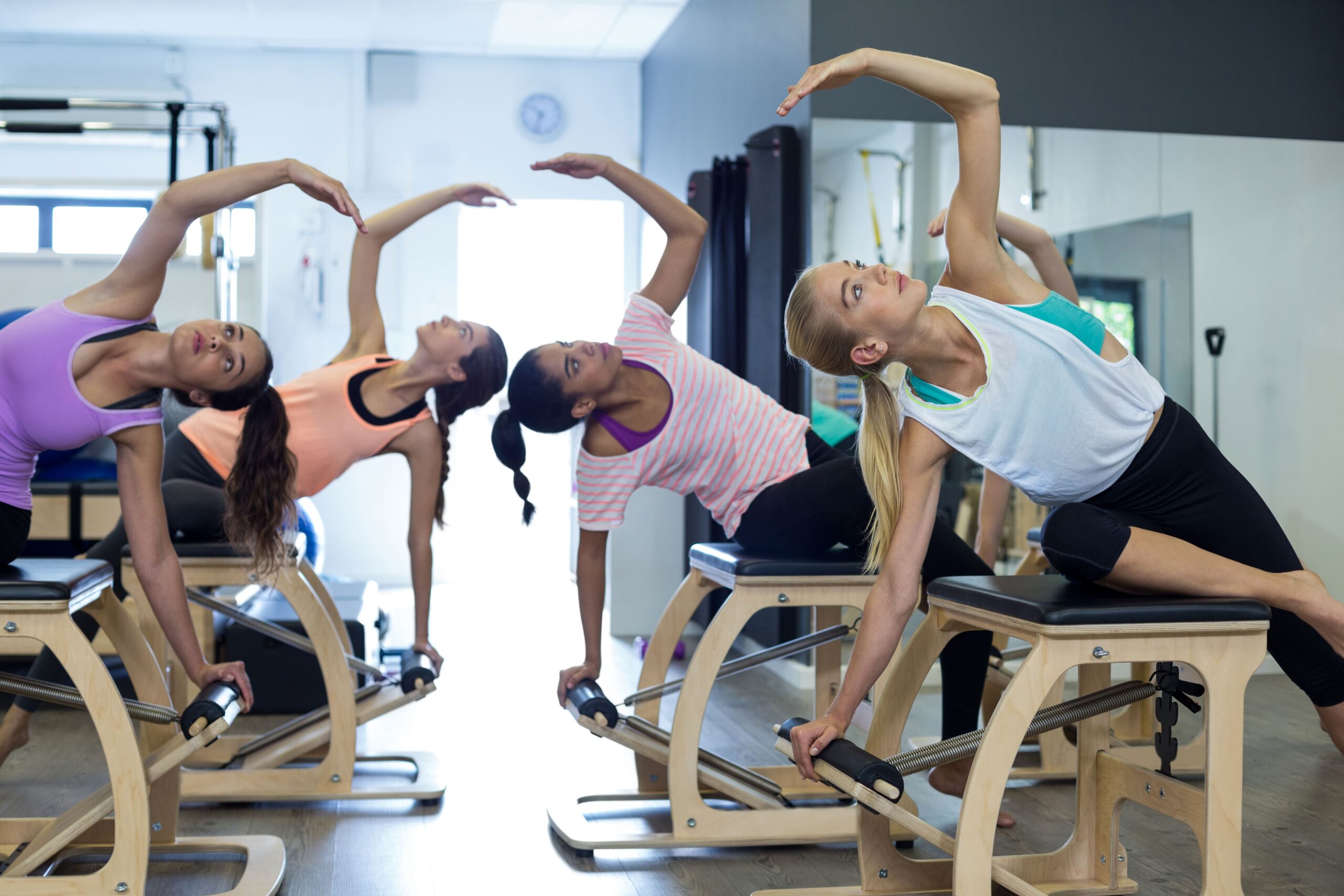 Chair Pilates uses a sturdy chair as both a tool and a support surface to perform Pilates‑based exercises. Unlike the Pilates Wunda Chair (a specialized piece of studio equipment), this approach uses a standard household chair — often with a solid seat, no wheels, and a firm back.
Chair Pilates videos guide you through movements that:
- Engage core muscles with support
- Improve posture and spinal alignment
- Build strength with balance assistance
- Enhance mobility (hips, shoulders, thoracic spine)
- Offer low‑impact strength options
The chair becomes an extension of the mat — providing support for balance, a surface for transitional moves, and a stable anchor for seated and standing exercises.
📌 Why Use Chair Pilates Videos?
Chair Pilates videos are especially useful because:
✔ They Make Pilates Accessible
No mat space or floor‑work experience is required — great for limited spaces or mobility challenges.
✔ They Support Stability
The chair helps you focus on alignment and technique without worrying about balance.
✔ They Fit Into Any Schedule
Short chair sequences (10‑20 minutes) are ideal for work breaks or quick daily movement.
✔ They Add Variety to Your Practice
Chair work challenges your body in new ways, refreshing your routine.
✔ They Offer Gentle Progression
As your confidence grows, chair videos can integrate dynamic standing and transitional patterns.
📍 Who Should Do Chair Pilates?
Chair Pilates is ideal for:
- Beginners needing support while learning form
- Older adults focused on safe strength & balance
- Desk workers looking for posture reset breaks
- People with mobility limitations or joint sensitivities
- Busy movers who want targeted, brief sessions
- Anyone interested in low‑impact strengthening
If you have recent injuries or surgery, consult a healthcare provider before starting any new exercise — even chair‑based — and modify movements as needed.
🎥 How to Use Chair Pilates Videos Safely
To make the most of guided Chair Pilates videos:
 🔸 Choose a stable, non‑rolling chair
No wheels, no slick surfaces — a solid dining or desk chair works best.
🔸 Watch the Video First
Preview form cues before you begin. Pause when needed to adjust posture.
🔸 Maintain Neutral Spine
Even while seated, keep ribs stacked over pelvis and shoulders relaxed.
🔸 Use Breath with Movement
Inhale before effort; exhale during effort, especially when pressing or lifting.
🔸 Modify When Required
If a stance feels unstable, widen your base or use the wall for extra support.
Chair Pilates videos often include specific setup cues (how far to sit back, where to place feet, how to grip) — pay attention, as these details matter more than rep counts.
🤸 What Chair Pilates Videos Typically Focus On
Chair Pilates videos may include:
🟡 Seated Core Work
Exercises that engage deep abdominals from a seated position.
🟡 Balance & Coordination
Transitions from chair to standing and back, or reaching patterns with support.
🟡 Upper Body Strength
Arm movements with or without light props while seated.
🟡 Hip & Lower Body Activation
Using the chair for assisted squats, leg lifts, or gentle hip opening.
🟡 Posture Series
Targeted work to reset shoulders, neck, and upper spine after prolonged sitting.
Search terms that help you find relevant video content include:
- “Chair Pilates full body workout”
- “Seated Pilates for beginners”
- “Chair Pilates core & posture”
- “Low impact chair Pilates”
- “Pilates chair balance and strength”
🧠 Choosing the Right Chair Pilates Video
When you search for and select Chair Pilates videos, look for:
✔ A certified instructor who cues alignment and breath
✔ Clear instructions for setup (where to place feet, how to sit)
✔ Modifications or variations for easier/harder versions
✔ Footage that shows close‑ups of key movements
✔ Videos organized by duration (10, 20, 30+ minutes)
This ensures you get safe, structured guidance instead of random movements.
📋 Sample Chair Pilates Workouts
Here are two sample chair‑based Pilates routines — one for beginners and one for intermediate level. These can be followed as scripts or used to guide video selection.
⭐ Beginner Chair Pilates (15–20 Minutes)
| Time | Exercise |
| 0–3 min | Breathwork + Seated Shoulder Rolls |
| 3–6 min | Seated Foot Taps (warm up hips & core) |
| 6–9 min | Seated Pelvic Tilts (gentle core activation) |
| 9–12 min | Seated Chest Openers (thoracic mobility) |
| 12–16 min | Seated Leg Lifts (core + hip activation) |
| 16–20 min | Seated Cool‑Down (neck, ankle mobility, breath) |
Focus: Introduce mindful movement with spinal alignment, gentle core activation, and breath cues.
💪 Intermediate Chair Pilates (25–30 Minutes)
| Time | Exercise |
| 0–3 min | Breath Initiation + Cat‑Cow over chair |
| 3–7 min | Seated Core Flow (slow circling + lifts) |
| 7–12 min | Assisted Chair Squats (standing transitions) |
| 12–17 min | Chair Plank Variations (hands on seat) |
| 17–22 min | Seated Leg Circles + Side Reaches |
| 22–27 min | Upper Body Strength (arms + shoulders) |
| 27–30 min | Stretch & Relaxation |
Focus: Engage balance, strength, and coordination with transitional flows and full‑body integration.
🪑 Essential Chair Pilates Exercises Explained
Here are foundational moves you’ll see in chair Pilates videos, with tips on how to perform them safely:
🔹 Seated Foot Taps
Purpose: Warm up hips and activate core
- Sit tall near the edge of the chair
- Exhale to lift one foot slightly, inhale to lower
- Alternate with control
Tips:
Keep movement small and avoid leaning back.
 🔹 Seated Pelvic Tilts
Purpose: Core initiation and low‑back mobility
- Sit tall
- Inhale to lengthen spine, exhale to tilt pelvis slightly forward or back
- Focus on deep core engagement, not range
Tips:
Keep ribs down and shoulders relaxed.
🔹 Assisted Chair Squats
Purpose: Glute/leg strength + balance
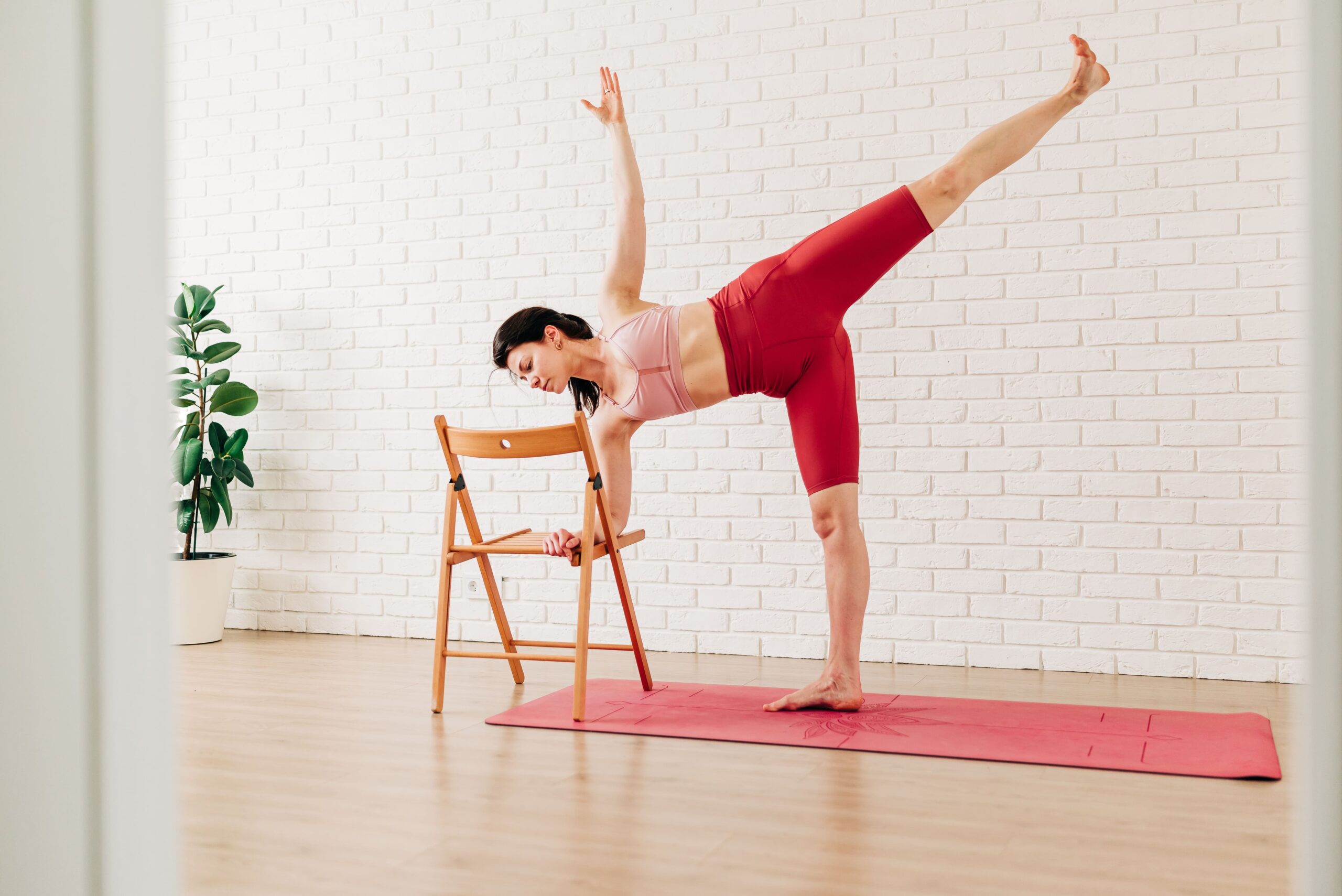
- Stand behind the chair holding the backrest
- Exhale to sit back gently as if lowering into the chair
- Inhale to stand up with control
Tips:
Don’t fully relax into the chair — touch lightly and rise back up.
🔹 Seated Leg Lifts
Purpose: Hip flexor and lower abs activation
- Sit tall with hands lightly on sides
- Exhale to lift legs one at a time or together
- Inhale to lower with control
Tips:
Avoid arching the back — keep core engaged.
🔹 Chair Plank (Hands on Seat)
Purpose: Upper body and core stabilization
- Place hands on the chair, extend legs back
- Exhale to hold plank with neutral spine
- Inhale to lower to knee modifications
Tips:
Keep shoulders over wrists and ribs drawn in.
🔹 Seated Side Reaches
Purpose: Oblique and lateral core stretch
- From seated, reach one arm overhead while lengthening the opposite side
- Exhale during reach, inhale to return
Tips:
Keep hips stable — avoid twisting from the lower spine.
🎯 Tips for Better Chair Pilates Practice
🔸 Maintain Active Foot Contact
Feet should be flat and firmly grounded — avoid dangling legs without contact.
🔸 Use Breath Intentionally
In Pilates, breath supports motion — exhale on effort, inhale on release.
🔸 Progress Slowly
Add standing variations or balance challenges only when you feel confident.
🔸 Keep Shoulders Relaxed
Avoid shrugging — keep shoulder blades long and down.
🔸 Use Chair Back for Support
When balance feels unstable, use the chair back as a lighter anchor.
❌ Common Mistakes to Avoid
 ❌ Sitting too far back in the chair — this limits core engagement
❌ Leaning on hands for balance instead of engaging core
❌ Rushing through reps — Pilates values control and breath
❌ Locking knees in standing transitions
❌ Ignoring alignment cues in videos
Always prioritize quality of movement over speed or rep counts.
Other Equipment Videos
➡️ Pilates Equipment Videos
➡️ Foam Roller Pilates
➡️ Pilates Ring Workouts
❓ FAQs: Chair Pilates Workouts
- Can chair Pilates replace mat Pilates?
Chair Pilates complements mat work beautifully. It’s not inherently better or worse — just suited to different goals or limitations.
- How often should I do chair Pilates videos?
Aim for 3–5 sessions per week based on your schedule and needs.
- Does chair Pilates build strength?
Yes — especially in the core, glutes, legs, and upper body when you progress through transitional movements.
- Do I need props with the chair?
No — a chair is enough. Props like bands or small balls can be added later for resistance.
- Are chair Pilates workouts good for posture?
Absolutely — they reinforce neutral spine, balanced shoulders, and core support.
Chair Pilates workouts are a versatile, accessible entry into equipment‑supported Pilates. Whether you’re a complete beginner, working around limitations, or simply looking for a quick targeted session, chair Pilates videos give you structure, support, and effective movement — without needing floor work or bulky equipment.
Chair Pilates invites you to move with intention, control, and breath — building strength, stability, and confidence one session at a time.