In the pursuit of better posture, toned muscles, and graceful movement, many people unknowingly develop habits in their Pilates practice that work against them. Two of the most common pitfalls? Overarching the lower back and holding the breath. These seemingly small issues can sabotage your alignment, limit progress, and even lead to discomfort or injury if left unchecked.
Whether you’re brand new to Pilates or a seasoned practitioner, learning to correct these habits will deepen your practice and help you move with more awareness and ease. This article dives into why these habits occur, how to identify them, and simple strategies to correct them—empowering you to build a stronger, more connected Pilates foundation.
What Is Overarching in Pilates?
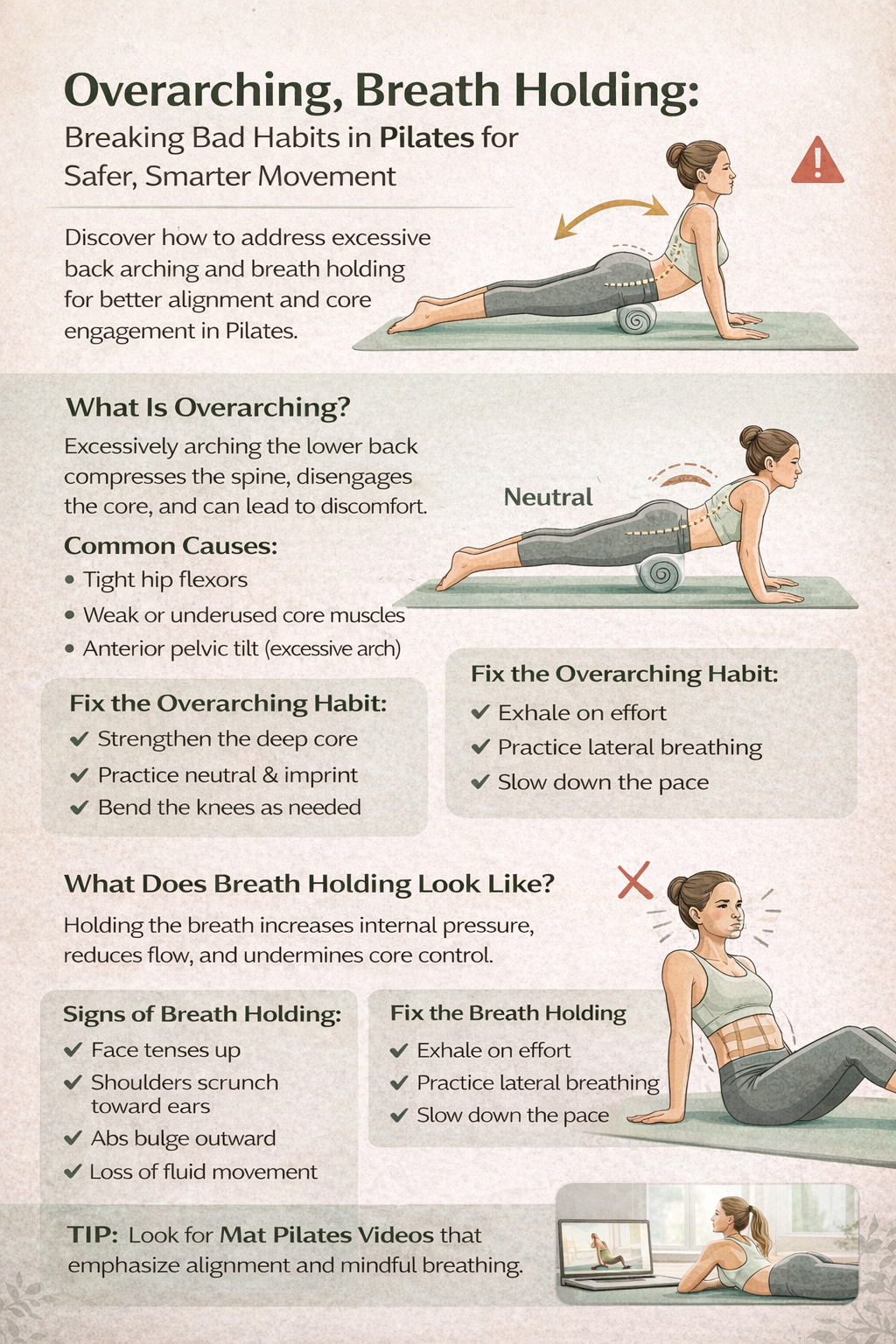
Overarching refers to an excessive curve in the lumbar spine (lower back). While maintaining a natural curve is important, overly arching the back places unnecessary strain on the spine and can compromise abdominal engagement.
How Overarching Happens
 Overarching often stems from:
-
Tight hip flexors or low back muscles
-
Weak or underused core muscles
-
A misunderstanding of neutral spine vs. imprint
-
Compensating for a lack of flexibility in the hamstrings or thoracic spine
You’ll often see this in exercises like:
-
The Hundred (when legs are lifted too low without core support)
-
Leg Circles (if the pelvis shifts with the leg movement)
-
Planks or leg pulls (if the belly sags and the back arches)
-
Even in everyday standing posture, especially in those with an anterior pelvic tilt
Why Overarching Is a Problem
-
It compresses the lower back, increasing the risk of strain or injury.
-
It reduces core engagement, which defeats the purpose of most Pilates exercises.
-
It causes misalignment, affecting balance and fluid movement.
-
Over time, it can contribute to chronic postural issues.
What Does Breath Holding Look Like?
Breath holding is exactly what it sounds like—forgetting to breathe during movement, especially during challenging exercises. This is incredibly common, even among experienced practitioners, and often happens during moments of intense concentration or strain.
Instead of exhaling through effort, people instinctively “brace” by holding their breath, which leads to tension, fatigue, and loss of flow.
Common Signs of Breath Holding
-
Feeling dizzy or tense after a set
-
Shoulders creeping up toward the ears
-
Abs bulging outward instead of drawing inward
-
Not being able to complete a full movement fluidly
Why Breath Holding Sabotages Your Practice
 Breath and movement are intertwined in Pilates. Holding your breath can:
-
Raise internal pressure, placing stress on your pelvic floor and diaphragm
-
Reduce oxygen flow, leading to muscle fatigue
-
Disconnect you from your core, since the breath is tied to abdominal control
-
Break the rhythmic flow that Pilates is known for
In short, you can’t fully engage your body if you’re depriving it of breath.
The Solution: Replacing Habits with Awareness
Correcting Overarching
The key to fixing over-arching isn’t forcing the back flat—it’s building awareness and strength. Here’s how:
1. Practice Pelvic Tilts and Imprint
These movements help you feel the difference between a neutral spine and a supported position. Start on your back with knees bent, rock the pelvis gently, and find where your low back naturally rests without straining. This builds internal awareness of what alignment feels like.
2. Strengthen the Deep Core
Focus on exercises that activate the transverse abdominis and pelvic floor, like:
-
Toe Taps
-
Dead Bugs
-
Modified Planks
-
Wall-supported Roll Downs
These reinforce proper support without the temptation to arch.
3. Use Visual Cues or Props
Placing a small towel under your lower back during mat exercises can give feedback if you’re overarching. You’ll know when you’re losing contact.
4. Bend the Knees When Needed
Trying to keep the legs straight during a Roll-Up or teaser may cause the spine to compensate. Bending the knees helps keep the movement in the abs, not the back.
Improving Breath Awareness
Correcting breath holding requires conscious repetition. Over time, breath-movement coordination becomes second nature.
1. Use Exhale on Effort
In Pilates, we exhale during the hardest part of the movement. For example:
-
Exhale as you roll up
-
Exhale as you lift a leg
-
Exhale as you curl the head and shoulders
This connects breath with core activation and reduces pressure.
2. Practice Lateral Breathing
Place your hands on your lower ribs. Inhale through the nose and feel the ribs expand sideways. Exhale through pursed lips and feel the ribs draw inward. This keeps the abdominal wall engaged without ballooning outward.
3. Slow Down
If you’re racing through reps, you’ll lose breath control. Slowing the pace allows you to pair each movement with deliberate breathing.
4. Verbal Cues and Counts
Listening to an instructor or even counting aloud helps regulate breath rhythm. Many Beginner Pilates Videos include verbal breath cues for this reason.
Creating a Safer, Smarter Practice
 Addressing overarching and breath holding isn’t just about technique—it’s about deepening your mind-body connection. These adjustments make every movement safer, more efficient, and more effective.
If you’re practicing at home, choose Mat Pilates Videos that include detailed cueing and modifications. Many classes within the Pilates by Duration or Pilates by Goal categories focus on alignment and breathwork, making them great resources for retraining your body.
Tips to Reinforce Good Habits
-
Film yourself to observe alignment.
-
Practice with a mirror to check for excessive back arching.
-
Return to basics—foundational exercises done well are more powerful than complex movements done incorrectly.
-
Stay curious—ask yourself, “Where is my spine right now?” and “Am I breathing fully?”
Real-World Carryover
The best part? These Pilates principles translate into daily life. Overarching and breath holding aren’t limited to the mat—they happen when lifting groceries, working at your desk, or even while driving. Read more here: The Link Between Your Breathe & Your Core
By becoming more aware of your breath and spinal alignment during Pilates, you’ll naturally carry that awareness into how you move through the world—reducing tension, improving posture, and protecting your back long term.
FAQs
Why do I tend to overarch my back during leg lifts?
This usually happens when the core isn’t fully engaged. The back compensates by arching. Try lifting one leg at a time or practicing toe taps with an imprinted spine.
How can I tell if I’m holding my breath?
Common signs include tension in the face, clenched jaws, or feeling winded after exercises. Try to pair each movement with intentional breath.
Is it okay to flatten my back completely to avoid overarching?
Only temporarily. Flattening helps build core awareness, but eventually you want to work toward a supported neutral spine for functional movement.
Does holding my breath during Pilates cause harm?
While it might not harm you immediately, it reduces core support and raises intra-abdominal pressure. Long term, it can affect pelvic floor health and limit your progress.
Can beginners fix these habits easily?
Yes! These are common issues that improve quickly with awareness and guidance. Starting with focused beginner sessions can make a big difference.
By retraining your movement patterns and committing to mindful breathing, you’ll transform not only your Pilates practice but how you carry yourself in everyday life. The most powerful changes often begin with the smallest adjustments—and it all starts with breath and alignment.