Tight hips? Stiff back? Limited range of motion? You’re not alone. In our screen-centric, chair-heavy world, flexibility is one of the first things to go. The good news? You don’t need to be “naturally flexible” to feel limber again — you just need consistent movement, and Pilates is one of the most effective ways to get it.
This guide focuses on Pilates for Flexibility, offering a complete breakdown of why it works, how to use it, and which movements best support your goals. And the best part? It’s all equipment-free and done right on the mat.
Why Pilates Is Ideal for Improving Flexibility
 Unlike static stretching routines, Pilates improves flexibility by combining active movement with core engagement and breathwork. This dynamic, full-body approach not only stretches tight muscles — it also strengthens them at their new length.
How Pilates Helps Flexibility:
- Improves spinal articulation (mobility through the spine)
- Opens tight hip flexors and hamstrings
- Mobilizes the shoulders and upper back
- Encourages full-body coordination
- Builds strength around joints for safe range of motion
Pilates teaches the body to move more efficiently — and flexibility becomes a natural result.
Understanding Flexibility vs. Mobility
Many people confuse flexibility with mobility, but both are important and addressed in Pilates.
- Flexibility is the ability of a muscle to lengthen passively.
- Mobility is the ability of a joint to move actively through a range.
In Pilates, you’re not just holding static stretches — you’re moving with control, training both flexibility and mobility simultaneously.
 What You Need to Get Started
Flexibility-focused Pilates routines are low-impact and accessible, but setting yourself up properly ensures a safe and enjoyable session.
You’ll Need:
- A Pilates mat or soft surface
- Comfortable clothing that allows full movement
- Optional: pillow, towel, or yoga block for support
Best Pilates Moves for Flexibility
These exercises are core to any flexibility-focused session. Each one targets tight or commonly restricted areas, especially in the spine, hips, hamstrings, and shoulders.
🌀 Spine Stretch Forward
Targets: Hamstrings, spine, upper back
- Sit with legs extended, feet flexed
- Inhale to sit tall, exhale to round forward
- Keep arms parallel and shoulders relaxed
💡 Tip: Imagine rounding over a large ball rather than forcing your head to your knees.
🐱 Cat-Cow Stretch
Targets: Spinal mobility and fluidity
- On hands and knees
- Inhale to arch the back (cow), exhale to round the spine (cat)
- Repeat slowly, coordinating breath and movement
💡 Great for morning sessions or post-desk stretches.
🪷 Mermaid Stretch
Targets: Side body, obliques, and hips
- Sit with knees folded to one side
- Inhale to reach up, exhale to bend toward the feet
- Stretch both sides evenly
💡 Modify with a pillow under the hips if your knees feel tight.
🚪 Hip Rolls
Targets: Lower spine, glutes, and hip flexors
- Lie on your back, knees bent
- Tilt pelvis and roll spine up into bridge
- Roll down slowly, one vertebra at a time
💡 Move slowly and feel each section of the spine articulate.
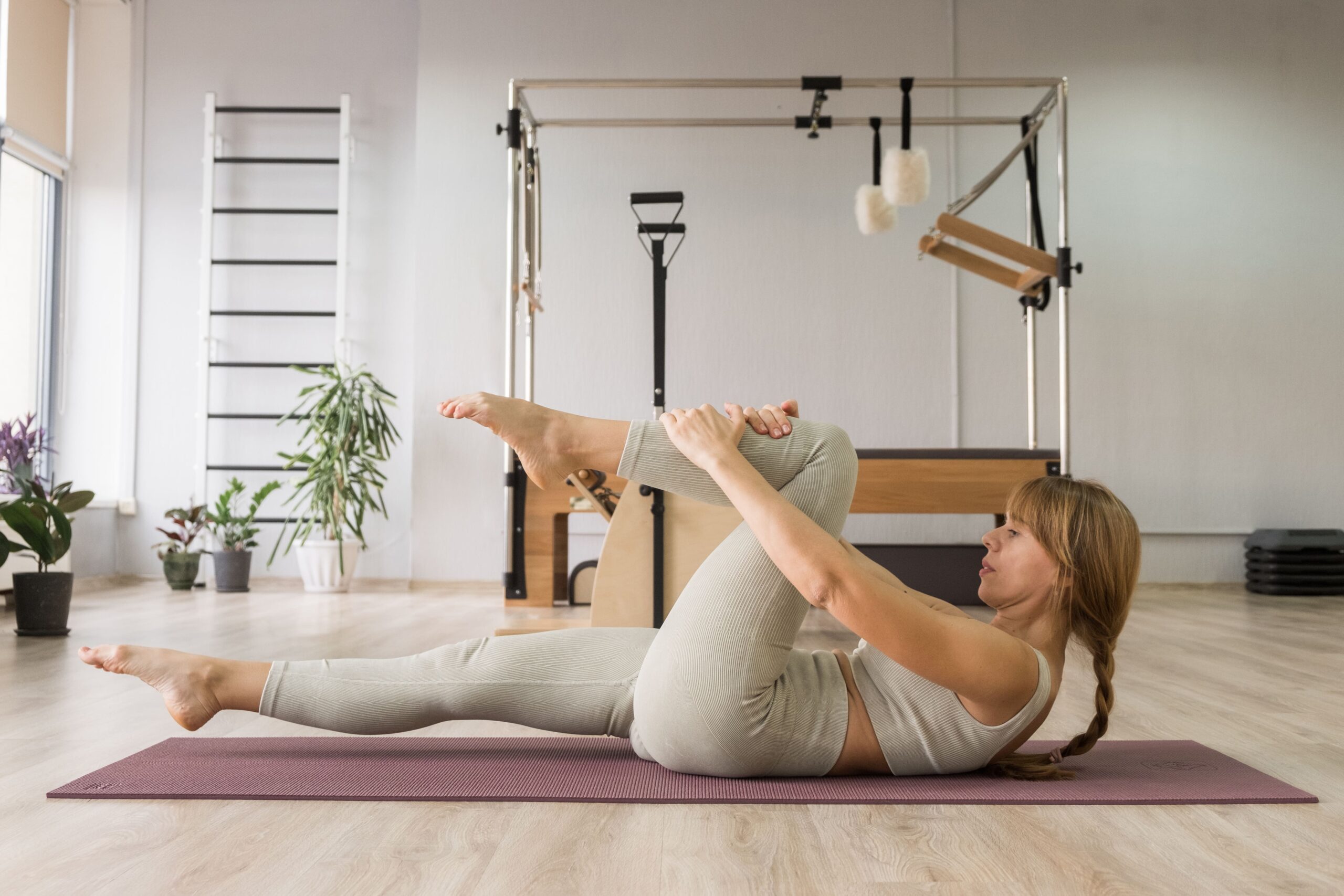
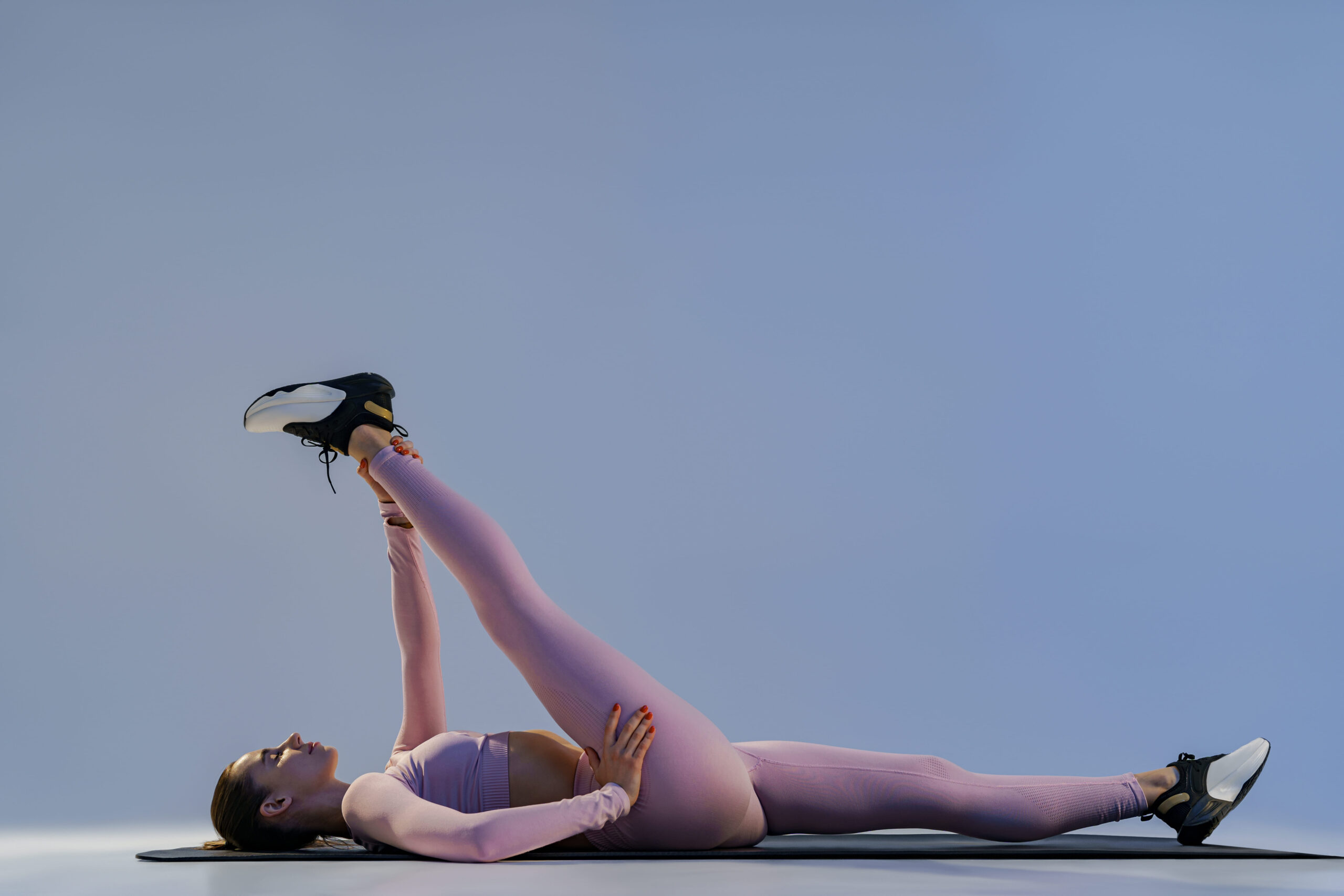 🔁 Hamstring Stretch (Leg Circles Start)
Targets: Hamstrings and calves
- On your back, extend one leg toward the ceiling
- Hold behind thigh or calf
- Gently pulse or circle the leg
💡 Keep shoulders relaxed — don’t strain to pull the leg.
🧘 Saw
Targets: Hamstrings, spine, and obliques
- Sit with legs extended wide
- Inhale to twist, exhale to reach the pinky finger toward opposite foot
- Alternate sides
💡 This is dynamic — aim for control, not depth.
🔄 Shoulder Bridge with Arm Reach
Targets: Chest, shoulders, hip flexors
- In bridge position, extend arms overhead
- Alternate lifting one arm and opposite leg
- Focus on length and opposition
💡 Engage glutes to support the stretch, not just the lower back.
Sample Pilates Flexibility Routine (20–30 Minutes)
| Time | Exercise |
| 0–2 min | Breath + Pelvic Tilt |
| 2–4 min | Cat-Cow |
| 4–6 min | Spine Stretch Forward |
| 6–8 min | Hamstring Stretch (each leg) |
| 8–10 min | Mermaid Stretch (each side) |
| 10–12 min | Saw |
| 12–14 min | Shoulder Bridge w/ Reach |
| 14–16 min | Hip Rolls |
| 16–20 min | Repeat or rest in Supine Twist |
Tips to Maximize Flexibility Gains with Pilates
🔹 Move with Breath
Exhale into stretches — breath softens resistance and invites deeper range.
 🔹 Don’t Push or Force
Flexibility is earned gradually. Going too far can cause strain or injury.
🔹 Repeat Movements
Revisit the same flows regularly to deepen range of motion over time.
🔹 Support Yourself
Use a pillow, towel, or block as needed. Comfort invites ease.
🔹 Practice Consistently
3–5 sessions per week will yield steady improvements, even in just 15–20 minutes a day.
Progress Over Time
With regular Pilates practice focused on flexibility, you’ll notice:
- Greater ease when bending, twisting, or sitting
- Reduced tightness in hips, hamstrings, or shoulders
- Less stiffness in the back
- Improved posture and breathing
- Better recovery after other workouts
Even small sessions — when done with precision — offer major returns.
See More Pilates Content
➡️ Mat Pilates Videos
➡️ Pilates for Strength
➡️ Pilates for Posture
➡️ How Does Pilates Help with Flexibility & Balance
FAQs: Pilates for Flexibility
- Do I have to be flexible to start?
Not at all. Pilates helps develop flexibility gradually and safely, starting from where you are.
- Can I do flexibility-focused Pilates daily?
Yes, as long as you listen to your body. Gentle, mindful sessions are safe for daily practice.
- What if I can’t touch my toes or sit upright?
Use props like cushions or bend your knees. There’s no need to force it — the goal is control, not contortion.
- Does Pilates replace stretching?
Yes and no. Pilates builds active flexibility with strength, while traditional stretching can complement it with longer holds.
- How long until I feel more flexible?
Many people feel subtle improvements in 2–3 weeks with consistent practice. Major changes often appear after 6–8 weeks.
You don’t need extreme stretches or yoga-level flexibility to move better. With Pilates for Flexibility, you can increase your range of motion, release tightness, and move more freely — all while building core strength and stability.
Make it a habit, stay curious with your movements, and enjoy the feeling of a body that opens up a little more every day.