Once you’ve mastered the basics of Pilates and built a foundation of core awareness, body control, and breath coordination, the next step is stepping into a flow that challenges your entire body—without overwhelming it. That’s where the Intermediate Full-Body Pilates routine comes in.
This isn’t just a harder version of beginner moves. It’s a thoughtful progression that introduces new layers of complexity: dynamic transitions, endurance-focused sequences, and refined control. It’s for those ready to go deeper—mentally and physically—while keeping the grace and flow that defines Pilates.
Whether you’re practicing at home, in a studio, or following a video online, this level bridges strength and fluidity. It’s an ideal sweet spot for those seeking visible results, improved performance, and a deeper connection to movement.
What Makes a Pilates Routine “Intermediate”?
Intermediate Pilates is about more than doing harder moves. It involves:
-
Longer sequences with fewer rests
-
Combination exercises that integrate multiple muscle groups
-
Deeper core engagement, especially with pelvic stability and spinal articulation
-
Controlled tempo, maintaining strength through slow, precise motion
-
Dynamic coordination between breath and movement transitions
Think of it as learning a dance—you’re no longer just practicing the steps. You’re beginning to embody the rhythm, the details, and the flow.
The Benefits of a Full-Body Intermediate Routine
 Pilates is often praised for its focus on the core, but a well-structured full-body flow reaches far beyond your abdominals. In an intermediate session, you’ll challenge:
-
Shoulder and upper back stability
-
Glute and hamstring strength
-
Hip mobility and control
-
Arm strength without bulk
-
Deep core stability under dynamic load
Here’s what that translates to in real life:
-
Easier posture during long hours at a desk
-
Better performance in sports or other workouts
-
Reduced risk of injury by improving movement mechanics
-
Toned, lengthened muscles—not just in your abs, but everywhere
If you’re seeking targeted training for more specific needs, explore our Pilates by Goal section, where you can choose flows focused on core, posture, strength, or flexibility.
Sample Intermediate Full-Body Sequence (No Equipment)
Below is a breakdown of a 25–30 minute intermediate full-body routine you can try at home. No equipment needed—just a mat and a willingness to challenge yourself.
1. Standing Roll Down to Walk Out Plank (2 mins)
Begin standing. Inhale, then exhale to roll down through the spine. Walk hands out to plank, hold for a breath, then reverse the movement. Repeat 4–6 times.
2. Leg Pull Front (Plank Leg Lifts) (2 mins)
In a full plank, lift one leg at a time, keeping hips stable. Engage your glutes and imagine lengthening from crown to heel.
3. Swan Dive Prep (3 mins)
Lying prone, hands by your ribs. Inhale to lift chest, using the upper back, not arms. Exhale to lower. Strengthens the spine and opens the front body.
4. Side-Lying Leg Series (6 mins total)
On your side, go through:
-
Leg lifts
-
Circles (small and slow)
-
Bicycle forward and back
-
Inner thigh pulses
Then switch sides. This sequence targets glutes, obliques, and inner thighs.
5. Single Leg Teaser (4 mins)
Lie on your back, one leg extended, the other bent. Roll up to a teaser position, maintaining core control. Lower slowly. Switch sides.
6. Bridge with Leg Extensions (3 mins)
Lift hips into a bridge, then extend one leg straight and pulse up. Switch sides after 6–8 reps.
7. Swimming (3 mins)
Lying face down, lift opposite arm and leg, alternating sides. Builds spinal extension and total-body coordination.
8. Mermaid Stretch & Spinal Twist Cool Down (5 mins)
Finish seated, with deep lateral stretches and gentle rotations to restore length and breath.
If you prefer guided instruction, check out our Mat Pilates Videos library, filled with intermediate-level routines led by professional instructors.
Transitioning Smoothly: From Beginner to Intermediate
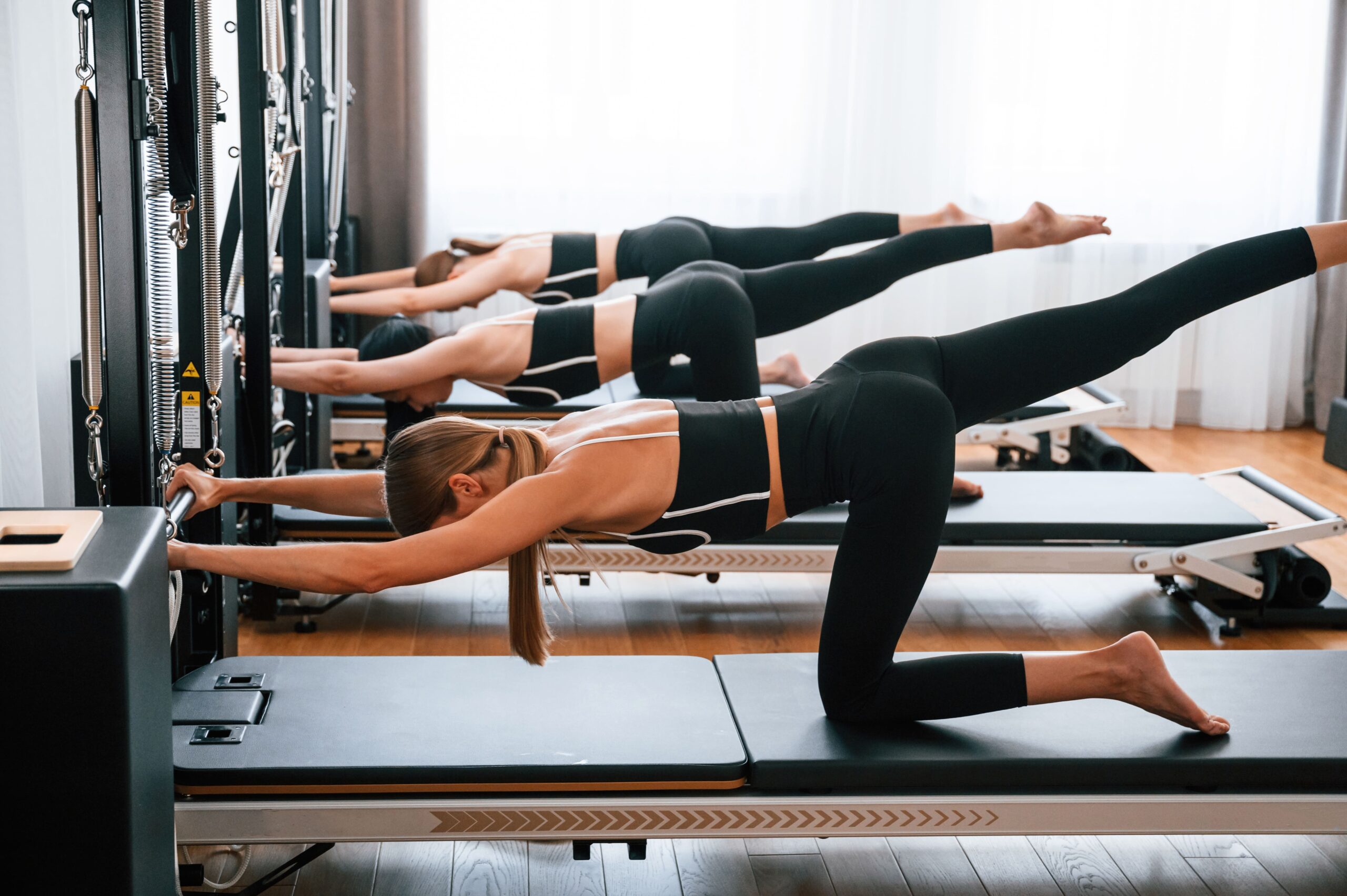 Many people linger in beginner classes out of comfort or fear of injury. While it’s essential to build a strong foundation, growth comes from stepping just outside that comfort zone. You’ll know you’re ready to level up when:
-
You can engage your core instinctively during movement
-
You maintain control throughout longer sequences
-
Your breath supports—not hinders—your movement
-
You’re craving a bit more challenge and intensity
Intermediate flows reward consistency. Stick with them for a few weeks and you’ll notice improved strength, posture, and coordination. Plus, they’re fun. The creativity and variety of movement keeps your brain as engaged as your body.
Modifications & Tips for Success
Even at the intermediate level, listening to your body is crucial. A few tips:
-
Move with control, not momentum
-
Use breath cues: Inhale to prepare, exhale on effort
-
Take breaks as needed, especially in planks or teaser variations
-
Engage the pelvic floor before lifting or transitioning
-
Focus on form more than reps
You may want to explore using small props like resistance bands or Pilates balls. These can add a new dimension without jumping into full equipment-based classes just yet. If you’re curious, browse our Pilates Equipment Videos for creative at-home options using simple gear. We also recommend watching this playlist: Intermediate Pilates
Integrating This Practice into Your Weekly Routine
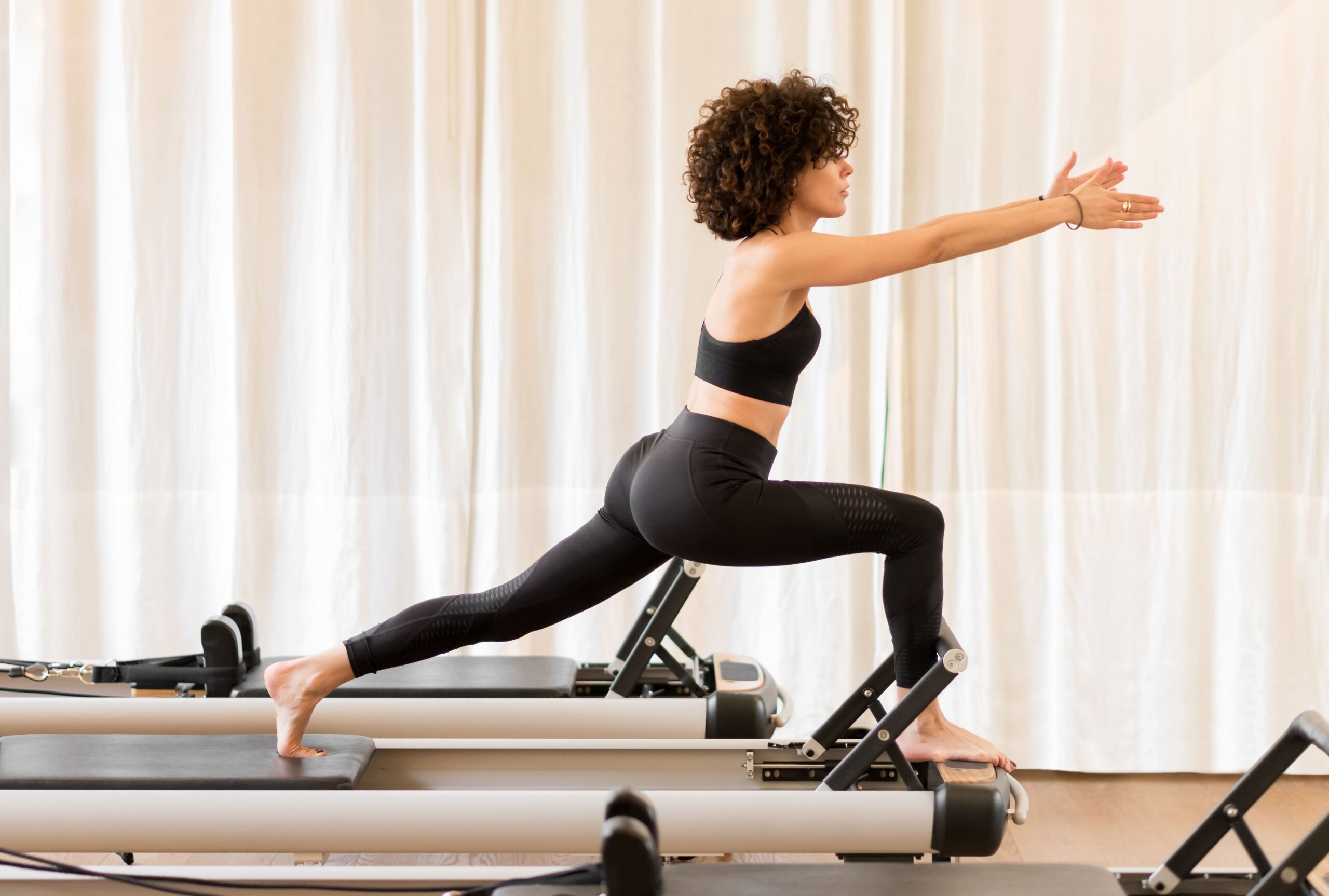 To see meaningful results—whether it’s strength, tone, or better movement—you’ll want to practice intermediate Pilates at least 3 times a week. Here’s a sample weekly flow:
-
Monday: Intermediate Full-Body
-
Wednesday: Lower Body Focus (glutes & hips)
-
Friday: Core & Upper Body
-
Sunday: Recovery or gentle mobility flow
You can always scale up or down depending on your goals, time, and energy. What matters most is consistency and quality over quantity.
FAQs
How long should an intermediate Pilates session last?
Typically, 25–45 minutes. Long enough to challenge the body, but still time-efficient. You can extend your session by adding a warm-up or extra mobility work.
Do I need a reformer or other equipment?
No. Mat-based intermediate Pilates is highly effective. However, adding tools like sliders, light weights, or bands can help intensify or diversify your practice later on.
Is intermediate Pilates enough to build strength?
Yes—especially for deep stabilizing muscles, which are often neglected in traditional strength training. You may not build bulk, but you’ll build serious functional strength.
Can I combine intermediate Pilates with other workouts?
Absolutely. It complements cardio, weight training, yoga, and even sports. Pilates improves form, control, and injury prevention across disciplines.
What if I can’t do all the moves?
That’s normal. Modify when needed. Over time, your strength and control will improve, and you’ll naturally progress into more complex sequences.
Intermediate Pilates is where things start to get exciting. You feel stronger, more capable, and more connected to your body than ever before. This full-body routine challenges every muscle while still honoring the breath, focus, and elegance that make Pilates so powerful.
You don’t need a fancy studio or equipment—just your mat, your breath, and the commitment to keep showing up. Let’s move forward.