In Pilates, strength and flexibility don’t live in separate worlds—they blend together through mindful movement. Two of the most foundational yet transformative elements in this practice are the hamstring stretch and spinal articulation. On their own, they each serve important physical functions, but when integrated together, they unlock a new level of fluidity, balance, and control in the body.
If your goal is to move better, reduce tightness, and build a more connected core, this combination is your starting point. In this article, we’ll explore why hamstring mobility and spinal articulation are essential, how to practice them effectively, and how they impact your overall Pilates performance—both on and off the mat.
Why the Hamstrings and Spine Matter in Pilates
Pilates is all about alignment and control. Both your hamstrings and your spine play critical roles in achieving that.
The Hamstrings
Located at the back of your thighs, the hamstrings help extend the hips and flex the knees. In Pilates, tight hamstrings are often responsible for compensations like:
-
Tucked pelvis during seated exercises
-
Overarching the back during forward folds
-
Limited movement in spinal articulation
When your hamstrings are tight, they limit how the pelvis can tilt, directly impacting how the spine can move—especially in exercises like Seated Roll Downs or Hamstring Stretch with Leg Circles.
The Spine
The spine is designed to move segmentally, meaning vertebra by vertebra. Pilates trains this awareness through spinal articulation—a gradual, controlled movement of the spine, often used in:
-
Roll Downs
-
Pelvic Curl (Bridge)
-
Cat-Cow
-
Rolling Like a Ball
When spinal mobility is lacking, we tend to move in large blocks rather than fluid chains, which can lead to strain and inefficient movement patterns.
The Link Between Hamstring Flexibility and Spinal Mobility
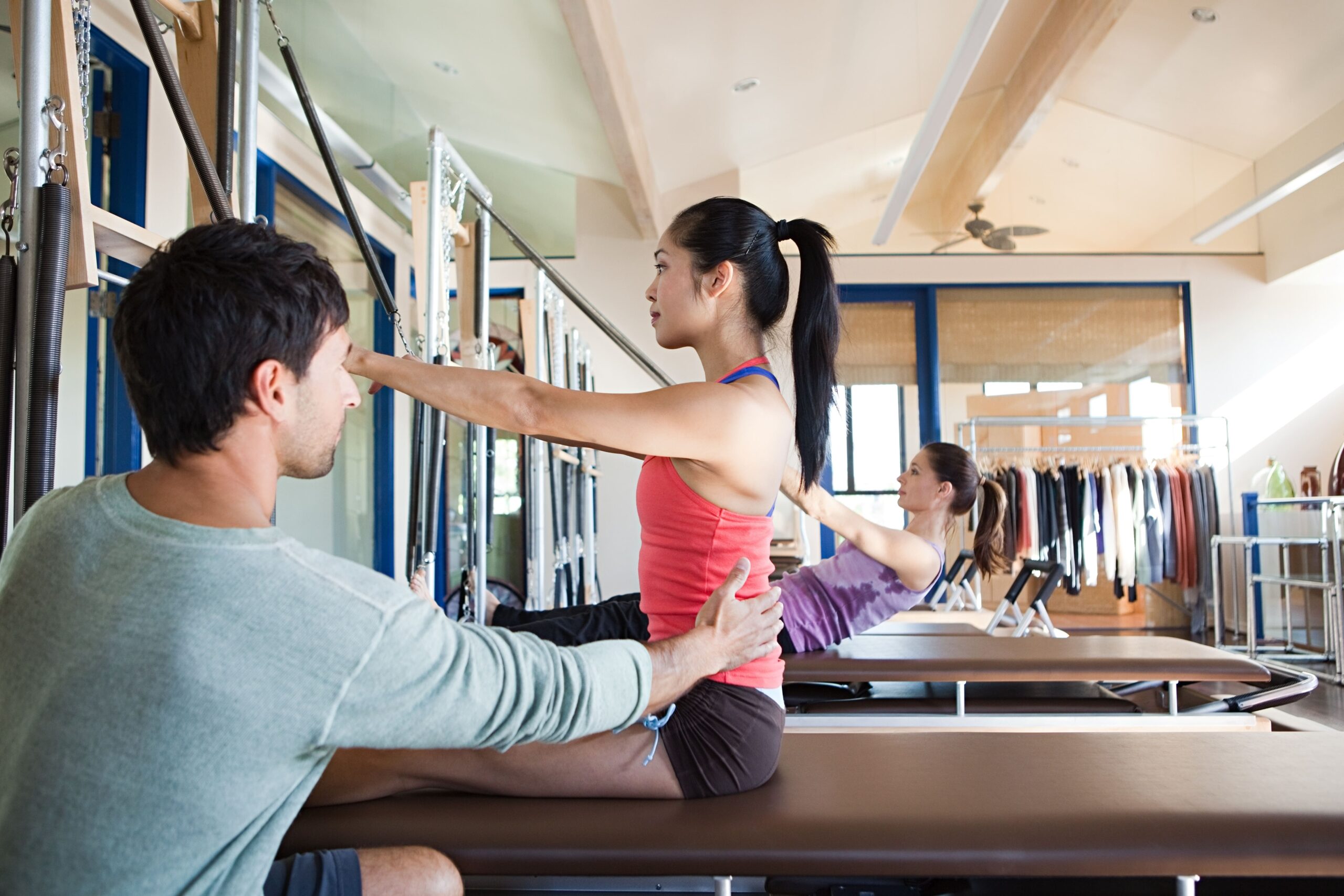 Here’s the key: your hamstrings connect to the pelvis, and the pelvis is the base of your spine.
If the hamstrings are too tight to allow the pelvis to tilt forward or backward, then your spine has to compensate—usually by rounding (flexion) or overarching (extension) elsewhere. This leads to poor articulation and potential discomfort in movements that demand both spinal and hip mobility.
Improving your hamstring flexibility frees the pelvis, which in turn allows for more natural, supported spinal motion.
Practicing the Hamstring Stretch in Pilates
There are many ways to stretch the hamstrings in Pilates, but the focus is always on control and alignment, not passive flexibility.
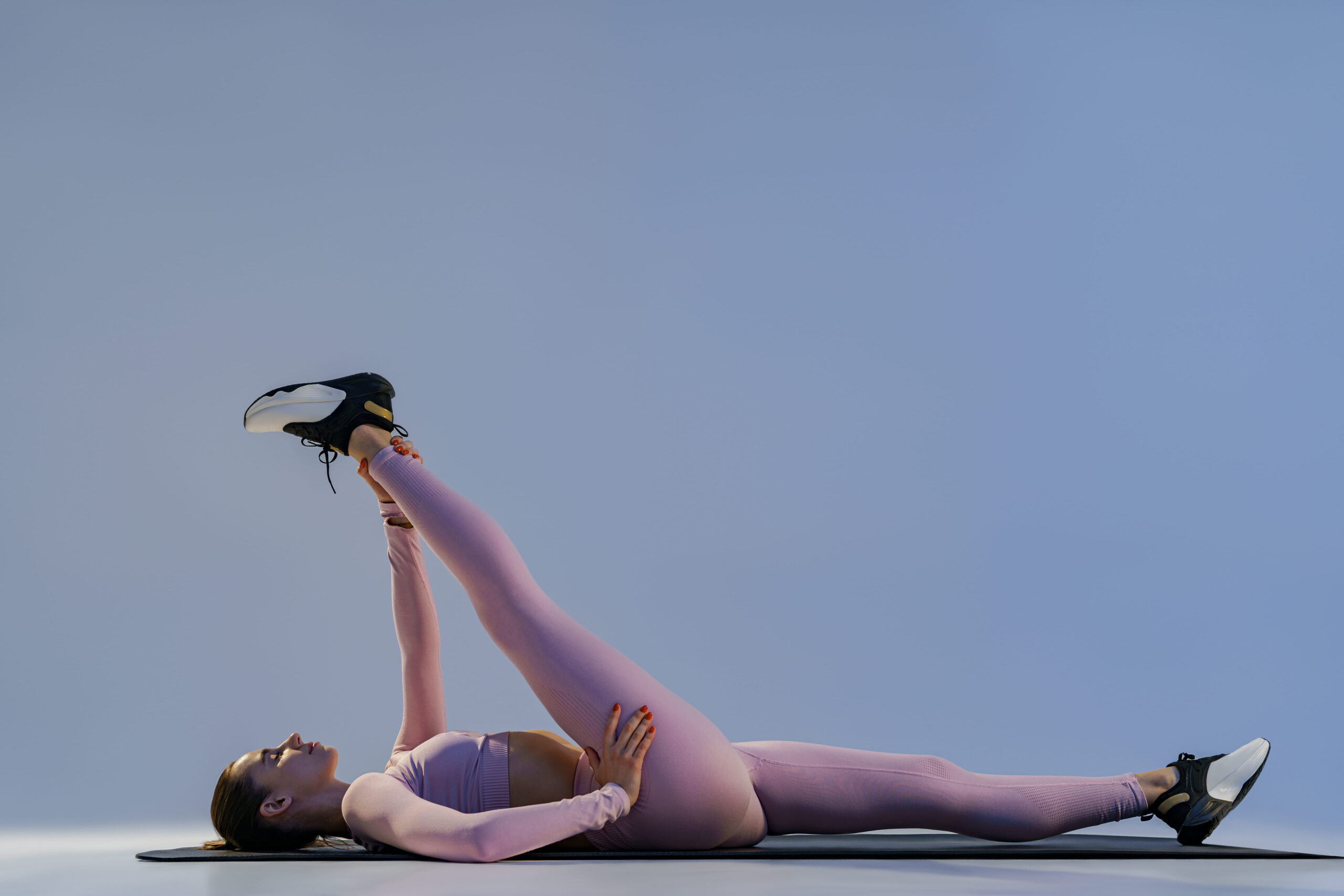
Classic Supine Hamstring Stretch
-
Lie on your back with both legs extended.
-
Bring one leg up toward the ceiling.
-
Hold behind the thigh or calf (not the knee).
-
Keep the opposite leg grounded and pelvis stable.
-
Inhale to lengthen; exhale to gently draw the leg closer.
Hamstring Stretch with Strap or Band
Adding a strap behind the foot can increase support and help you keep proper alignment, especially if you have limited flexibility.
Standing Roll Down (with Hamstring Emphasis)
-
Stand tall, feet hip-width apart.
-
Inhale to prepare.
-
Exhale as you articulate down through the spine, one vertebra at a time.
-
Pause at the bottom and gently stretch the hamstrings.
-
Inhale to prepare, then exhale to roll back up slowly.
This combines both hamstring release and spinal articulation in one movement.
Tip: For more guided progressions, you’ll find this stretch used often in floor-based routines under Flow Sequences, Floor Work or Mat Pilates Videos.
Understanding and Practicing Spinal Articulation
Spinal articulation refers to your ability to move each part of your spine separately. Think of it like a string of pearls—each vertebra moves in order, rather than in one solid block.
Beginner-Friendly Articulation Drills
Pelvic Curl (Bridge Roll)
-
Lie on your back, knees bent, feet flat.
-
Inhale to prepare.
-
Exhale as you tilt the pelvis, then slowly lift the spine one bone at a time until you’re in a bridge.
-
Inhale at the top.
-
Exhale and slowly roll down, starting from the upper spine, through the mid-back, and finally the pelvis.
This drill improves awareness and strengthens the deep core and glutes.
Cat-Cow Flow
From an all-fours position:
-
Inhale as you arch the spine (Cow)
-
Exhale as you round the spine (Cat)
-
Focus on leading from the pelvis up or the head down to encourage segmental motion
Seated Roll Down
Sit tall with legs bent and feet flat. Inhale, then exhale and roll down slowly, starting from the tailbone. Focus on controlling each segment. Return to seated the same way.
This move helps reinforce abdominal control while stretching the spine and hamstrings.
Combining the Two in Your Practice
 Integrating hamstring stretches and spinal articulation into a cohesive routine is a smart way to enhance your mobility, core engagement, and movement efficiency.
Here’s a mini sequence you can use:
-
Supine Hamstring Stretch (R/L) – 2 mins
-
Pelvic Curl – 6 reps
-
Seated Spine Stretch Forward – 1 min
-
Cat-Cow – 6 cycles
-
Standing Roll Down – 3 reps
-
Rolling Like a Ball – 6 reps
This sequence is especially powerful before or after longer Pilates flows. You’ll often see it featured in Pilates by Goal content focused on mobility or posture correction.
Tips for Progressing Safely
-
Use breath: Exhale during flexion or effort to activate deep core support.
-
Don’t force the stretch: Focus on consistent practice over time. Forcing the hamstrings can cause strain.
-
Check your pelvis: Neutral alignment ensures you’re targeting the right muscles.
-
Go slow: Especially in articulation, speed hides compensation.
- Make sure to check out our recommended video: Pilates Spine Stretch Exercise
When to Focus on These Movements
 These practices are ideal for:
-
Warming up before a mat session
-
Unwinding after long periods of sitting
-
Easing into movement after injury or stiffness
-
Improving posture and reducing lower back pain
They’re also featured heavily in Beginner Pilates Videos, because they teach body awareness and set the foundation for more complex sequences.
FAQs
How often should I stretch my hamstrings in Pilates?
3–4 times a week is ideal, especially if you sit for long periods. Daily stretching, even briefly, can maintain flexibility.
Why can’t I roll down smoothly through my spine?
This usually indicates tightness in the back muscles or hips, or a lack of abdominal control. Work on core strength and go slowly to train articulation.
Is it better to stretch hamstrings seated or lying down?
Both have benefits. Supine stretches offer more support and alignment control, while seated stretches integrate more spinal awareness.
What if I feel the stretch in my lower back instead of my legs?
You might be rounding your spine to compensate. Bend your knees slightly and lengthen through the spine as you stretch.
Can spinal articulation improve posture?
Yes. It enhances awareness of alignment and balance along the spine, leading to better upright posture and movement control.
Whether you’re brand new to Pilates or returning to the basics, spending time with hamstring stretches and spinal articulation is a rewarding investment in your mobility, posture, and core connection. These subtle but powerful practices set the stage for pain-free, graceful movement that extends far beyond your mat.