When you think of Pilates, you likely picture flowing movements and deep breathing—but make no mistake: Pilates can burn, especially when you’re working with a core burner or plank series. These challenging sequences are designed to target every layer of your abdominals, pushing your stability, control, and endurance to the next level.
This article breaks down the purpose and power of core-burning exercises and plank variations, showing how they work together to create a balanced, full-body experience that goes far beyond just building a six-pack. Whether you’re looking to up your mat routine or complement your reformer sessions, this is your go-to guide for smart, effective core training.
Why Core Burners Are Essential in Pilates
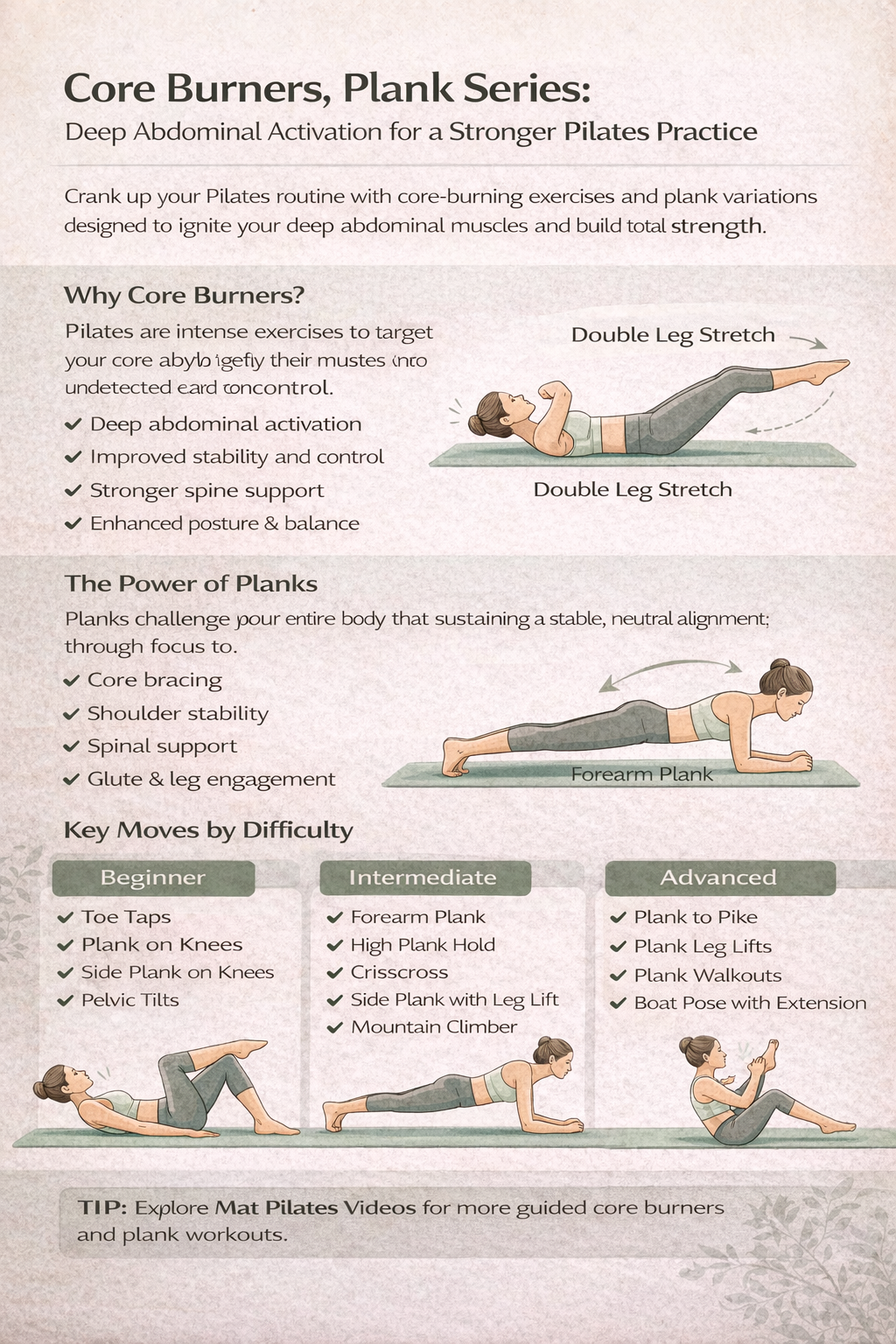 The core in Pilates isn’t just about your abs—it’s your entire center, often referred to as the “powerhouse”. This includes:
-
Transverse abdominis (deepest abdominal layer)
-
Obliques (internal and external)
-
Rectus abdominis (the six-pack muscle)
-
Multifidus and erector spinae (back stabilizers)
-
Pelvic floor
-
Diaphragm
When you work through core burner series, you’re training these muscles to work together to:
-
Stabilize the spine
-
Support movement
-
Improve posture
-
Protect against injury
The “burn” you feel is the result of sustained activation with controlled intensity—no crunches, no flailing, just precise, deep work that demands presence and precision.
The Role of Planks in Core Activation
Planks are foundational in Pilates and beyond. While they may seem static, they’re anything but. Holding or flowing through plank variations challenges your entire anterior chain—the muscles from the front of your body—as well as the shoulders, glutes, and legs.
Planks emphasize:
-
Core bracing
-
Shoulder stability
-
Pelvic alignment
-
Neutral spine control
They also teach you how to resist movement, which is just as important as initiating it.
Anatomy of a Core Burner + Plank Series
Here’s a look at how these sequences are structured and how they work together to keep your body engaged from head to toe.
🔹 Warm-Up and Core Primer
Before jumping into planks, you want your deep core awake and active.
Moves to Include:
-
Toe Taps
-
Dead Bug
-
Pelvic Tilts
-
Hundreds (modified if needed)
These exercises prepare the transverse abdominis, stabilize the pelvis, and connect breath to movement.
🔹 Core Burner Sequence (Supine + Seated Work)
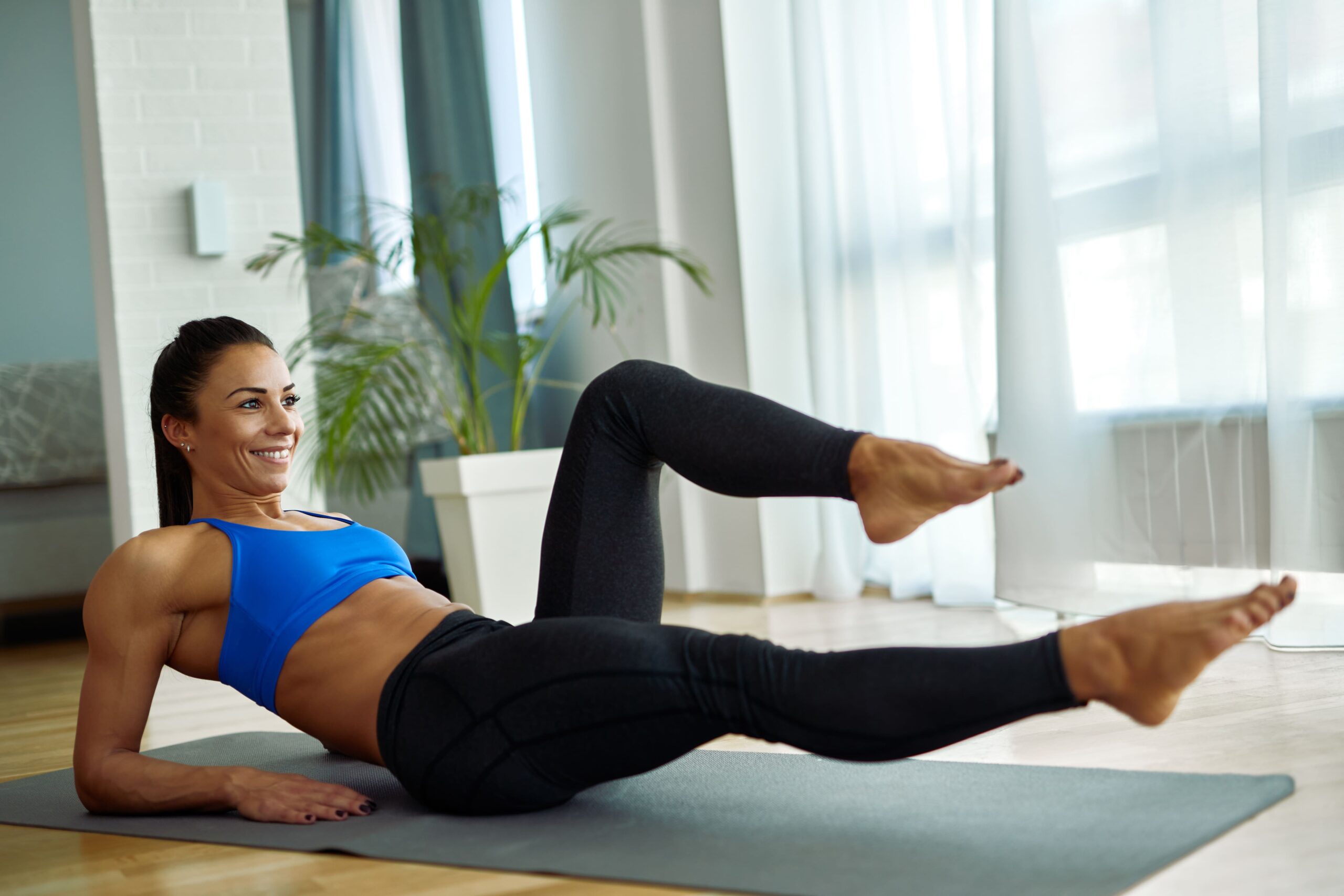
This phase builds sustained abdominal contraction with minimal rest. Think “deep burn, slow control.”
 Sample Core Burners:
-
Double Leg Stretch (with pulses)
-
Scissor Switch with Reach
-
Crisscross (focus on rotation from the waist, not the neck)
-
Seated Twist + Toe Tap
-
Boat Hold Variations (hold + pulse or extend legs)
You’ll often find these in Mat Pilates Videos focused on abdominal work or Pilates by Goal classes that target the midsection.
Tip: If you begin to lose form, reduce range of motion or keep feet down while maintaining core engagement.
🔹 Plank Series (Kneeling or Full)
Once the core is fired up, we take it to the next level by challenging stability and integration.
Plank Variations to Explore:
-
High Plank Hold
Shoulders over wrists, heels driving back, belly drawn in. Start here to build endurance. -
Forearm Plank
Reduces wrist pressure and emphasizes deep core bracing. -
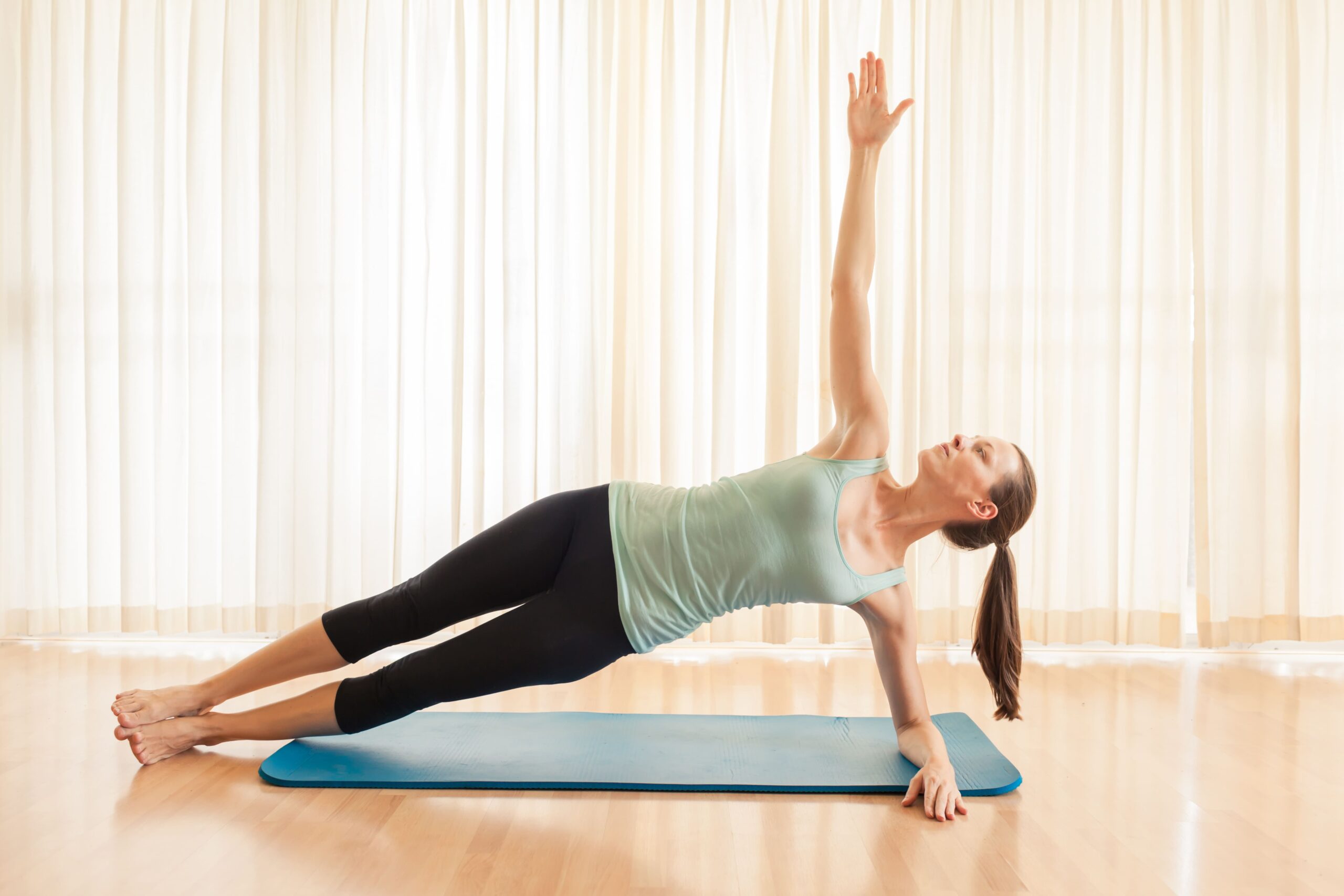
Side Plank (Kneeling or Full)
Targets obliques, shoulder stabilizers, and glutes. -
Leg Lifts from Plank
Single leg lifts add instability and challenge the core without breaking plank form. -
Plank Walkouts or Walk-ins
Adds dynamic movement while keeping the spine stable. -
Plank to Pike
Involves shifting hips up and down to transition from plank to an inverted “V” shape. -
Mountain Climber (Slow)
Brings one knee in at a time—slowly—to keep tension on the abdominals.
🔹 Combine Into a Flow
You can easily create a full-body core burner by alternating between plank and mat-based core work.
Example Flow (20 min):
-
Toe Taps (1 min)
-
Crisscross (30 sec)
-
High Plank Hold (30 sec)
-
Double Leg Stretch (1 min)
-
Side Plank (Right/Left – 30 sec each)
-
Scissors with Reach (1 min)
-
Forearm Plank with Leg Lifts (1 min)
-
Child’s Pose Recovery (30 sec)
This keeps intensity up without overloading any one area, and includes moments of dynamic movement and isometric hold.
Key Technique Tips
-
 Neutral spine is non-negotiable in planks. Avoid overarching or tucking the pelvis too much.
 -
Engage the glutes and inner thighs—they help stabilize your base.
-
Elbows soft, not locked. In high plank, press through your hands and widen through the upper back.
-
Avoid breath-holding. Exhale on effort—especially during transitions and leg lifts.
For help reinforcing these habits, explore articles like Overarching, Breath Holding, which guide you through how to maintain safe form during intense sequences.
Modifications & Progressions
Whether you’re new or advanced, this style of training can meet you where you are.
Modify:
-
Perform planks on knees
-
Reduce time or number of reps
-
Take breaks in Child’s Pose
-
Use a wall for incline plank options
Progress:
-
Add pulses to your plank holds
-
Hold for time under tension (30–60 seconds)
-
Add alternating knee taps or shoulder taps
-
Flow through side planks with leg lifts
These sequences are often used in Pilates Fusion Workouts as well, where they’re blended with yoga flows or strength-based movement to boost challenge and variety. We also recommend checking out this video: Plank Series on The Reformer
Benefits of Core Burners and Plank Series
-
Deep abdominal activation beyond surface-level crunches
-
Improved posture and spinal support
-
Better balance and body control
-
Increased shoulder and wrist stability
-
Efficient use of time—these workouts deliver high return in short bursts
They’re especially valuable for those who:
-
Sit at a desk all day and need postural correction
-
Want to build a stronger center without equipment
-
Are transitioning from Beginner Pilates to intermediate/advanced levels
-
Love short, high-intensity mat workouts
FAQs
Is it normal for my arms to burn during plank exercises?
Yes. Your shoulders, arms, and core are working together. Try shifting the weight slightly back or modifying with forearm planks.
Can I do these workouts daily?
It’s best to give your core a day to rest in between intense sessions. 3–4 times a week is a great starting point.
How long should I hold a plank?
Start with 20–30 seconds and build up to 60–90 seconds with proper form. Quality over quantity!
What if I feel it in my lower back?
That usually means the hips are sagging or the core isn’t fully engaged. Modify to knees or reduce duration.
Are core burners effective for weight loss?
They help tone and strengthen the core, which supports better posture and movement efficiency. For weight loss, pair with cardio and healthy eating.
Core burners and plank sequences are an energizing, focused way to elevate your Pilates routine. They don’t just work your abs—they teach your body to move with intention, resilience, and grace. Whether you’re aiming to refine your form, feel stronger in your daily movement, or simply chase that satisfying core burn, this series is your mat-based powerhouse.