Think you need an hour to get in a good Pilates workout? Think again.
For beginners, even 10 minutes of intentional movement can lead to stronger abs, better posture, and a calmer mind. This short Pilates routine is designed to be efficient and accessible — no fancy equipment, no advanced moves, just pure, focused core activation and full-body connection.
Whether you’re squeezed for time or want a low-pressure way to begin your Pilates journey, this guide is the perfect place to start (See other: 10 Minute Pilates Workout).
Why 10 Minutes of Pilates Is Enough (For Now)
 Time shouldn’t be a barrier to building a consistent practice. In fact, the original Pilates method was built around frequent, focused movement rather than long, exhausting workouts.
Here’s what just 10 minutes of beginner Pilates can offer:
- Improved spinal alignment
- Gentle activation of your core muscles
- Increased body awareness
- Better breath control
- Stress relief and improved focus
Done consistently, short sessions build lasting strength — especially for those new to Pilates or returning after a break.
What You’ll Need
Minimal setup means minimal resistance to starting. Here’s all you need:
- A Pilates or yoga mat (or a folded blanket if you’re on carpet)
- Comfortable clothes (form-fitting is ideal for monitoring alignment)
- A quiet space (optional, but helpful)
The 10-Minute Beginner Pilates Routine (Step-by-Step)
This routine is structured for clarity, flow, and balance. Each exercise is simple but powerful when performed with focus.
Minute 1: Breath & Pelvic Tilt
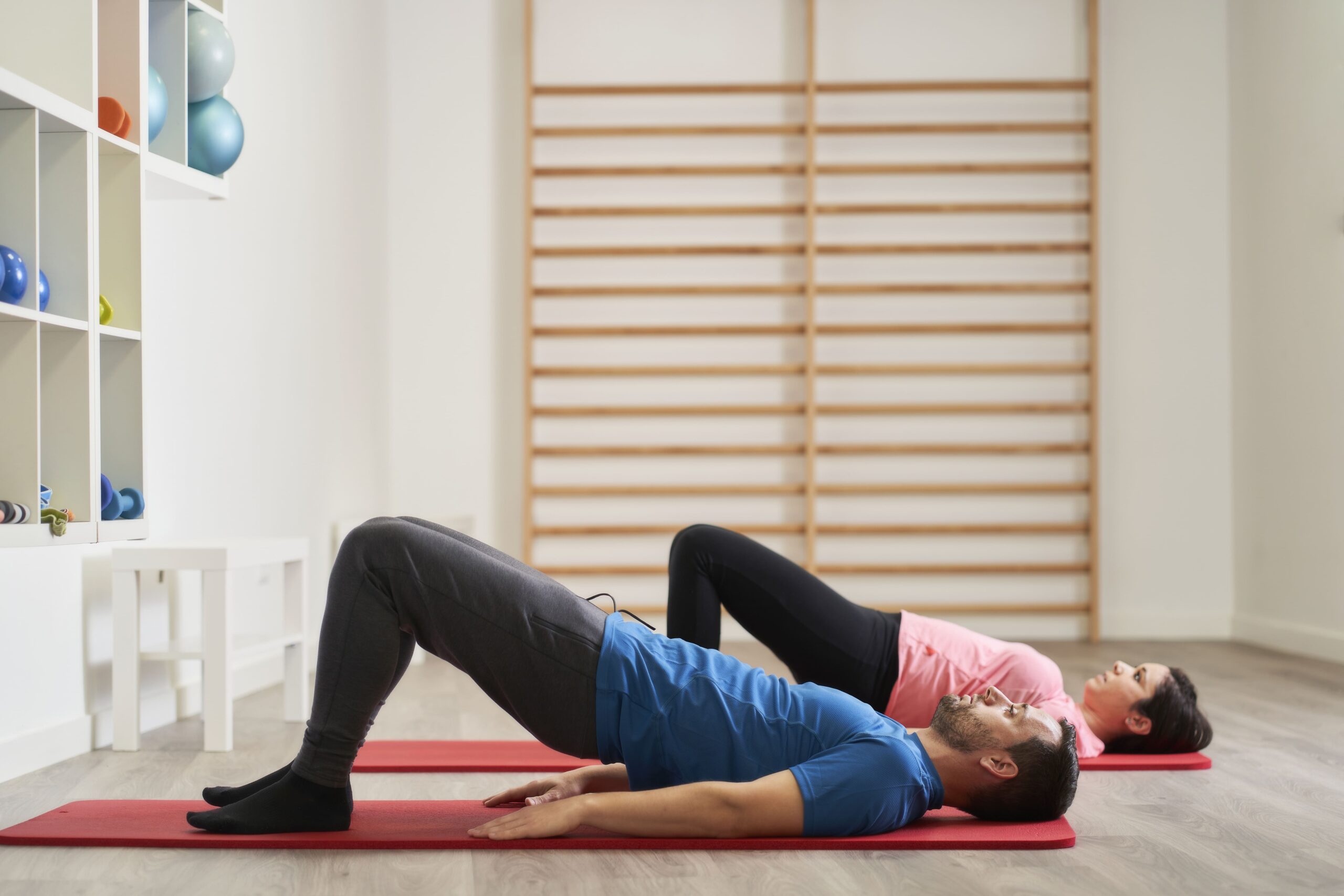 Focus: Waking up the core and connecting breath with movement
- Lie on your back, knees bent, feet flat on the floor
- Inhale deeply through the nose
- As you exhale, gently tilt your pelvis to flatten your back into the mat
- Inhale to return to neutral
- Repeat slowly for 1 minute
💡 Tip: This is the foundation of spinal control — move with intention, not momentum.
Minute 2: Toe Taps
Focus: Lower core activation
- From your back, bring both knees to tabletop
- Inhale
- Exhale and lower one toe to tap the mat, then return
- Alternate legs for 1 minute
💡 Tip: If your lower back arches, don’t lower the foot as far.
Minute 3: Single-Leg Stretch
Focus: Deep abdominals, coordination
- Curl head, neck, and shoulders up
- Pull one knee into your chest, extend the other leg at 45°
- Switch legs slowly, inhaling and exhaling with each change
💡 Tip: Keep the belly pulled in and ribs tucked.
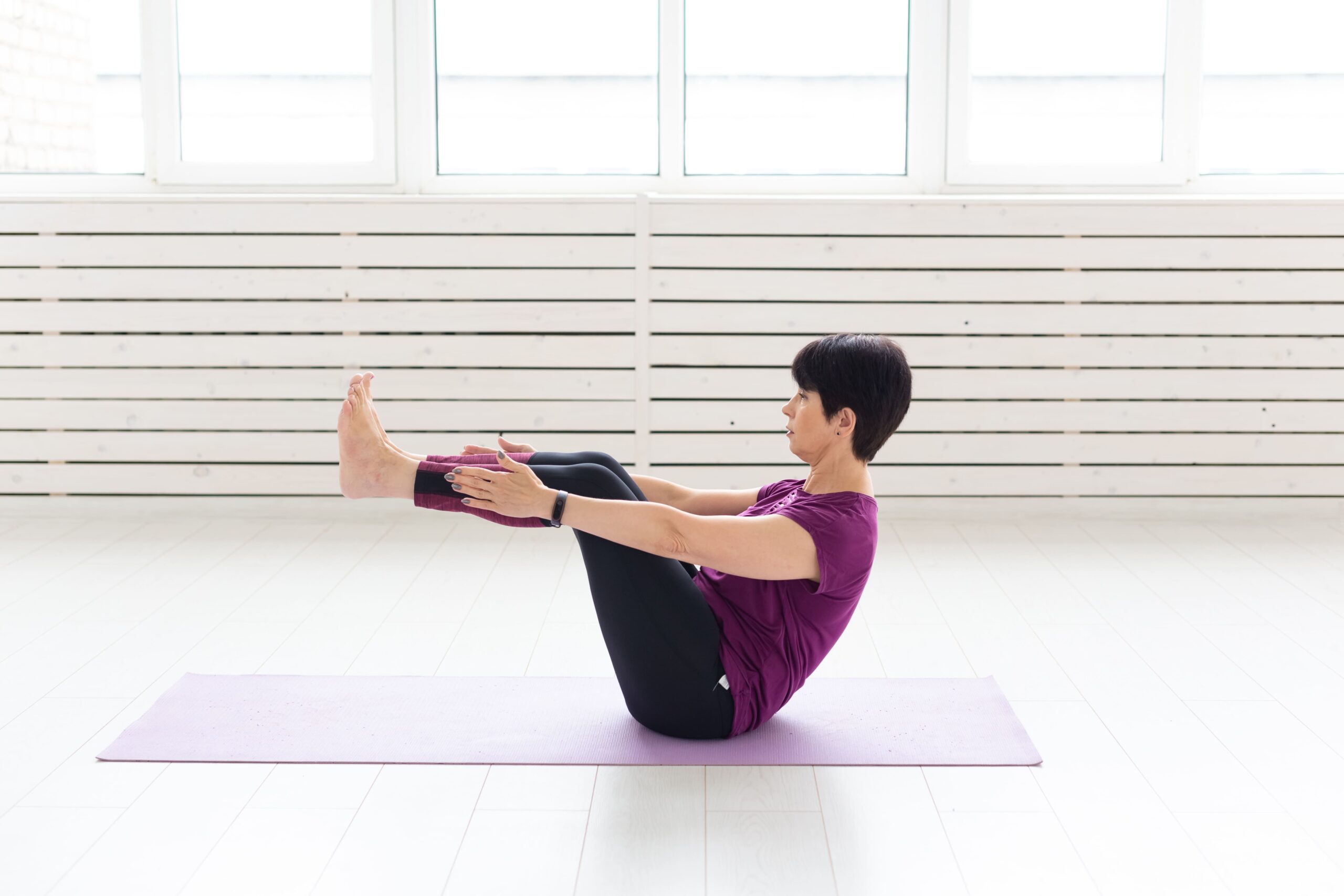
Minute 4: Spine Stretch Forward
Focus: Spinal mobility, hamstring release
- Sit tall with legs extended and feet flexed
- Inhale
- Exhale as you round forward, reaching arms toward toes
- Inhale to return to upright
💡 Tip: Imagine rounding over a beach ball instead of trying to touch your toes.
Minute 5: Pelvic Curl (Bridge)
Focus: Glutes, hamstrings, spinal articulation
- Lie on your back with knees bent
- Inhale to prepare
- Exhale, tilt the pelvis and roll the spine up into a bridge
- Inhale at the top, exhale to roll down slowly
💡 Tip: Keep your feet grounded and avoid arching the back.
Minute 6: Leg Circles (Right Leg)
Focus: Core stability, hip mobility
- Extend your right leg toward the ceiling, left leg bent
- Circle the leg slowly clockwise 5 times, then counter-clockwise 5 times
- Keep hips still
💡 Tip: Make small circles — it’s about control, not size.
Minute 7: Leg Circles (Left Leg)
Repeat as above, switching legs.
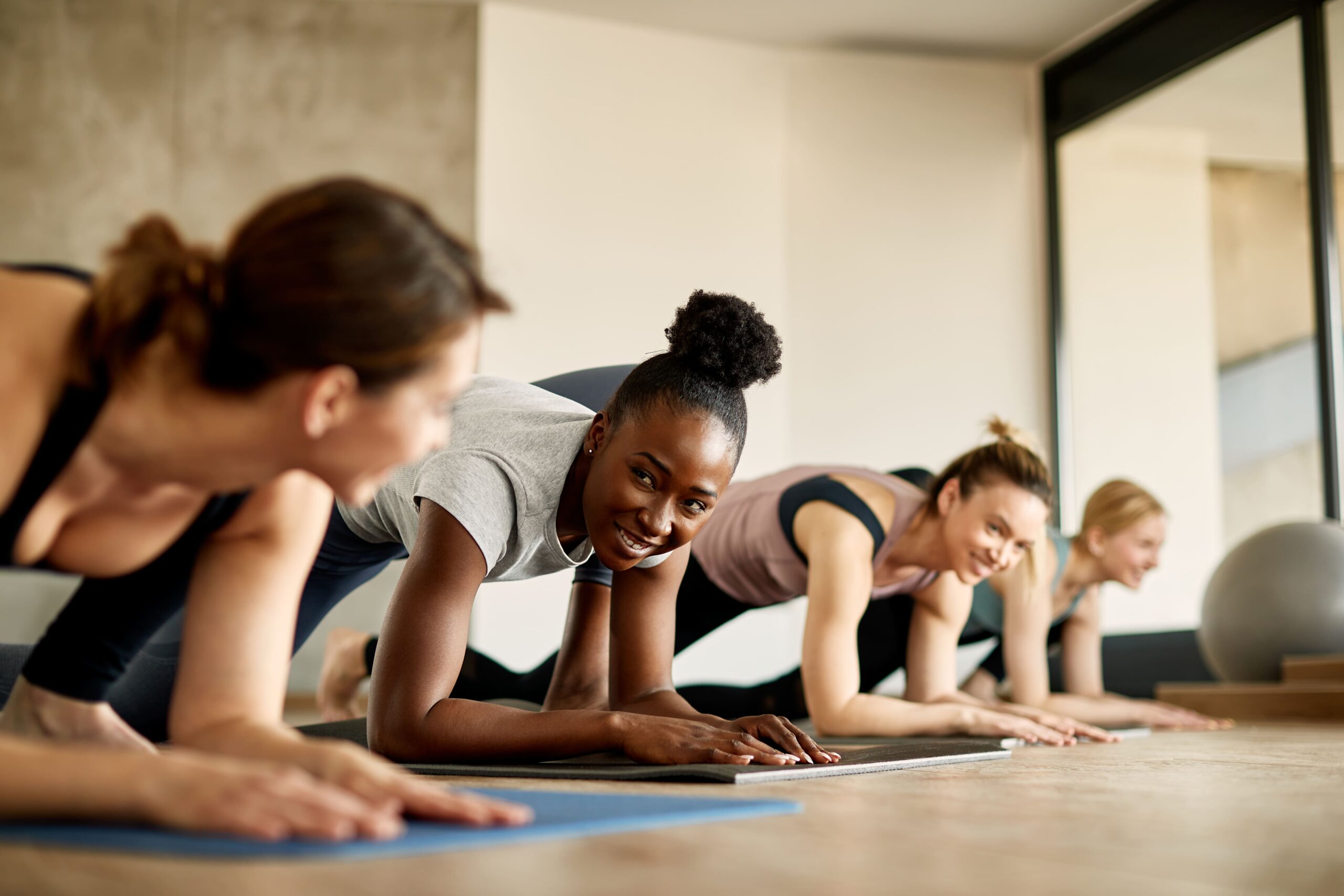 Minute 8: Plank Prep (Forearm or Hands)
Focus: Total core tension
- Come onto forearms and knees (or toes if you’re ready)
- Engage your abs, draw belly up and in
- Hold for 30 seconds, rest, then repeat for another 30 seconds
💡 Tip: Keep a long, straight line from head to hips.
Minute 9: Cat-Cow Stretch
Focus: Spinal movement, breath awareness
- On all fours, inhale to arch the back (cow)
- Exhale to round the spine (cat)
- Repeat slowly for 1 minute
💡 Tip: Coordinate the breath with the movement and release any tension in the spine.
Minute 10: Seated Forward Fold & Breathing
Focus: Cooldown, calming breath
- Sit tall with legs extended
- Gently fold forward and hold
- Return to upright and close with 3 deep breaths
💡 Tip: Don’t force the stretch — let gravity do the work.
Weekly Schedule Example
Here’s how to incorporate this 10-minute routine into your week for real progress:
| Day | Routine |
| Monday | 10-Minute Beginner Routine |
| Tuesday | Rest or light stretching |
| Wednesday | Repeat Routine |
| Thursday | Add 5-minute walk or yoga |
| Friday | 10-Minute Routine + Core Focus |
| Saturday | Optional repeat or rest |
| Sunday | Breathing & mobility only |
Make It Your Own
As you get more confident with these movements, you can:
- Repeat the full sequence twice (for 20 minutes)
- Swap in more challenging moves from your Pilates practice
- Use props like a Pilates ring or small ball for added resistance
- Film yourself to track posture and progress
Common Mistakes in Short Routines
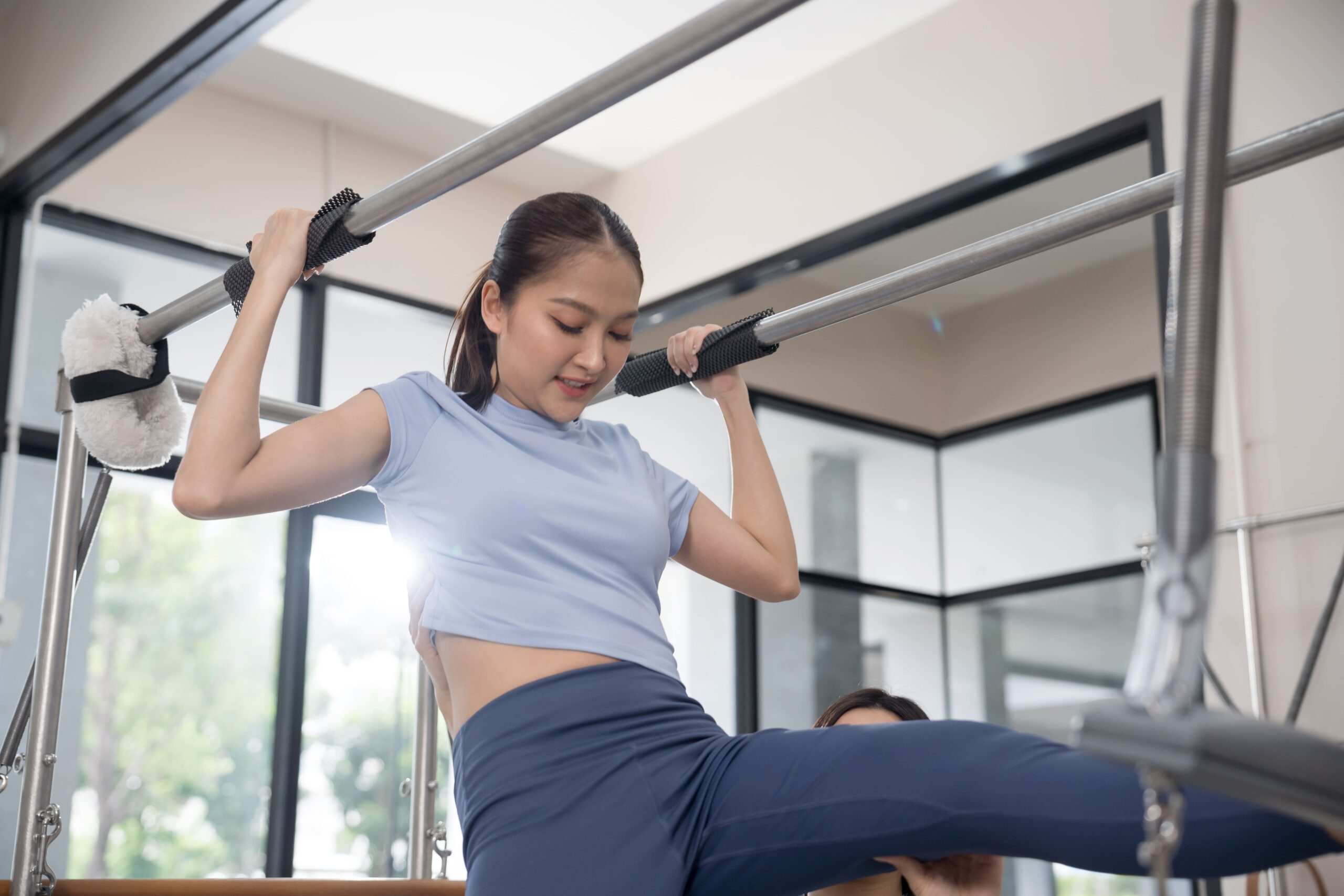 ❌ Rushing the Moves
This isn’t a race. Each motion should be deliberate and controlled.
❌ Neglecting the Breath
Your breath is part of the exercise — not a side task. Inhale to prepare, exhale to move.
❌ Skipping Alignment
Even in 10 minutes, posture matters. Reset and realign as often as needed.
FAQs: 10-Minute Beginner Routine
- Is 10 minutes really enough to see results?
Yes — especially for beginners. Consistent, focused movement builds core strength and body awareness over time.
- Can I do this routine every day?
Absolutely. As long as your body feels good and you’re recovering well, daily practice is safe and beneficial.
- What if I can’t do one of the exercises?
Modify it! For example, keep your head down during abdominal exercises or reduce the range of motion in leg circles.
- Should I warm up before this routine?
The first few movements act as a built-in warm-up. Just take your time easing into the session.
- Can I add cardio to this routine?
Yes! Try walking, cycling, or gentle dance before or after to boost heart health and energy.
This 10-minute beginner Pilates routine proves that consistency trumps complexity. With just a mat, some space, and a commitment to move with intention, you’ll start seeing subtle but powerful shifts in your body — increased strength, better posture, and a more centered sense of self.
You don’t need more time — just the right focus.