As Pilates practitioners progress on the reformer, the exercises become less about isolated strength and more about integration, control, and fluid transitions. Few movements embody this evolution better than Tendon Stretch and Snake & Twist. These advanced reformer exercises challenge not only muscular strength, but also balance, coordination, spinal mobility, and mental focus.
While they are often grouped together in higher-level reformer sequences, Tendon Stretch and Snake & Twist serve very different purposes. One builds explosive yet controlled power through the legs and core, while the other explores rotation, lateral strength, and spinal articulation in a deeply expressive way. Understanding their mechanics and intention is essential for performing them safely and effectively.
This article breaks down each exercise in depth, explains how they fit into the reformer system, and shows how they contribute to a well-rounded, advanced Pilates practice.
Understanding Where These Exercises Fit in Reformer Pilates
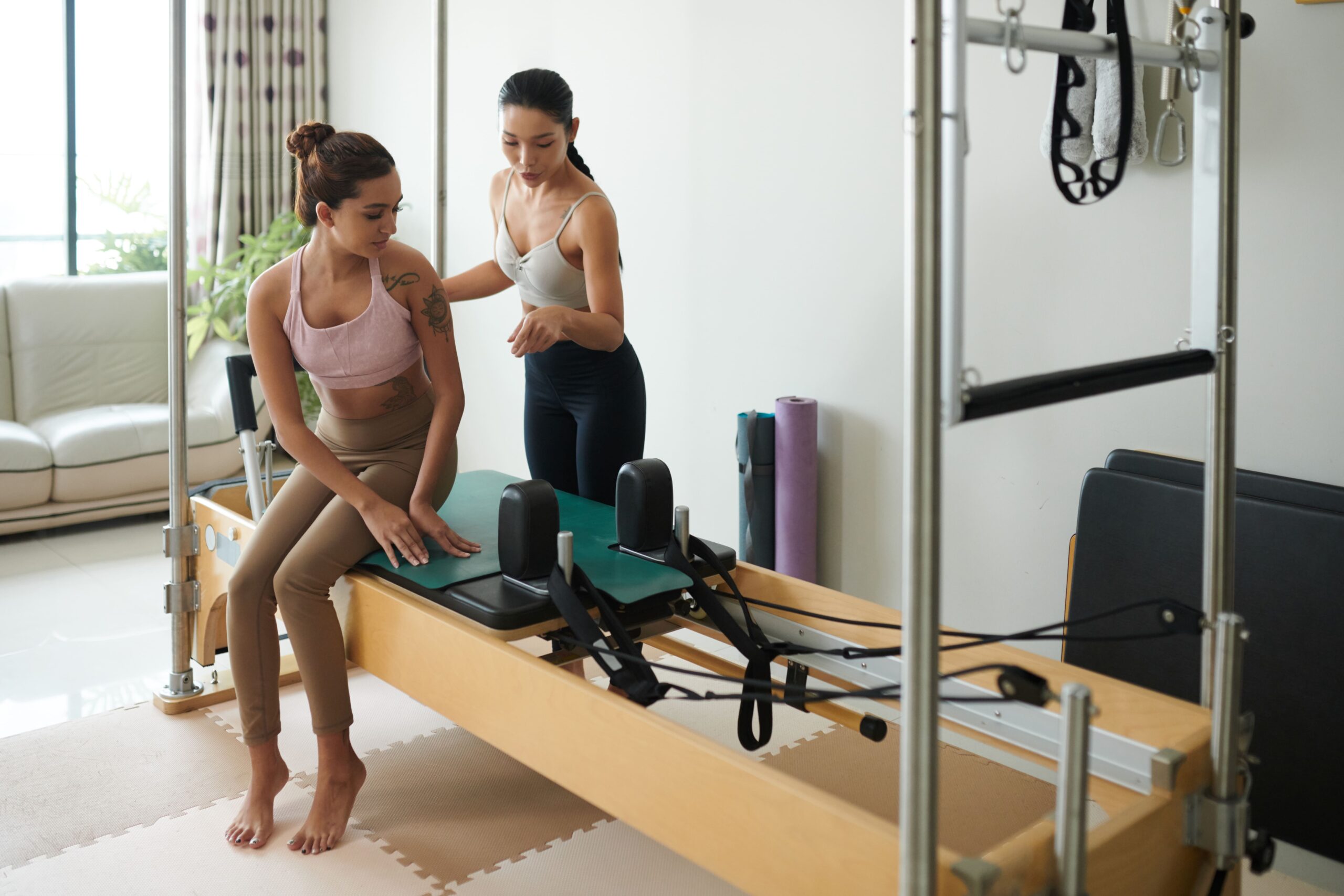 Tendon Stretch and Snake & Twist are generally considered advanced reformer exercises. They are typically introduced only after a practitioner has developed:
-
Strong plank mechanics
-
Consistent shoulder blade stabilization
-
Deep core control under load
-
Confidence moving the carriage with precision
-
Familiarity with exercises like Long Stretch, Elephant, and Up Stretch
These movements often appear in higher-level Reformer Pilates Videos or progression-based programs where strength, balance, and flow are emphasized together rather than separately.
They are also excellent examples of how Pilates uses the reformer not just as resistance, but as a tool for feedback. The moving carriage instantly reveals imbalances, hesitation, or lack of control.
Tendon Stretch: Strength, Balance, and Dynamic Control
What Is Tendon Stretch?
Tendon Stretch is a powerful reformer exercise performed standing on the carriage with the heels lifted and hands placed on the footbar. Despite the name, it is not a passive stretch. Instead, it is a dynamic strength exercise that demands intense engagement of the calves, hamstrings, glutes, core, and shoulders.
The movement involves pressing the carriage out and pulling it back in while maintaining balance on the balls of the feet and a lifted, controlled torso.
Setup for Tendon Stretch
-
Springs: Light to moderate (commonly 1 red or 1 red + 1 blue, depending on the reformer and practitioner strength)
-
Footbar: Up
-
Position: Standing on the carriage, feet parallel or slightly turned out, heels lifted
-
Hands: Firmly on the footbar, arms straight
-
Spine: Long with a slight posterior tilt to support the lower back
The starting position alone is demanding, requiring strong ankle stability and core engagement before any movement begins.
How Tendon Stretch Is Performed
-
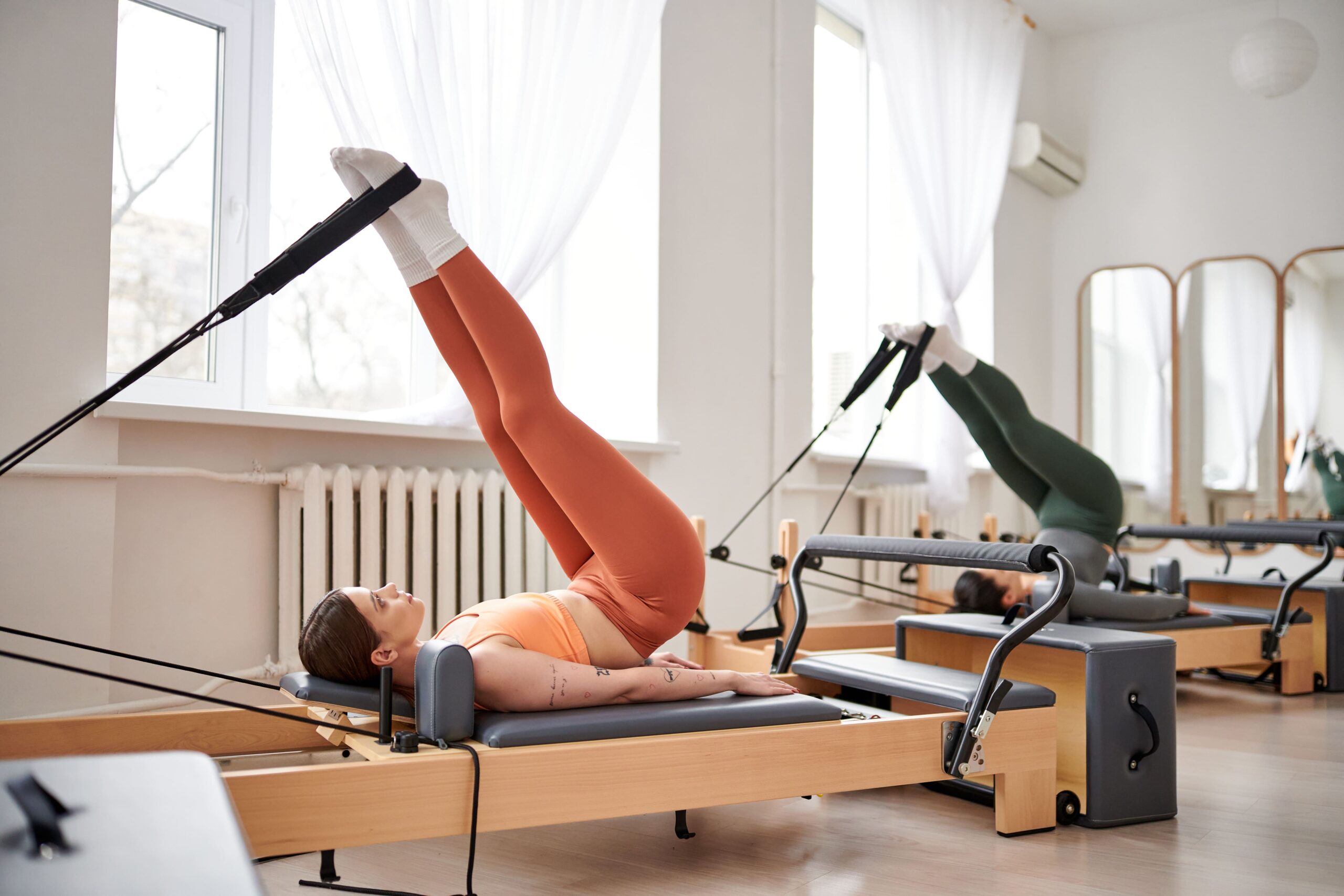 Begin with the carriage pulled all the way in, heels lifted, hips slightly forward over the feet.
 -
Inhale to prepare, lifting through the waist and stabilizing the shoulders.
-
Exhale as you press the carriage back by extending through the ankles, knees, and hips.
-
Inhale briefly at the end range without collapsing or sinking.
-
Exhale strongly to pull the carriage back in using the abdominals and posterior chain, not momentum.
The movement is rhythmic but controlled, often performed for 6–10 repetitions.
Key Muscles Worked
-
Calves and Achilles tendon
-
Hamstrings and glutes
-
Deep abdominals
-
Shoulder stabilizers
-
Intrinsic foot muscles
Tendon Stretch is frequently included in Pilates by Goal programming that focuses on lower-body power, balance, and athletic control.
Common Mistakes in Tendon Stretch
-
Dropping the heels and losing ankle engagement
-
Letting the shoulders collapse toward the ears
-
Overusing momentum instead of control
-
Allowing the lower back to arch excessively
-
Looking down and losing spinal alignment
Because of its intensity, Tendon Stretch is often practiced after exercises like Long Stretch and Elephant, once the body is fully prepared.
Snake & Twist: Rotation, Strength, and Flow
What Are Snake and Twist?
 Snake and Twist are two closely related reformer exercises that are often taught together. They involve side plank positioning combined with spinal rotation, creating a complex, flowing movement that challenges the entire body.
While Snake emphasizes lateral strength and spinal extension, Twist adds a rotational component that increases difficulty and coordination demands.
These exercises are as much about grace and control as they are about strength.
Setup for Snake & Twist
-
Springs: Light (typically 1 red or even lighter depending on experience)
-
Footbar: Up
-
Position: Side-facing plank with one foot against the shoulder block and the other stacked in front or behind
-
Hands: One hand on the footbar, the other free or placed behind the head depending on variation
The setup itself requires confidence, balance, and shoulder stability before movement begins.
How Snake Is Performed
-
Begin in a side plank position with the carriage pulled in.
-
Inhale to prepare, lifting through the waist and stabilizing the shoulder.
-
Exhale as you press the carriage out while allowing the spine to extend slightly and the chest to open.
-
Inhale to maintain control at the end range.
-
Exhale to pull the carriage back in, returning to the starting position with precision.
Snake focuses on length, lift, and lateral control, encouraging the body to move as one connected unit.
How Twist Builds on Snake
Twist adds spinal rotation to the movement:
-
As the carriage presses out, the torso rotates toward the ceiling.
-
As the carriage returns, the body untwists back to neutral.
This added rotation increases demand on the obliques, spinal stabilizers, and shoulder girdle.
Snake & Twist are commonly highlighted in advanced Reformer Pilates Videos as hallmark exercises that demonstrate mastery of the system.
Benefits of Snake & Twist
-
Improves spinal rotation and mobility
-
Builds deep oblique and lateral chain strength
-
Enhances shoulder stability under load
-
Develops coordination between upper and lower body
-
Encourages fluid transitions and breath control
These movements are often paired with flowing sequences rather than isolated repetitions, reinforcing Pilates’ emphasis on continuous movement.
Comparing Tendon Stretch and Snake & Twist
Although they are both advanced exercises, their goals are quite different.
Tendon Stretch emphasizes vertical power, ankle strength, and core control in a forward-facing position. Snake & Twist emphasize lateral strength, rotation, and expressive movement through space.
Together, they create balance in an advanced reformer practice by training the body in multiple planes of motion.
How These Exercises Fit Into a Reformer Session
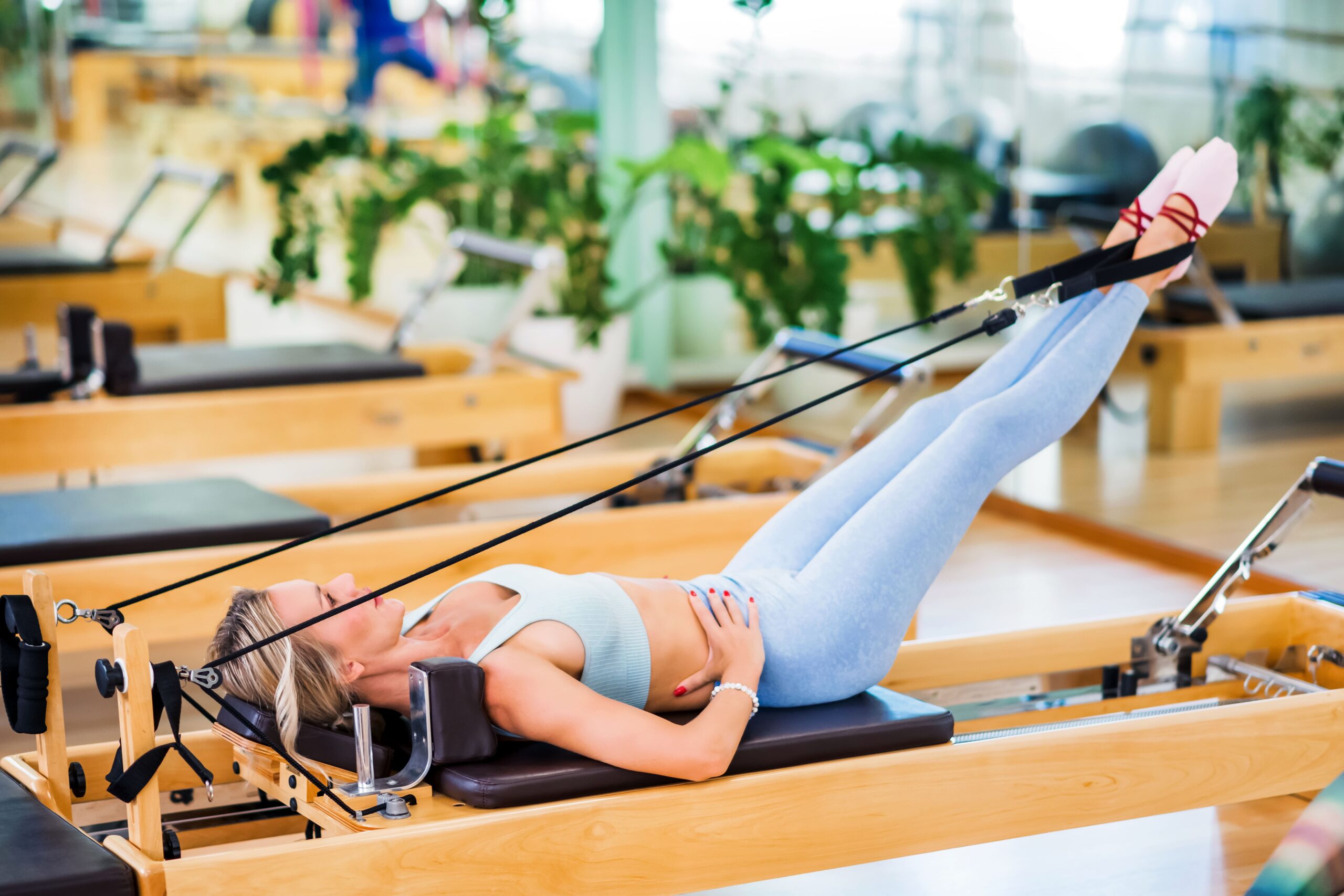 A typical advanced reformer sequence might include:
-
Footwork and bridging to warm up
-
Long Stretch and Elephant to prepare shoulders and hips
-
Tendon Stretch to build dynamic power
-
Snake & Twist to explore rotation and lateral control
-
Short Spine or Mermaid to decompress and restore mobility
This type of sequencing is often seen in Pilates Equipment Videos designed for experienced practitioners who are comfortable adjusting springs and transitioning efficiently.
Safety and Progression Considerations
Because these exercises place high demands on balance and joint stability, they are not appropriate for everyone.
They should be approached with caution by individuals who have:
-
Wrist or shoulder injuries
-
Achilles tendon issues
-
Significant balance limitations
-
Lower back instability
Modifications, lighter springs, or preparatory exercises are strongly recommended before attempting the full versions.
Many instructors introduce partial versions of Snake or supported Tendon Stretch variations in Beginner Pilates Videos before progressing to the full expressions. Make sure to watch this playlist for more: Advanced Reformer
Mental Focus and Breath in Advanced Reformer Work
One of the defining features of Tendon Stretch and Snake & Twist is the level of mental presence they require. These are not exercises that can be rushed or performed on autopilot.
Breath plays a crucial role:
-
Exhalation supports effort and control
-
Inhalation creates lift and space
-
Consistent breathing prevents tension and imbalance
This mind-body connection is what transforms these movements from physically demanding drills into expressive Pilates exercises.
FAQs
Are Tendon Stretch and Snake & Twist only for advanced practitioners?
They are considered advanced, but elements of each can be introduced earlier with modifications and close supervision.
Why is Tendon Stretch so difficult even with light springs?
Because it challenges balance, ankle strength, and core control simultaneously. Light springs require more stabilization, not less.
What should I feel most during Snake & Twist?
You should feel deep engagement in the obliques, glutes, and shoulder stabilizers, along with a sense of length through the spine.
How often should these exercises be practiced?
Once or twice a week is sufficient. They are intense and require recovery time, especially for the calves and shoulders.
Do these exercises improve performance in other Pilates movements?
Yes. They enhance overall control, confidence on the reformer, and the ability to manage complex transitions and multi-planar movement.
Tendon Stretch and Snake & Twist represent the artistry of advanced Reformer Pilates. They demand strength without rigidity, mobility without collapse, and focus without tension. When approached with patience and respect for the process, these exercises elevate not only physical ability, but also the quality and intelligence of movement across the entire Pilates practice.