In Pilates, the focus often revolves around the core, but there’s a silent powerhouse working just as hard—your shoulder blades. Also known as the scapulae, these floating bones play a critical role in posture, upper body strength, and fluid movement. When shoulder blade stabilization is overlooked, it can lead to neck tension, weak push movements, and even imbalances throughout the spine and hips.
This article dives deep into the importance of shoulder blade stabilization in Pilates, how to identify weaknesses, and the best exercises to develop strength, control, and awareness in this vital region of the body.
Why Shoulder Blade Stabilization Matters
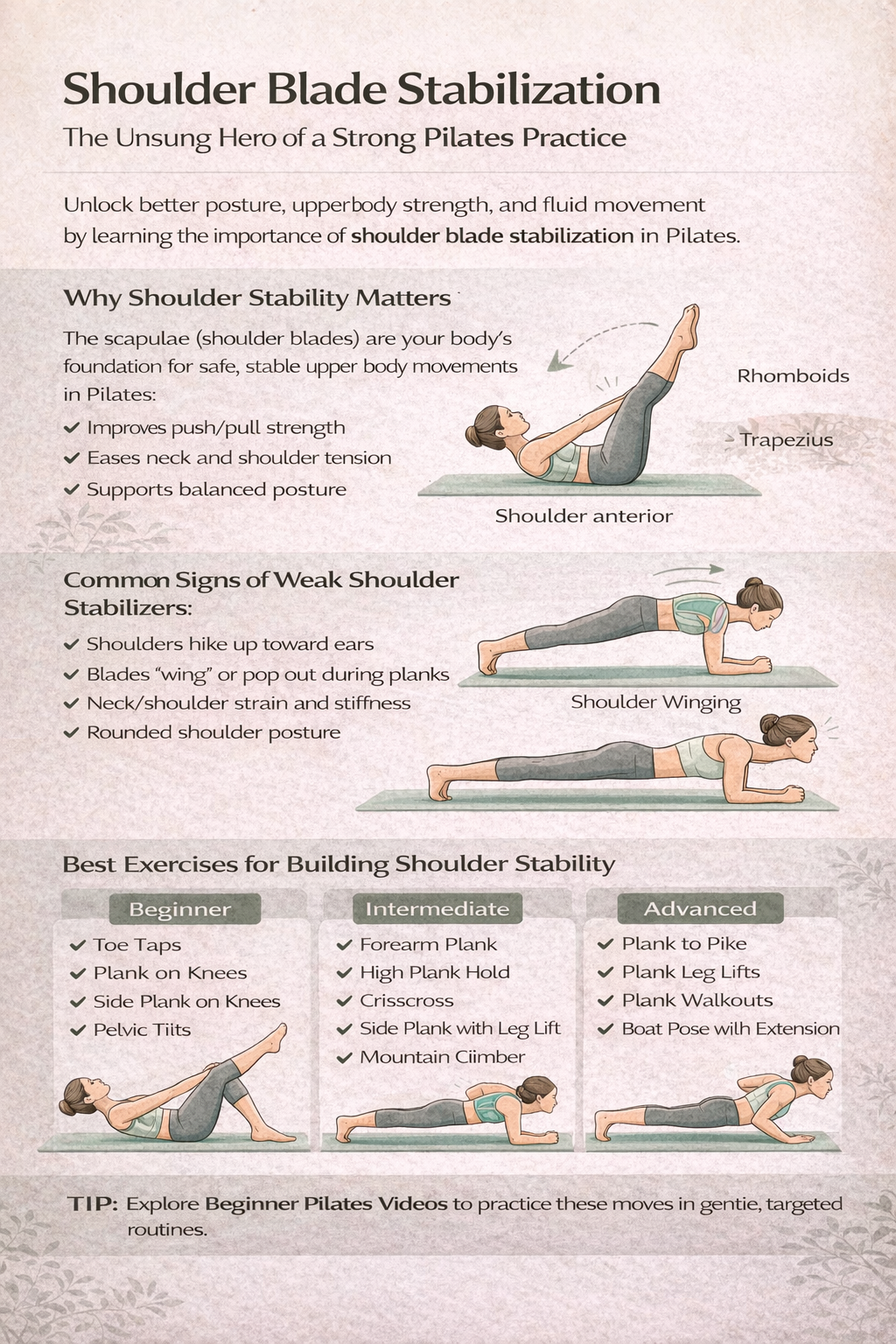 The shoulder blades are unique in the body—they’re not directly attached to the skeleton by bone, but instead are suspended by muscles. This design allows for a wide range of motion, but it also demands high levels of control. If that control is missing, movement becomes inefficient or even painful.
In Pilates, the shoulder girdle supports almost every upper-body movement, whether you’re:
-
Holding a plank
-
Pressing into the mat during Hundreds
-
Reaching forward in a Seated Roll Down
-
Lifting into a Swan or Cobra
-
Transitioning through a side-lying series
In these moments, stable scapulae provide the foundation for fluid and safe movement.
Benefits of Shoulder Blade Stability:
-
Improved posture and upper body alignment
-
Reduced neck and shoulder tension
-
Enhanced push/pull mechanics
-
Greater spinal support
-
Better arm mobility and coordination
Anatomy of the Shoulder Girdle in Pilates
Understanding what muscles are involved helps you target them more effectively.
Key stabilizing muscles include:
-
Serratus anterior: Draws the scapula forward and around the ribcage
-
Lower and middle trapezius: Retracts and depresses the scapulae
-
Rhomboids: Draw the shoulder blades toward the spine
-
Levator scapulae: Elevates the scapula (often overactive in tension)
-
Rotator cuff group: Stabilizes the head of the arm bone in the shoulder socket
When these muscles work in harmony, your shoulder blades can glide, anchor, and support efficiently.
Common Signs of Poor Scapular Control
-
Shoulder blades wing out during planks or push-ups
-
Neck tightness after upper body exercises
-
Difficulty maintaining alignment in arm reaches or side planks
-
Rounded shoulders and head-forward posture
-
Weak push mechanics in weight-bearing positions
The good news? Pilates is one of the best systems for retraining and stabilizing the shoulder girdle—especially through floor-based, bodyweight-only sequences.
Foundational Exercises for Shoulder Blade Awareness
These exercises help build the mind-body connection needed to control the scapulae with intention, rather than passive tension.
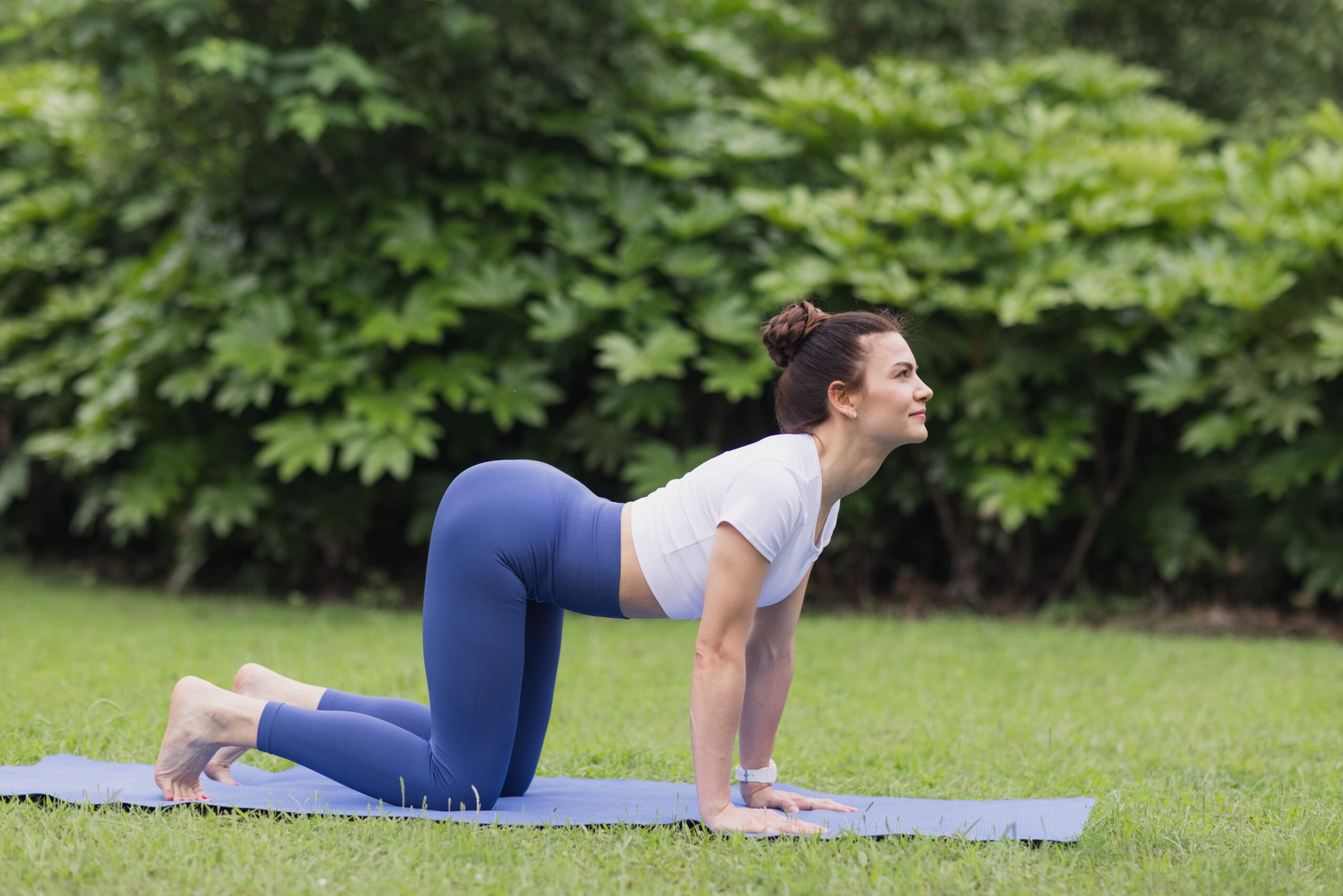 🔹 Scapular Glides
Start in a high plank or quadruped (hands and knees) position.
-
Without bending your elbows, squeeze shoulder blades together.
-
Then press the floor away to widen the back and separate the blades.
-
Keep the head neutral and spine still.
Repeat slowly 10–12 reps.
This teaches you the difference between passive collapse and active engagement in plank-based movements.
🔹 Wall Angels
Stand with your back against a wall, arms bent at 90 degrees.
-
Press the entire back, including the ribs and low back, gently into the wall.
-
Slide your arms upward as if making a snow angel, keeping contact with the wall.
Focus on lower trap and serratus engagement.
🔹 Prone Scapular Retraction (Y, T, W Series)
Lie face down with arms extended (Y), out to the sides (T), or bent (W).
-
Inhale to prepare.
-
Exhale as you lift the arms slightly off the mat, focusing on drawing the scapulae together and down.
These movements are part of many Pilates by Goal flows aimed at improving posture and upper back strength.
🔹 Serratus Push-Ups
Start in kneeling or high plank.
-
Without bending the elbows, retract and protract the scapulae as in scapular glides.
-
Focus on pushing through the floor to activate the serratus anterior.
 This builds endurance for planks, pikes, and arm-weighted mat work.
🔹 Side-Lying Arm Reaches
-
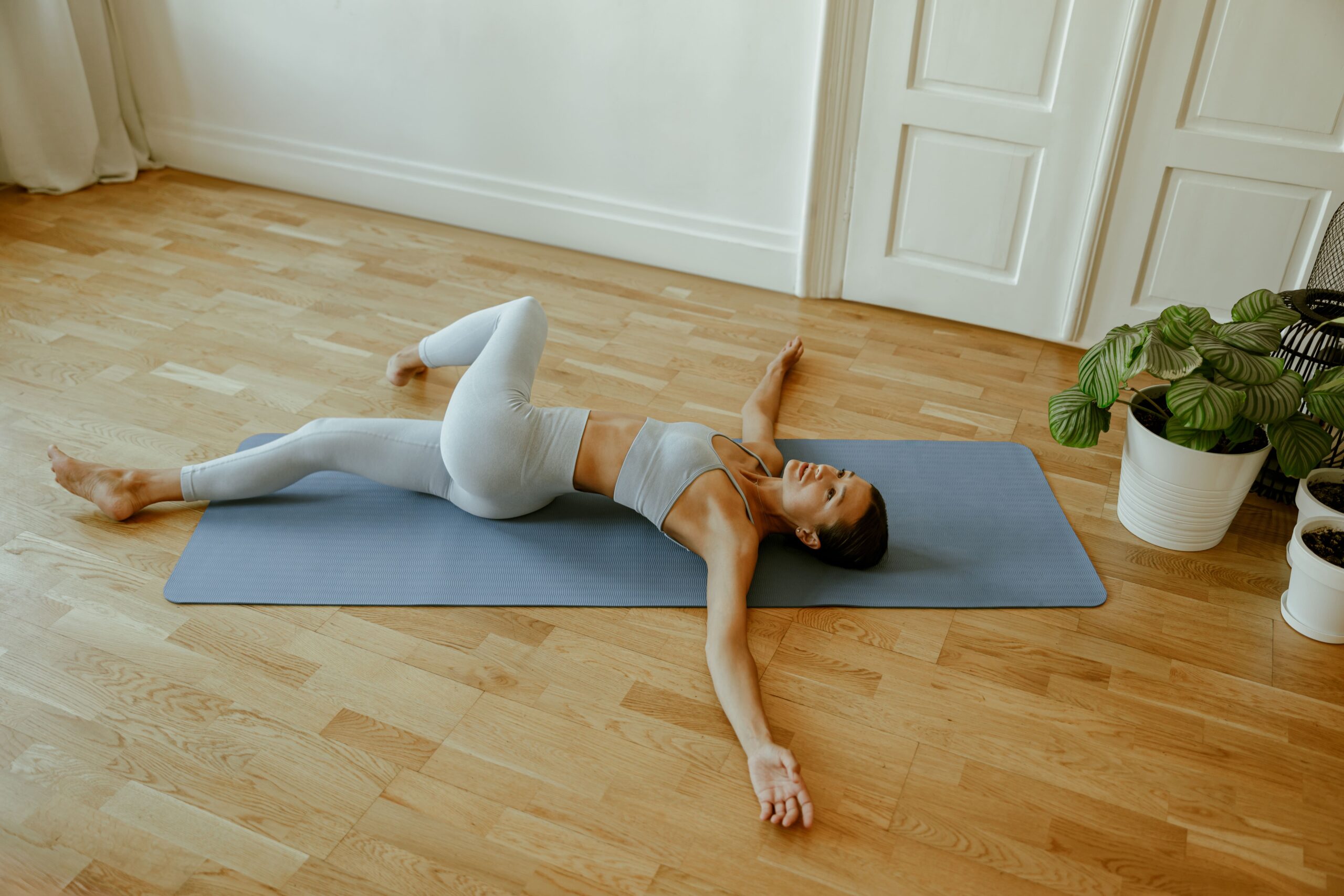
Lie on one side, head supported.
-
Extend the top arm toward the ceiling.
-
Reach upward, letting the shoulder blade lift.
-
Then allow it to sink back into place.
This builds awareness of controlled scapular glide.
Integrating Stabilization Into Your Practice
Rather than thinking of these as isolated drills, aim to integrate shoulder blade awareness into all upper-body movements.
During Planks:
-
Press firmly through palms
-
Draw shoulder blades down and wide
-
Avoid collapsing between the arms
During Hundreds or Leg Lifts:
-
Keep shoulders away from ears
-
Ground the shoulder blades without tensing the traps
During Swan or Cobra:
-
Retract the blades lightly without squeezing the spine
-
Lengthen through the crown of the head, not just lifting the chest
Shoulder blade stability is also key in Reformer Pilates Videos, especially in resistance-based arm sequences and any long lever movements.
Short Shoulder Stability Flow (10–15 Minutes)
-
Wall Angels – 1 min
-
Scapular Glides (Quadruped) – 10 reps
-
Prone Y-T-W – 2 rounds
-
Serratus Push-Ups – 10 reps
-
Side-Lying Arm Reaches – 10 reps per side
-
Child’s Pose with Arm Reach – 1 min hold
Repeat once or use as a warm-up before a Core Burner + Plank Series.
What About Flexibility?
Often, we over-focus on stretching tight traps or neck muscles, when the problem is instability. Weak stabilizers cause other muscles to work overtime. By strengthening the right areas, tension in the upper neck and shoulders can release naturally. We also recommend reading this article: 7 Scapular Stabilization Exercises.
When to Prioritize Shoulder Blade Work
 You’ll especially benefit from targeted scapular work if you:
-
Experience neck tension during mat classes
-
Have trouble maintaining form in planks or push-ups
-
Sit at a desk or drive long hours (rounded shoulder posture)
-
Are recovering from shoulder or upper back injury
-
Want better arm mobility and strength
It’s also a must-have focus in Pilates for Special Populations, especially seniors or postpartum clients working on posture and support.
FAQs
Why do my shoulders creep up during Pilates?
It’s often a sign that your upper traps are compensating. Focus on drawing the shoulder blades down and widening the collarbones.
Can I do these exercises daily?
Yes—most shoulder stabilization drills are gentle and ideal for daily practice, especially if you’re working to correct posture or pain.
Do I need equipment to improve shoulder blade strength?
No. Many of the most effective exercises are bodyweight-based and can be done on the mat.
What if I already have strong arms? Isn’t that enough?
Strong arms don’t always mean stable shoulder blades. The deep stabilizers are smaller and require specific activation and awareness.
Is shoulder blade work only for upper body strength?
No—stable shoulder blades support the spine and help coordinate whole-body movement, especially in flowing transitions and balance work.
Shoulder blade stabilization might not be flashy, but it’s foundational. With the right focus, you’ll build strength, improve posture, reduce pain, and unlock a new level of grace in your Pilates practice. Think of it as strengthening your wings—you’ll move with more power, ease, and control in every direction.