One of the most beautiful aspects of Pilates is its accessibility—you don’t need fancy machines or pricey gear to experience transformative results. Bodyweight-only sequences are a testament to this simplicity. Using nothing but your own body, breath, and focus, you can build remarkable strength, improve flexibility, and develop core control. These sequences are adaptable, challenging, and incredibly effective for all levels.
Whether you’re practicing at home, traveling, or just prefer a minimalist approach, this guide will walk you through the benefits, structure, and variations of bodyweight-only Pilates sequences, with tips on how to make the most of them.
Why Choose Bodyweight Pilates?
 Skipping equipment doesn’t mean sacrificing results. On the contrary, working with just your body challenges your stabilizer muscles, enhances proprioception (your body’s sense of position), and deepens the mind-body connection.
Here’s why bodyweight-only sequences are worth integrating into your routine:
-
Accessible anywhere, anytime
-
No setup or cleanup
-
Improves full-body coordination
-
Enhances balance and control
-
Targets deep stabilizing muscles often missed by machines
Many popular Mat Pilates Videos emphasize these kinds of sequences, especially for beginners or those focusing on functional strength.
Structuring an Effective Bodyweight Pilates Sequence
To get the most out of bodyweight workouts, structure matters. A well-balanced Pilates sequence will flow from gentle warm-ups to more dynamic core work, and finally into stretching and mobility.
1. Centering & Warm-Up
Begin with breathwork and light movement to activate the deep core and connect with your body.
Sample Moves:
-
Pelvic Tilts or Imprint Practice
-
Knee Sways (gentle spinal mobility)
-
Cat-Cow on all fours to wake up the spine
-
Arm Raises with Breath for shoulder mobilization
Tip: These movements prepare the body while reinforcing alignment, especially helpful in early morning or recovery sessions.
2. Core Activation
The heart of Pilates is core control. Start with fundamental abdominal exercises that lay the groundwork for strength and stability.
Sample Moves:
-
Toe Taps
-
Dead Bug
-
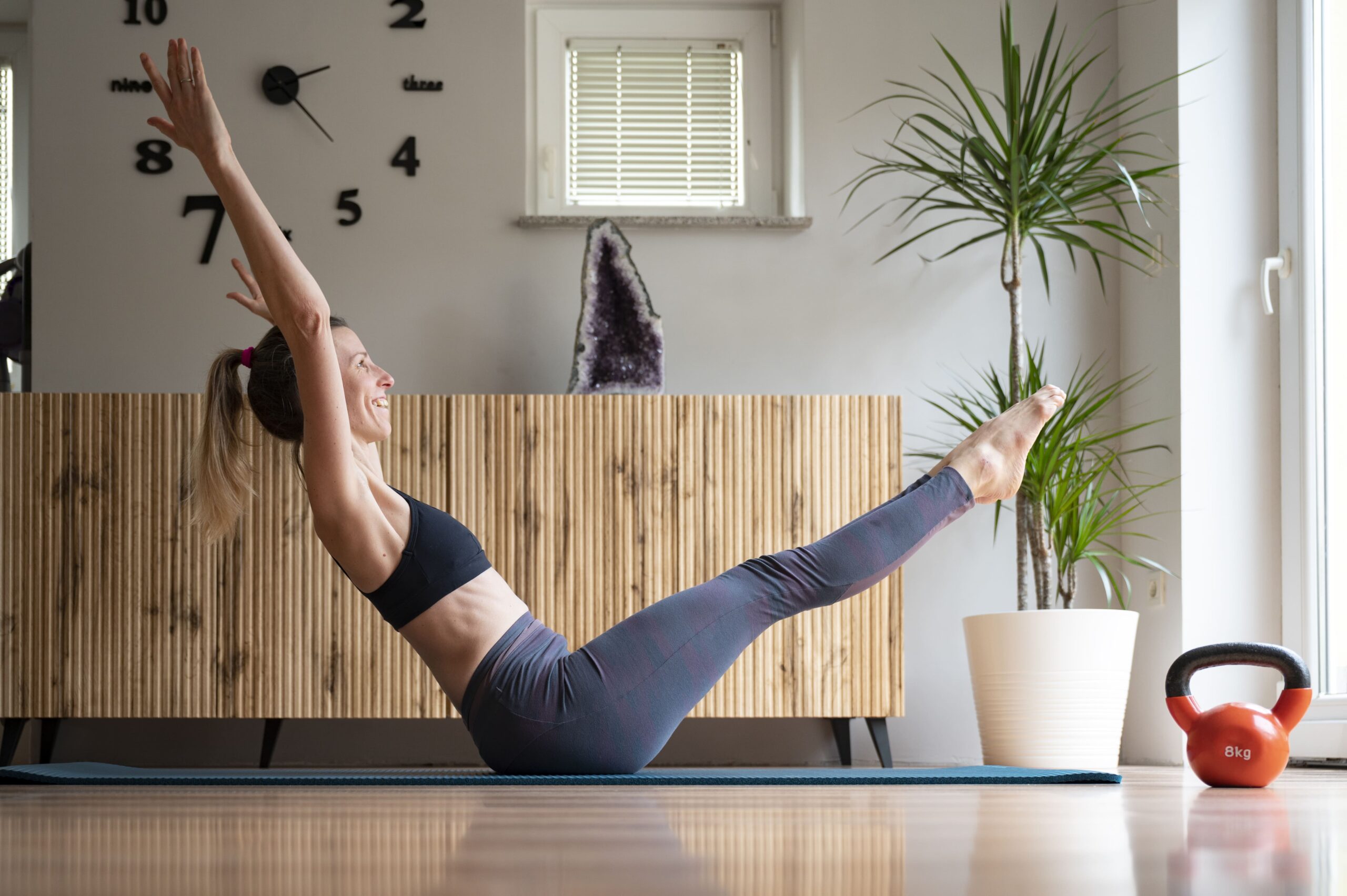
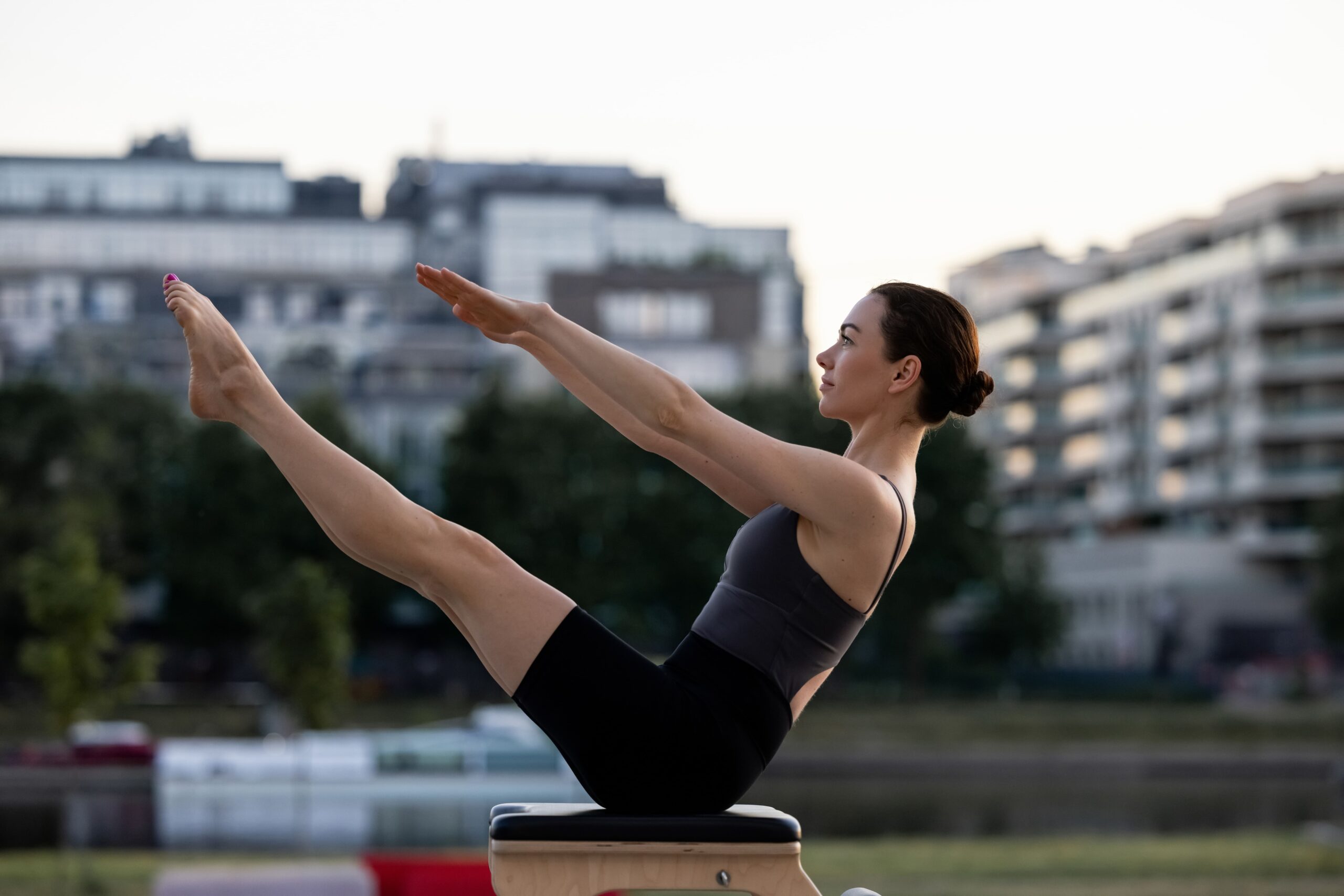
Hundred (legs in tabletop or extended)
-
Single-Leg Stretch
-
Double Leg Lift Prep
Focus on moving from your center and maintaining control—not momentum.
3. Full-Body Strength & Integration
Once your core is fired up, transition into movements that integrate the entire body, encouraging fluid motion and postural strength.
Sample Moves:
-
Seated Roll Down
-
Plank Variations (forearm, straight arm, side plank)
-
Bridge or Pelvic Curl
-
Leg Pull Front (Reverse Plank)
-
Swimming (prone back-body engagement)
This phase is where the magic happens: movements that challenge multiple muscle groups without needing weights or props.
4. Stretch & Mobility
End with movements that release tension and increase mobility, helping the body recover and recalibrate.
Sample Moves:
-
Spine Twist
-
Saw
-
Figure 4 Stretch
-
Hamstring Stretch
-
Child’s Pose
These movements encourage flexibility, joint health, and promote balance between effort and ease.
Tips for Success in Bodyweight Pilates
-
Slow down: Speed can mask weakness. Slowing the pace uncovers where you truly need support.
-
Use your breath: Coordinate movement with breath. Exhale during effort to help engage the core.
-
Maintain alignment: Without props, you’ll rely more on self-correction. Use a mirror or film yourself occasionally.
-
Progress gradually: Increase reps, duration, or move to more challenging variations as you build confidence.
Progressions Without Props
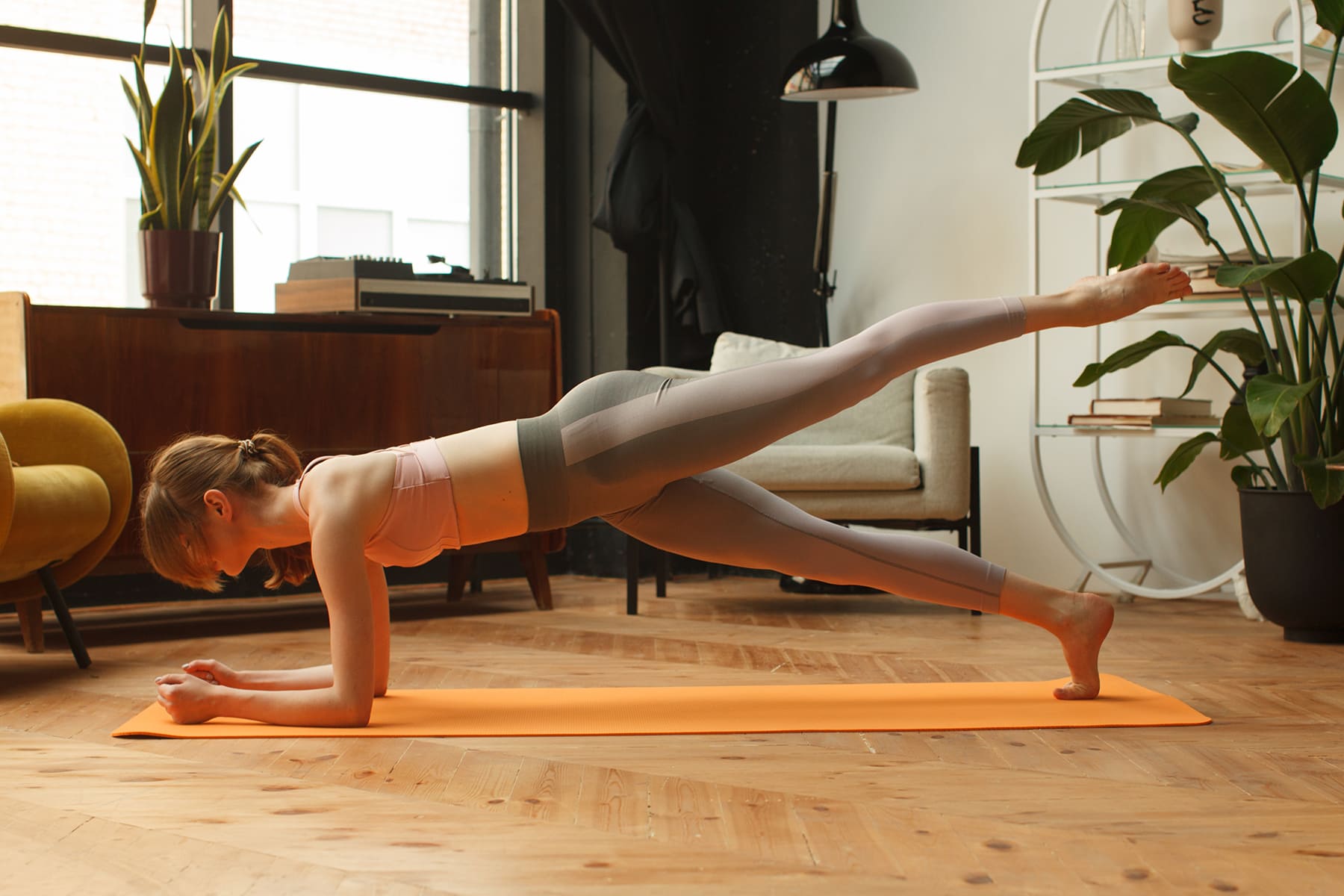 You don’t need equipment to increase intensity. Bodyweight Pilates can be scaled simply by altering leverage and control.
Here’s how:
-
Extend legs instead of keeping them bent
-
Add pulses or holds at peak contraction
-
Combine movements (e.g., bridge with single-leg lift)
-
Incorporate transitional flow between exercises
Many Pilates Fusion Workouts build on this concept by blending yoga or dynamic strength with classical Pilates shapes.
Popular Bodyweight-Only Flows
Here are a few themed sequences you can try, each under 30 minutes and designed for different goals:
🔹 Core Focus Flow (20 min)
-
Seated Breathwork
-
Pelvic Tilts
-
Hundred
-
Single Leg Stretch
-
Crisscross
-
Leg Pull Front
-
Side Plank Holds
-
Supine Twist Stretch
🔹 Lower Body Burn (25 min)
-
Glute Bridge Series (standard, pulses, single-leg)
-
Clamshells (side-lying)
-
Side Kicks
-
Swimming
-
Hamstring Stretch & Pigeon Variation
 🔹 Morning Wake-Up Routine (15 min)
-
Cat-Cow
-
Thread the Needle
-
Roll Downs
-
Standing Side Bends
-
Forward Fold
-
Seated Spine Twist
🔹 Travel-Friendly Flow (10–15 min)
-
Plank to Down Dog
-
Knee Hover Taps
-
Tabletop Balance Holds
-
Seated Saw
-
Child’s Pose
Each of these can be modified based on your energy, ability, or focus for the day.
Who Benefits from Bodyweight Sequences?
Pretty much everyone. But they’re especially valuable for:
-
Beginners: Learning foundational alignment without distractions
-
Travelers: No equipment required, minimal space needed
-
Rehab & recovery: Gentle, controlled movements enhance healing
-
Busy schedules: Easy to fit into short time blocks
-
Athletes: Excellent as cross-training for endurance and balance
Bodyweight sequences also help reinforce postural habits and core recruitment, which benefit both Pilates and daily movement patterns.
Connecting to Other Pilates Categories
 If you love bodyweight-only sessions and want to tailor them even further, try exploring categories like:
-
Pilates by Duration for time-based flows (10, 20, 30 minutes)
-
Pilates by Goal, such as flexibility, balance, or toning
-
Pilates for Special Populations, like prenatal or seniors, which often rely on bodyweight control rather than resistance
These sections offer curated sequences with varied difficulty levels, pacing, and focus, helping you build consistency and confidence in your mat practice. Continue with an at-home workout: 15 Minute Beginner At Home Pilates
FAQs
Can bodyweight Pilates really build strength?
Yes! When done with control and correct form, bodyweight Pilates builds deep core strength and stabilizer muscle tone that traditional strength training often misses.
Do I need a mat for bodyweight sequences?
While not essential, a mat provides cushioning and helps define your space. It’s especially helpful for spinal support during seated or supine work.
How often should I do bodyweight Pilates?
3–5 times a week is ideal for noticeable results. Even short 10–15 minute flows can be effective if done consistently.
What if I find some movements too hard without equipment?
Modify! Bend knees, reduce range, or use a wall or towel for feedback. The beauty of Pilates is its adaptability.
Can I lose weight with bodyweight-only Pilates?
While Pilates isn’t primarily a calorie-burning workout, it supports lean muscle tone, posture improvement, and overall movement efficiency—which all support a healthy lifestyle and metabolism.
Bodyweight-only Pilates proves that simplicity is powerful. With nothing but your own body, you can cultivate strength, fluidity, and awareness that ripple into every part of your life. Whether you’re flowing on a beach towel, in your living room, or at a studio mat class, your body is your most reliable and versatile tool.