In Pilates, precision and control are everything. While flashy movements might draw attention, it’s often the slower, more deliberate exercises that truly strengthen the core and improve posture. Two essential movements that exemplify this are the Seated Roll Down and Toe Taps. These exercises might look simple, but they’re incredibly effective when performed with focus and intention. Together, they create a powerhouse combo that targets spinal articulation, core stability, and coordination.
Let’s break down how each movement works, their benefits, and how to safely incorporate them into your practice for optimal results.
What Is the Seated Roll Down?
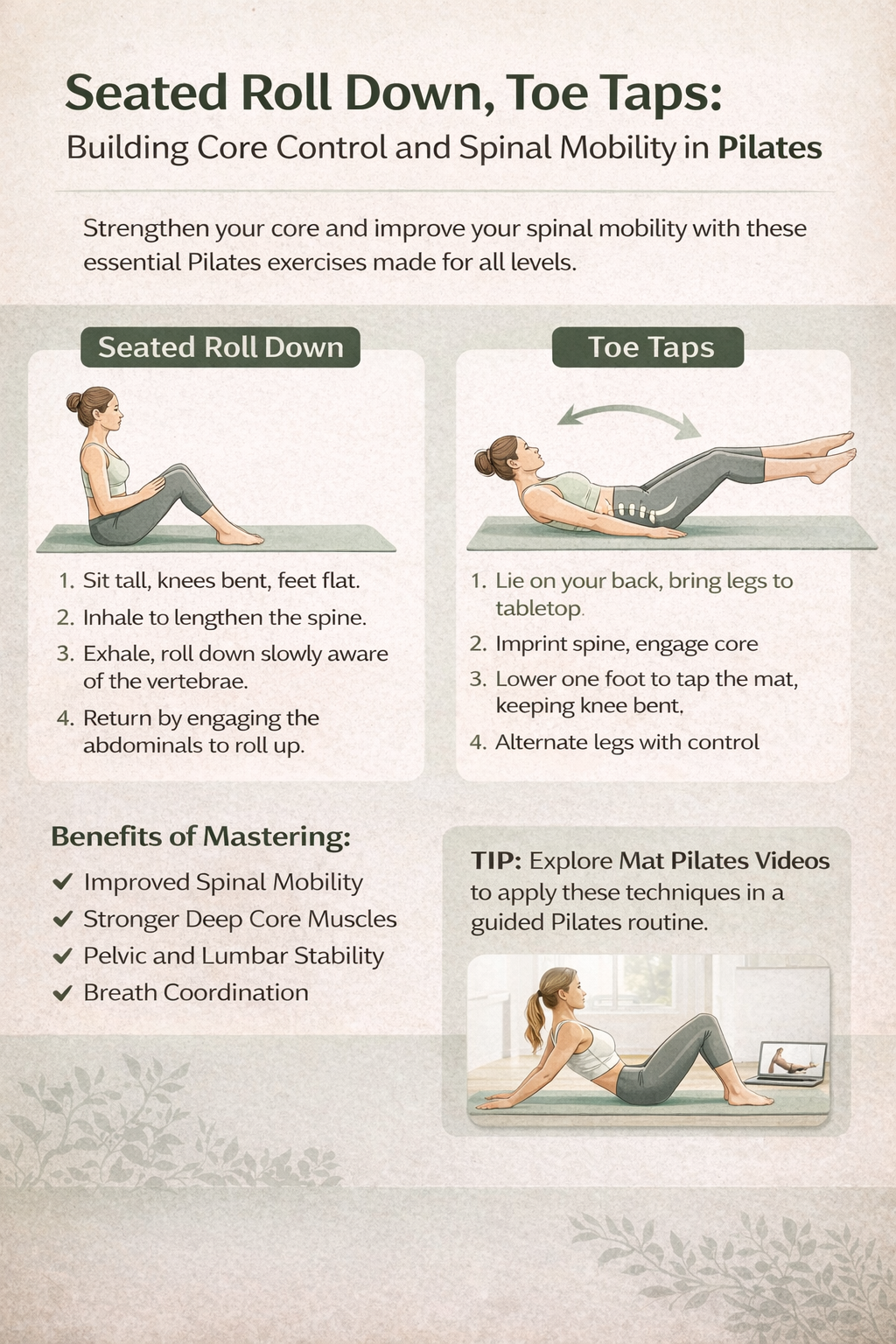 The Seated Roll Down is a Pilates exercise that emphasizes spinal articulation—moving the spine one vertebra at a time. It’s a modified version of the full Roll-Up but starts in a seated position with knees bent and feet flat on the floor.
This movement trains the abdominal muscles to control spinal flexion, promoting deep engagement through the rectus abdominis, obliques, and even the pelvic floor.
How to Perform a Seated Roll Down
-
Start Seated: Sit tall with knees bent, feet flat, and hands resting on the backs of your thighs or reaching forward.
-
Inhale to Prepare: Lengthen through the spine.
-
Exhale and Roll Down: Begin to curl the tailbone under, slowly rolling down one vertebra at a time until your low back touches the mat.
-
Inhale at the Bottom: Pause and maintain control.
-
Exhale to Roll Up: Engage the abdominals and slowly return to the starting seated position.
Common Cues for Success
-
Imagine zipping up a tight pair of pants to encourage deep abdominal engagement.
-
Keep your chin slightly tucked to avoid neck strain.
-
Move slowly—this is not about speed, but precision.
What Are Toe Taps?
Toe Taps (Video Guide)are a classic Pilates exercise used to develop pelvic stability and strengthen the transverse abdominis—the deepest layer of abdominal muscles. This is a small, controlled movement done while lying on your back, typically in an imprint position to protect the lower back.
They’re ideal for beginners and advanced practitioners alike because they teach how to move the legs without disrupting the position of the spine—a crucial Pilates principle.
How to Perform Toe Taps
-
Lie on Your Back: Start in a supine position with knees bent and feet flat.
-
Lift to Tabletop: Bring both legs into a 90-degree tabletop position, knees stacked above hips.
-
Imprint the Spine: Engage the core to gently press the lower back into the mat.
-
Inhale to Lower One Foot: Slowly tap the toes of one foot to the mat, keeping the knee bent.
-
Exhale to Return: Bring the leg back to tabletop, maintaining core engagement.
-
Alternate Legs: Continue for 8–10 reps per leg.
Key Tips for Alignment
-
Keep your ribs knitted together so they don’t flare.
-
Move only as far as you can without arching the lower back.
-
Focus on quality over quantity—slow and steady wins here.
Why Pair These Movements?
 When combined, Seated Roll Downs and Toe Taps provide a holistic approach to Pilates fundamentals. The Roll Down builds spinal mobility and abdominal control, while the Toe Taps challenge your ability to stabilize the pelvis and control leg movement.
This pairing is excellent for:
-
Warming up the body before a more dynamic session
-
Rehabilitating after injury or for those with back pain
-
Reinforcing the imprint position and neutral spine awareness
-
Progressing to more complex movements like The Hundred or Double Leg Stretch
Modifications and Progressions
Pilates is all about working with your body as it is today, not forcing it into what it “should” be. These exercises can easily be modified or made more challenging.
Seated Roll Down Modifications
-
Use a resistance band around your feet to help guide the movement.
-
Limit your range of motion if you have tight hamstrings or low back discomfort.
-
Keep your hands on your thighs for support.
Toe Taps Progressions
-
Try double toe taps, where both feet lower at once.
-
Extend the tapping leg straight to add challenge.
-
Place a small ball under the sacrum to test stability even more.
Incorporating These Moves Into Your Practice
These foundational exercises appear in many Mat Pilates Videos, particularly in sequences focused on building deep core strength and refining form. You’ll often see them used in Beginner Pilates Videos or as part of warm-up routines in Pilates by Goal sessions (such as core-focused or spinal mobility goals).
For example:
-
Start your session with Seated Roll Downs to awaken your spinal muscles.
-
Follow with Toe Taps to reinforce core activation in a supine position.
-
Progress into a Pelvic Curl or Leg Circles to continue building strength and mobility.
Including these consistently in your practice lays the groundwork for more dynamic movements down the line.
Benefits of Mastering Seated Roll Downs and Toe Taps
-
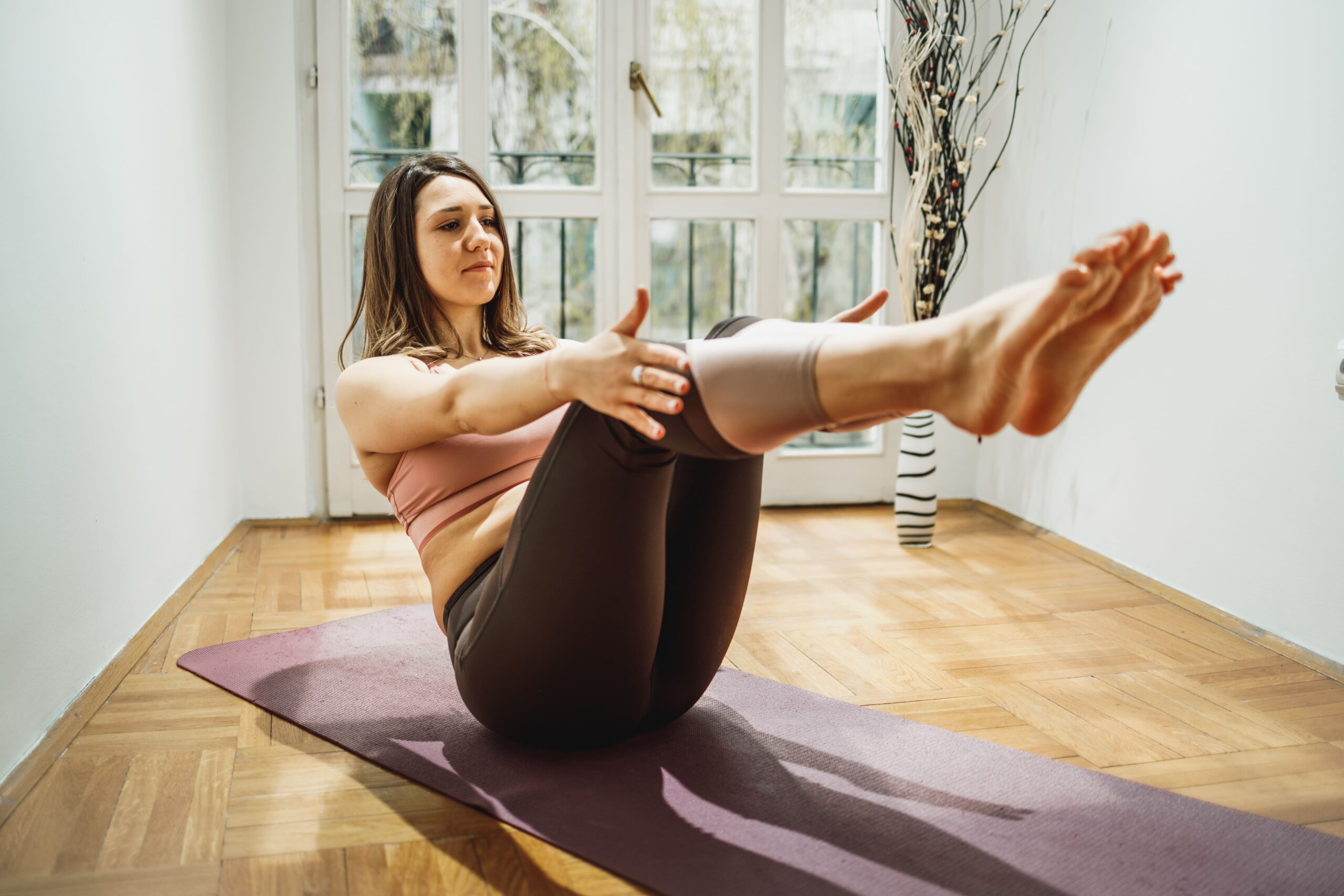 Improved Spinal Mobility: Rolling down segmentally enhances the flexibility and movement of each vertebra.
 -
Stronger Deep Core Muscles: Both exercises target the transverse abdominis, pelvic floor, and multifidus.
-
Enhanced Posture: Better spinal articulation leads to upright, supported posture off the mat.
-
Pelvic and Lumbar Stability: Vital for protecting the lower back during all Pilates and daily movement.
-
Breath Coordination: Learning to pair breath with motion deepens mind-body connection.
Troubleshooting Common Challenges
Straining the Neck in Roll Downs?
Make sure your abdominals initiate the movement. If the neck feels overworked, you may not be engaging your core deeply enough. Try a smaller range of motion or add support behind the back.
Back Arching During Toe Taps?
Keep your range small and prioritize the imprint position. If needed, rest one foot on the floor instead of maintaining both legs in tabletop.
Hip Flexors Taking Over?
Focus on drawing the belly inward and imagining the spine sinking into the mat to bring awareness back to the abdominals.
Functional Benefits Beyond Pilates
The body awareness gained through Roll Downs and Toe Taps transfers directly into daily life. Simple tasks like getting in and out of bed, picking things up from the floor, or sitting and standing all benefit from a strong core and mobile spine.
Learning how to segmentally move the spine and stabilize the pelvis lays the groundwork not only for more advanced Pilates work, but for a more supported, comfortable everyday experience.
FAQs
Are Seated Roll Downs safe for beginners?
Yes. They are often included in beginner sequences to help develop core control and spinal mobility. Just start with a small range of motion and work your way down gradually.
What muscles do Toe Taps target?
Toe Taps primarily work the transverse abdominis, pelvic floor, and hip stabilizers, while also training the body to maintain a neutral or imprinted spine.
Can I do these exercises every day?
Absolutely. These are gentle, foundational movements that can be practiced daily to enhance spinal and core function.
Do I need props for these exercises?
No props are necessary, but tools like a resistance band or small stability ball can enhance the challenge or assist with modifications.
Why do I shake during Toe Taps?
Shaking is a sign your stabilizer muscles are being challenged—this is a good thing! As your core strength improves, the shaking will lessen.
Adding these two exercises to your routine is a smart, sustainable step toward mastering Pilates fundamentals. As your strength and confidence grow, you’ll be amazed at how much more fluid, powerful, and intentional your movement becomes.