Resistance bands are one of the most effective, versatile, and portable tools you can add to your Pilates practice. Light, inexpensive, and easy to store, resistance bands transform traditional mat work into strength‑building, mobility‑enhancing, muscle‑activating movements — all with controlled resistance that goes beyond bodyweight alone.
This guide explains how resistance band Pilates works, why it’s effective, how to use guided resistance band Pilates videos, and how to structure safe, progressive workouts for all levels — from beginner to advanced.
💪 What Is Resistance Band Pilates?
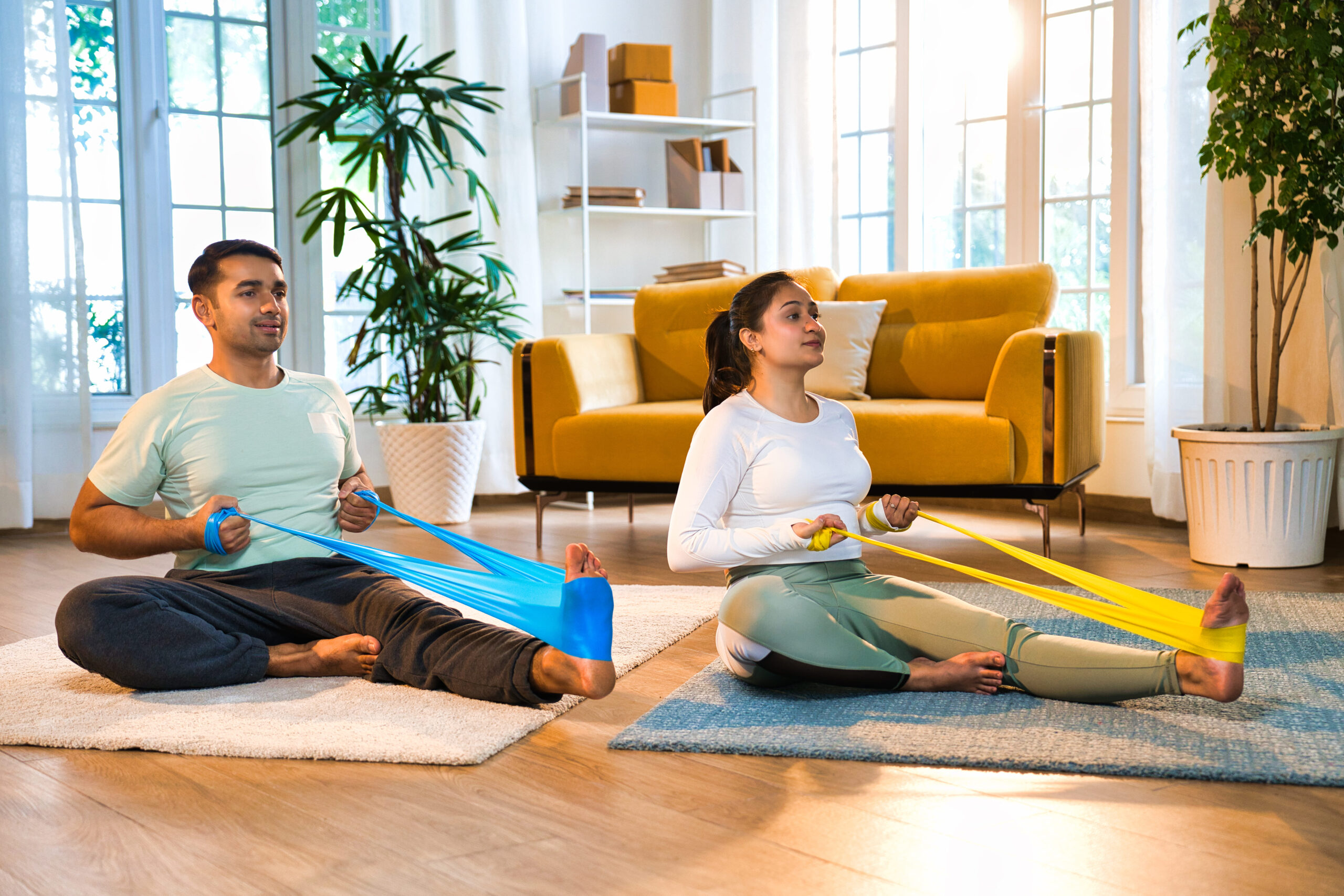 Resistance band Pilates uses stretchable elastic bands (often loop‑style or long Pilates bands) as an extension of your body. You can incorporate the band to:
- Add resistance to traditional Pilates movements
- Train muscles through a full range of motion
- Challenge stability and control
- Provide assistance or support when needed
- Increase muscle activation without heavy weights
Depending on the band thickness and how you grip or anchor it, you can make moves easier, harder, or more dynamic — all while emphasizing Pilates principles like breath control, alignment, and mindful movement.
🎯 Why Use Resistance Bands in Pilates Videos?
Pilates mat work is powerful on its own, but adding bands offers unique advantages:
🟡 Progressive Muscle Challenge
Bands add measurable tension, helping you strengthen deeper muscles in the core, glutes, hips, arms, and back.
🟡 Improved Joint Health
Bands provide resistance that’s gentle on joints — ideal for functional strengthening and controlled movement.
🟡 Enhanced Motor Control
The elastic nature of bands requires coordination and stabilization, improving neuromuscular timing.
🟡 Portable & Accessible
Bring your band to home workouts, travel, or outdoor sessions — no bulky equipment required.
🟡 Perfect for Guided Video Workouts
Most band Pilates videos break movements into safe progressions with pacing and alignment cues.
📍 Who Benefits from Resistance Band Pilates?
Resistance band Pilates videos are a great fit for:
- Beginners — light bands help introduce strength training safely
- Intermediate practitioners — bands deepen muscular engagement
- Advanced users — heavier bands introduce progressive challenges
- People rehabbing (with clearance) — controlled resistance builds stability
- Busy movers — short band‑focused videos fit any schedule
Note: If you have shoulder, hip, knee, or spine injuries, consult a healthcare provider before performing resistance band exercises, especially with high tension bands or advanced moves.
📹 How to Use Resistance Band Pilates Videos Safely
 When following resistance band Pilates videos:
✔ Choose the Right Band
Banded resistance comes in light, medium, and heavy. Start light — you can always increase tension later.
✔ Listen to Your Body
Band resistance should feel challenging but controlled — sharp pain is not normal.
✔ Focus on Form First
In Pilates, alignment and breath come before the number of reps.
✔ Warm Up Before Band Work
Use mobility drills or gentle mat flows before adding resistance.
✔ Maintain Flow, Control & Breath
Inhale to prepare, exhale to perform — this engages core musculature with every move.
🧠 Choosing Resistance Band Pilates Videos
When exploring online videos, look for classes that:
✔ Are led by certified Pilates instructors
✔ Clearly demonstrate band setup and safety cues
✔ Include options for lighter or heavier resistance
✔ Incorporate progression and modification cues
✔ Emphasize alignment, breath, and muscle engagement
Helpful search terms include:
“Pilates resistance band workout”
“Pilates bands core sequence”
“band Pilates full body routine”
“Pilates band upper body flow”
📍 How Bands Enhance Common Pilates Exercises
Below are ways resistance bands add value to classic Pilates movements:
🔹 Band‑Assisted Hundred
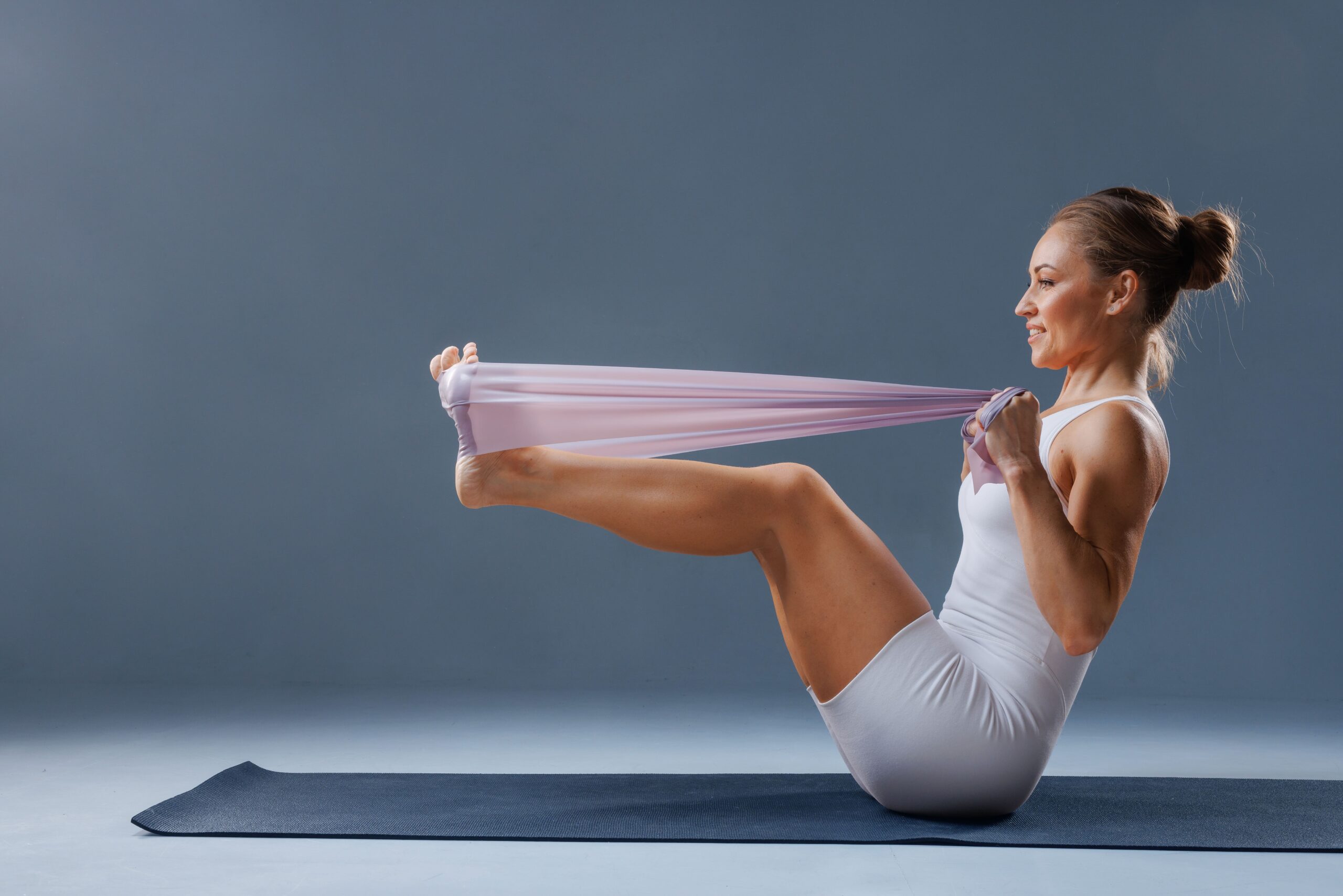
- Loop band around soles
- Extend legs with band resistance
- Pump arms while controlling breath
Benefits: Adds shoulder and leg resistance while strengthening deep abdominals.
🔹 Band Leg Circles
- Secure band around feet
- Circle legs while keeping core stable
Benefits: Trains hip mobility and pelvic stability.
🔹 Standing Band Rows
- Anchor band at chest height
- Pull back in rowing motion
Benefits: Improves upper back strength and posture — great for counterbalancing sitting.
🔹 Pilates Band Bridge Press
- Place band around thighs
- Perform bridge with outward resistance
Benefits: Activates glutes and outer hips while strengthening posterior chain.
🔹 Band Side Leg Lifts
- Band around ankles
- Lift leg laterally
Benefits: Strengthens hip abductors, supports balance and lower body strength.
🧩 Sample Resistance Band Pilates Video Workouts
Here are two sample routines you can follow — or use as templates to choose your videos.
⭐ Beginner Resistance Band Pilates (20–25 minutes)
| Time | Exercise |
| 0–3 min | Breath + gentle warm‑up (spine rolls, ankle circles) |
| 3–7 min | Band‑assisted Hundred (light band) — 1–2 sets |
| 7–10 min | Band Leg Circles (each side) — 8–10 reps |
| 10–15 min | Band Bridge Press — 2–3 sets of 12 |
| 15–20 min | Standing Band Rows — 2 sets of 12 |
| 20–25 min | Side‑lying Band Leg Lifts — 10/side |
Focus: Introduce resistance in safe, controlled ways with emphasis on breath and alignment.
💪 Intermediate/Advanced Resistance Band Pilates (30–40 min)
| Time | Exercise |
| 0–5 min | Warm‑up + dynamic mobility (breath + hip openers) |
| 5–10 min | Band Hundred (medium band) — 3 × 60 seconds |
| 10–15 min | Band Side Planks with Row — 2 × 8/side |
| 15–20 min | Band Bridge + Hip Circles — 3 × 12 |
| 20–25 min | Band Standing Hip Flexion (balance challenge) — 2 × 10 |
| 25–30 min | Band Leg Circles + Core Flow — 10/side |
| 30–35 min | Seated Band Upper Body Flow — 2 × 12 |
| 35–40 min | Cool‑down + stretch (bands used for support as needed) |
Focus: Strength and coordination through dynamic band resistance and integrated flow patterns.
🧠 Tips for Better Resistance Band Pilates
 🔸 Start Each Session With Breath
Activating breath supports core engagement and helps you connect mind to movement.
🔸 Use Slow, Intentional Movement
Do not rush — the band’s resistance magnifies small alignment errors.
🔸 Monitor Shoulder & Hip Position
Bands can pull on joints — stabilize with mindful core engagement.
🔸 Incorporate Bands Into Warm‑ups and Cool‑downs
Bands can activate muscles before work and support stretches afterward.
🔸 Track Your Band Progression
Make notes of band color, exercises, and reps — so you can progress safely.
❌ Common Mistakes to Avoid
- Using too much resistance too soon
This often leads to compensatory patterns or loss of control. - Neglecting breath cues
In Pilates, breath is part of muscle engagement. - Allowing hips or ribs to shift
Maintain neutral alignment. - Rushing through reps
Band tension is most effective when movement is slow and controlled. - Relying on momentum
The band should be resisted consciously, not passed through quickly.
📌 What Bands Are Best for Pilates?
Resistance bands come in a few useful formats:
| Type | Best Use |
| Loop Bands (Light/Medium/Heavy) | Anchoring around legs or arms for full‑body resistance |
| Long Flat Pilates Bands | Seated or standing flows with lines of resistance |
| TheraBands (Progressive Colors) | Graduated strength levels for progression |
| Mini‑Loop Bands | Focused hip, abductor, or arm sequences |
Choose a light band to start, then graduate to medium or heavy as your form and strength improve.
📍 Helpful Search Tips for Video Discovery
 Try queries like:
- “Pilates band workout beginner”
- “Resistance band Pilates full body”
- “Pilates bands core & glutes”
- “Pilates with theraband flow”
- “Mat Pilates with bands equipment”
Add “video” or “YouTube” to your search to find instructional sessions.
Other Equipment Videos
➡️ Pilates Equipment Videos
➡️ Pilates Ball Sequences
➡️ Chair Pilates Workouts
➡️ Watch Recommended Resistance Band Videos
❓ FAQs: Resistance Band Pilates
- Can resistance band work replace weights in Pilates?
Bands are a lighter, joint‑friendly alternative to traditional weights, especially in Pilates‑style workouts. They challenge muscles differently but complement strength training well.
- How often should I do band Pilates videos?
3–5 times per week is a great starting point — mix with mat Pilates or other equipment videos for balance.
- Can beginners use resistance bands?
Absolutely — start with light resistance and guided videos.
- Are bands safe for people with joint pain?
Yes — bands provide gentle tension and support functional strength when used with proper form and modifications.
- Do I need multiple bands?
Multiple bands offer progression — start with one light band and add medium or heavier as you grow stronger.
Resistance band Pilates videos give you a dynamic, accessible, and strength‑building way to deepen your Pilates practice. From gentle activation and mobility to strength‑focused sequences and fluid flows, bands allow for progression, challenge, and variety — all with an emphasis on alignment, breath, and controlled movement.
Whether you’re a beginner looking for safe intro videos or an experienced mover ready to level up, resistance band Pilates adds a powerful new dimension to your workout library.