When most people picture Pilates, they imagine core work, lean muscles, and graceful movement. But Pilates is much more than that — and it’s not just for women. For men, Pilates offers a powerful, functional approach to strength, mobility, athleticism, posture, and injury prevention that complements strength training, sports performance, and everyday movement.
This guide explores:
- Why Pilates is valuable for men
- How male anatomy and movement patterns benefit from Pilates
- Key exercises and how they fit into male‑oriented training
- Sample routines and progression strategies
- FAQs and practical tips
Whether you’re new to Pilates or a seasoned mover, this guide helps you integrate Pilates intelligently into your fitness life.
Why Men Should Do Pilates
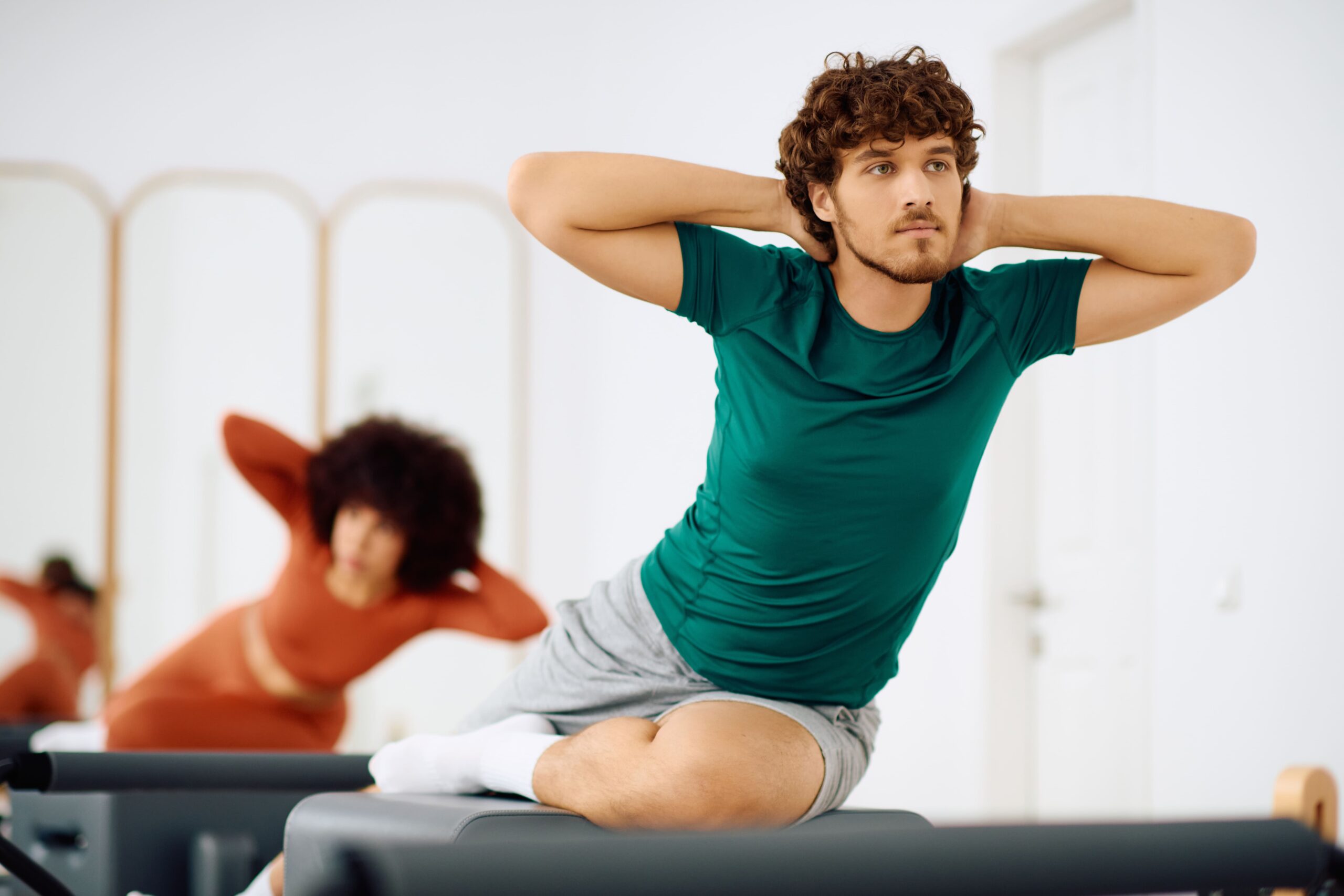 Pilates is often misunderstood as a “core class” or a “female‑oriented workout,” but those assumptions miss the deeper value Pilates offers — especially for men who:
- Lift weights regularly
- Play competitive or recreational sports
- Experience stiffness or postural imbalance
- Want to reduce injury risk
- Desire improved overall stability and movement efficiency
Key Benefits for Men
- Functional Core Strength
Pilates develops the deep stabilizing muscles (transverse abdominis, multifidus, pelvic floor) that support heavy lifts, athletic movement, and lower back health. - Greater Mobility Without Sacrificing Strength
Mobility often declines with age or repetitive training. Pilates improves hip, spine, and shoulder mobility — essential for optimal performance. - Better Posture
Desk work, driving, and weight training can lead to forward head posture, rounded shoulders, and a tight chest. Pilates restores alignment. - Injury Prevention & Balance
Strengthening stabilizers around joints reduces strain and compensatory patterns that lead to injury in sport, lifting, or daily life. - Enhanced Breath Mechanics
Proper breath support in Pilates translates to better performance and endurance in strength training and cardio. - Neuromuscular Coordination
Pilates trains the nervous system to fire muscles in the optimal sequence — improving balance, reaction time, and movement efficiency.
How Pilates Complements Traditional Training
Men often focus on weight training, cardio, or sport‑specific training, which are excellent for strength and endurance. Pilates complements these by:
| Traditional Training | Pilates Contribution |
| Heavy lifting | Stability, control, core integrity |
| Running or cycling | Posture, spinal mobility, balance |
| Sports practice (soccer, tennis) | Co‑ordination, stabilizer strength |
| High‑intensity training | Joint safety, breath control |
| Cardio | Postural alignment and recovery support |
Pilates fills in the gaps — especially in rotational control, scapular stability, hip mobility, and core integration.
Key Movement Priorities for Men
While Pilates fundamentals apply to everyone, some areas are particularly beneficial for male bodies based on common movement patterns and training histories.
Hip Mobility & Control
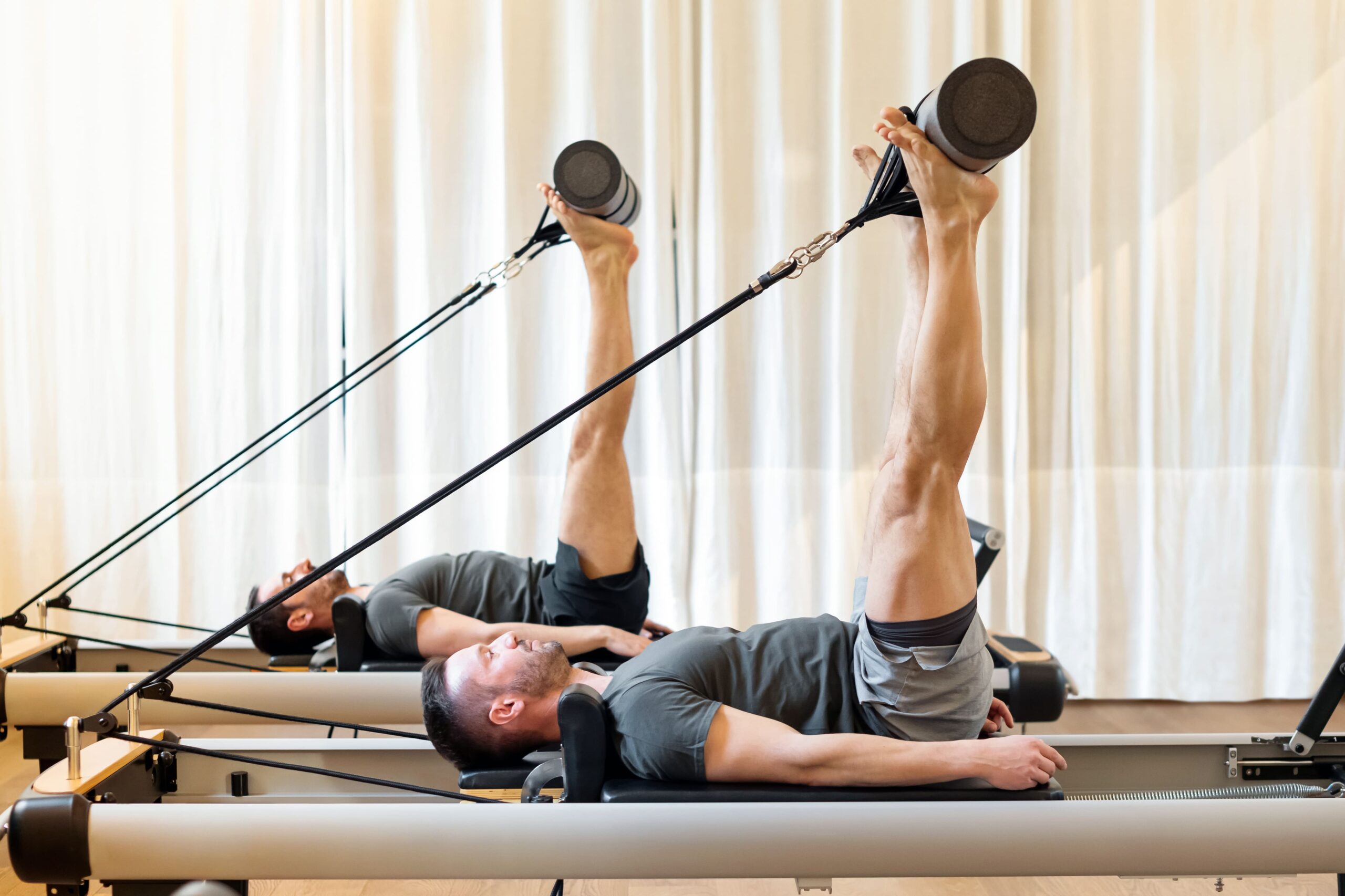 Men frequently develop tight hip flexors and limited external rotation from sitting or heavy quad‑dominant training. Pilates addresses this with targeted mobility work, such as:
- Hip circles
- Side‑lying leg series
- Modified lunges with control
Spinal Articulation & Postural Strength
Heavy lifting often creates a strong but stiff spine. Pilates gently mobilizes while strengthening the spinal stabilizers:
- Cat‑Cow variations
- Segmental spine roll‑downs
- Thoracic rotation patterns
Shoulder Stability & Scapular Control
Weight training, especially pressing, can lead to shoulder imbalances. Pilates strengthens shoulder girdle stability:
- Scapular stabilization with bands
- Plank progressions with control
- Swimming on the mat
Core Integration Over Aesthetics
More than visible abs, Pilates develops the deep core stack that protects the back and supports dynamic movement:
- Planks and their variations
- Side‑planks with knee modifications
- Hollow body holds with breath coordination
Safe Modifications and Cues for Men
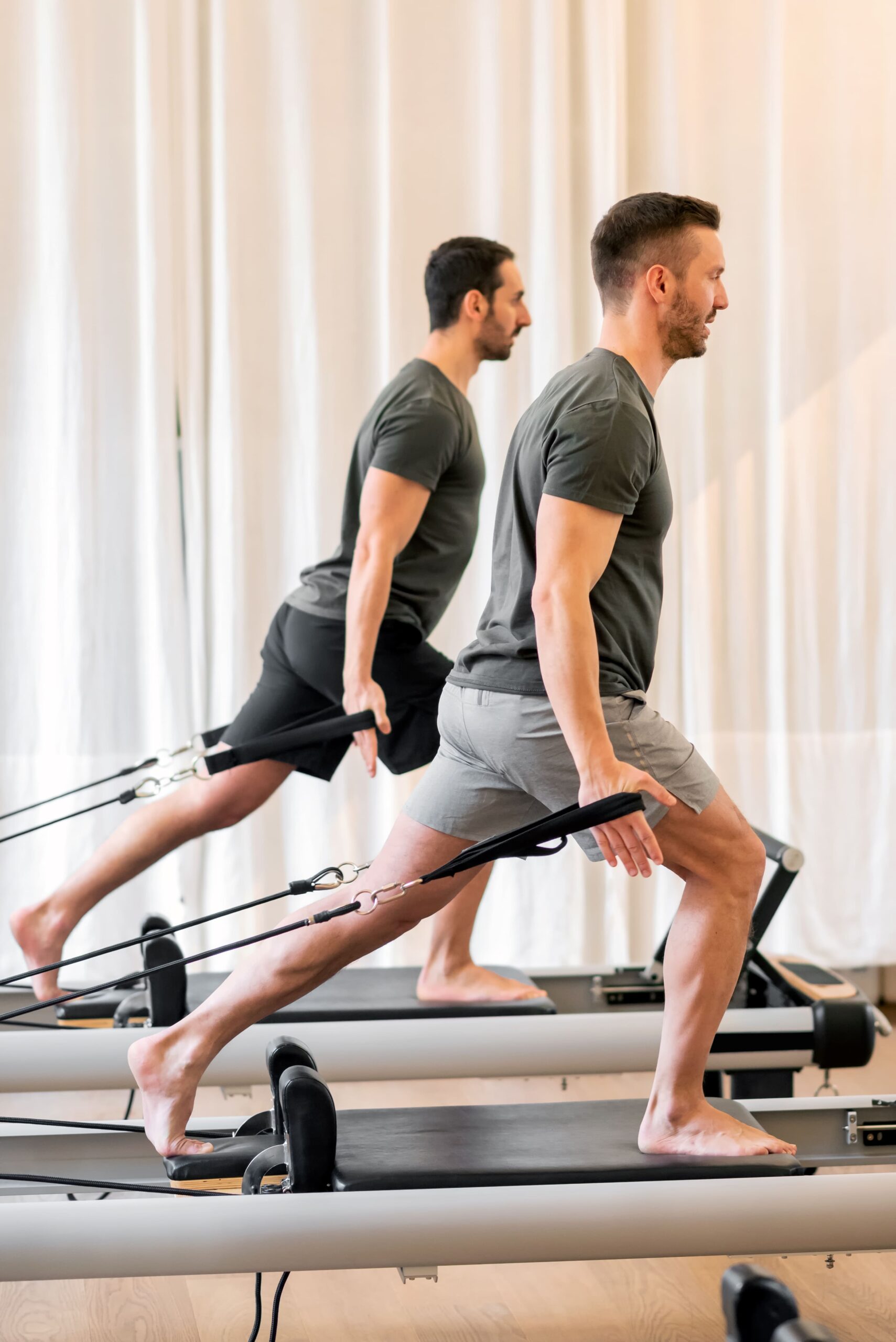 Men may approach Pilates with strength but also with a cultural habit of exerting rather than controlling. Here are pointers to make the work effective and safe:
✔ Slow Down
Pilates doesn’t reward speed. Control is strength.
✔ Breathe Intentionally
Exhale during the effort phase to engage deep stabilizers.
✔ Avoid Overarching
Keep ribs and pelvis aligned — avoid excessive lumbar extension (“rib flare”).
✔ Use Props
Stability balls, resistance bands, and small weights enrich Pilates without high impact.
✔ Respect Range of Motion
Flexibility gains come from repeated movement, not forced stretching.
Core Pilates Exercises for Men
Below are foundational Pilates movements that support strength, coordination, and mobility. Exercises are listed with basic coaching cues.
Plank Variations
Focus: Core, shoulders, glutes
How to do it:
- From forearms or palms, align shoulders over elbows
- Engage belly without sucking ribs up
- Hold with breath control
Progression: Add leg lifts or alternating arm reaches
Benefits: Builds deep core and shoulder stability critical for performance in lifting and sports.
Dead Bug
Focus: Core control, coordination
How to do it:
- Lie on back with arms up
- Opposite arm and leg extend while maintaining a stable spine
- Exhale on reach, inhale on return
Benefits: Trains cross‑body coordination and core bracing without compressive loads.
Side‑Lying Leg Lifts
Focus: Hip abductors, pelvic control
How to do it:
- Lie on side, head supported
- Lift top leg with controlled exhale
- Lower with inhalation
Benefits: Helps balance hip strength lateral to dominant quads and hamstrings.
Glute Bridge
Focus: Posterior chain
How to do it:
- Lie on back, feet hip‑width
- Hips lift with exhale
- Pause, then inhale to lower
Variation: Single‑leg bridge for added challenge
Benefits: Strengthens glutes, a key muscle group often under‑trained relative to quads in traditional lifting.
Spine Roll‑Down (Standing)
Focus: Spinal segmental mobility
How to do it:
- Stand tall
- Exhale to curl down one vertebra at a time
- Inhale to stack up
Benefits: Releases compression and teaches smooth spinal mobility.
Scapular Stabilizations With Band
Focus: Upper back and shoulder integrity
How to do it:
- Anchor light resistance band
- Pull back shoulder blades gently
- Avoid shrugging
Benefits: Reinforces posture, counters forward shoulder rounding.
Sample Pilates Routines for Men
Below are two routines — Strength‑Focused and Mobility‑Focused — each ~30 minutes.
Strength‑Focused Pilates Routine (30 min)
| Time | Exercise |
| 0–5 min | Breathwork + Warm‑Up (Cat‑Cow, Rolls) |
| 5–10 min | Plank + Variations (3 x 30 sec) |
| 10–15 min | Dead Bug (3 x 10/side) |
| 15–20 min | Side‑Lying Leg Series (3 x 12/side) |
| 20–25 min | Glute Bridges (3 x 12) |
| 25–30 min | Band Scapular Work + Cool‑Down |
Mobility‑Focused Pilates Routine (30 min)
| Time | Exercise |
| 0–5 min | Breath & Thoracic Rotation |
| 5–10 min | Standing Spine Roll‑Down (5 slow reps) |
| 10–15 min | Hip Mobility (Leg Circles / Hip Openers) |
| 15–20 min | Cat‑Cow + Quadruped Extensions |
| 20–25 min | Shoulder Band Work + Stretch |
| 25–30 min | Hamstring + Chest Opening Stretches |
How to Progress in Pilates
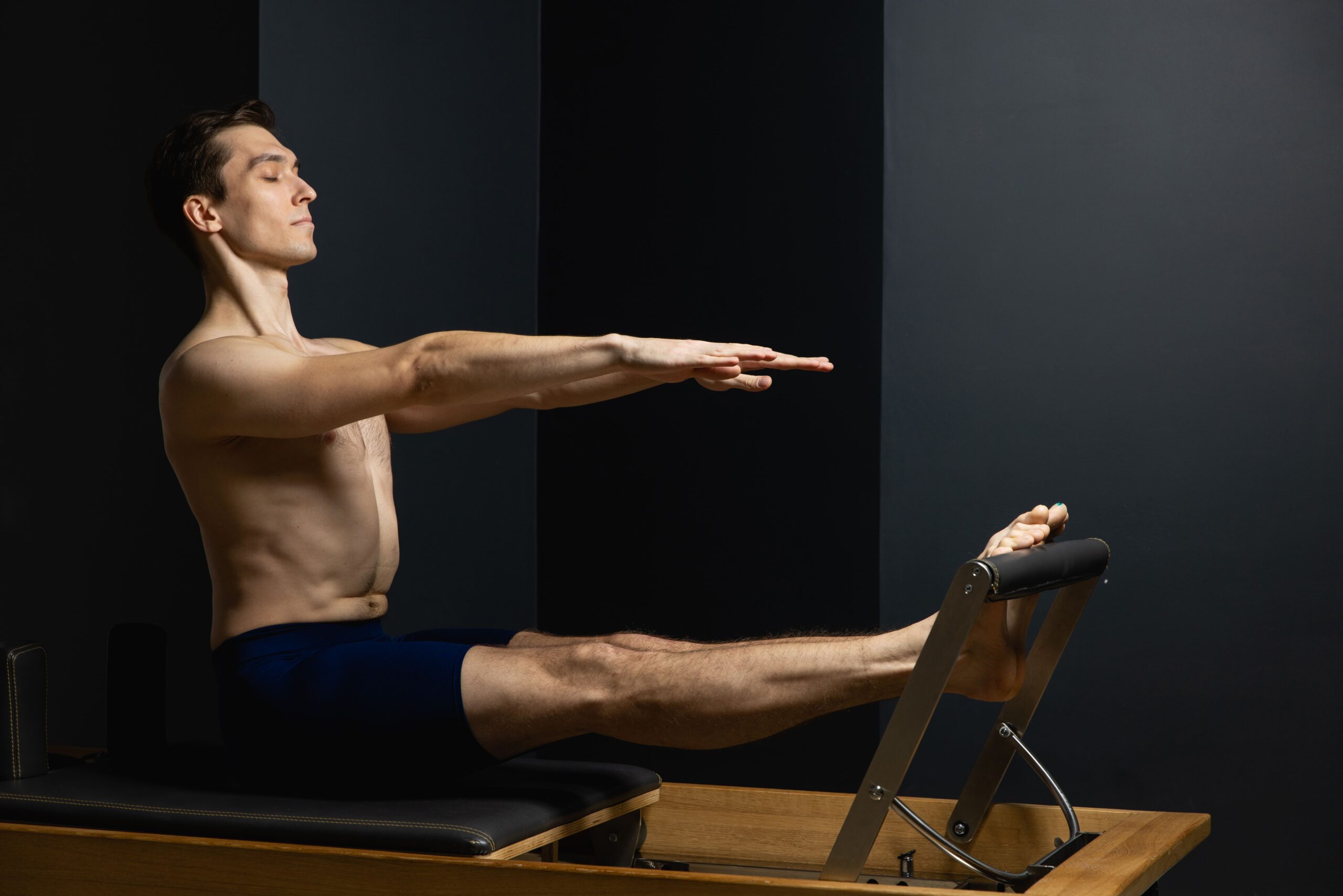 Pilates is not linear like traditional lifting — progress comes from control, depth, and precision.
Progression Tips:
- Increase reps slowly (e.g., 2–4 reps/side weekly)
- Add controlled variations (e.g., single‑leg work)
- Integrate props (bands, small weights)
- Focus on smoother breath transitions
Related Information
➡️ Pilates for Special Populations
➡️ Pilates for Seniors
➡️ Pilates for Kids
➡️ More About Physical Activity
FAQs: Pilates for Men
- Can Pilates build visible muscle?
Yes — especially in core, glutes, and stabilizer groups. Adding light resistance amplifies toning.
- Is Pilates only for flexibility?
No — it builds strength, stability, and balanced musculature as much as mobility.
- Should men do Pilates instead of weight training?
Pilates is best with weight training, not instead of — it enhances performance and resilience.
- How often should men do Pilates?
3–5 sessions per week (20–45 min) complements most training routines.
- Does Pilates help reduce injury?
Yes — by strengthening stabilizers and improving movement patterns, Pilates reduces overuse and compensation injuries.
Pilates for men is not a niche — it’s a smart, functional training choice that builds deep strength, resilience, coordination, and mobility. It balances and enhances traditional training, supports athletic performance, and cultivates long‑term body health.
Men who embrace Pilates often discover a new dimension of strength — one rooted not in brute force, but in control, alignment, and mindful movement.