Aging well doesn’t happen by accident — it happens through thoughtful movement, strength, mobility, and confidence in your body. Pilates for seniors is a gentle, adaptable, and highly effective way to maintain physical function, reduce pain, improve balance, and enhance day‑to‑day independence.
This guide walks you through:
- Why Pilates is especially helpful for older adults
- Core principles for safe practice
- Common exercises and modifications
- A sample routine you can follow at home
- FAQs and practical tips
Whether you’re new to exercise or returning after a break, Pilates offers a joint‑friendly, empowering way to stay active as you age.
Why Pilates Is Great for Seniors
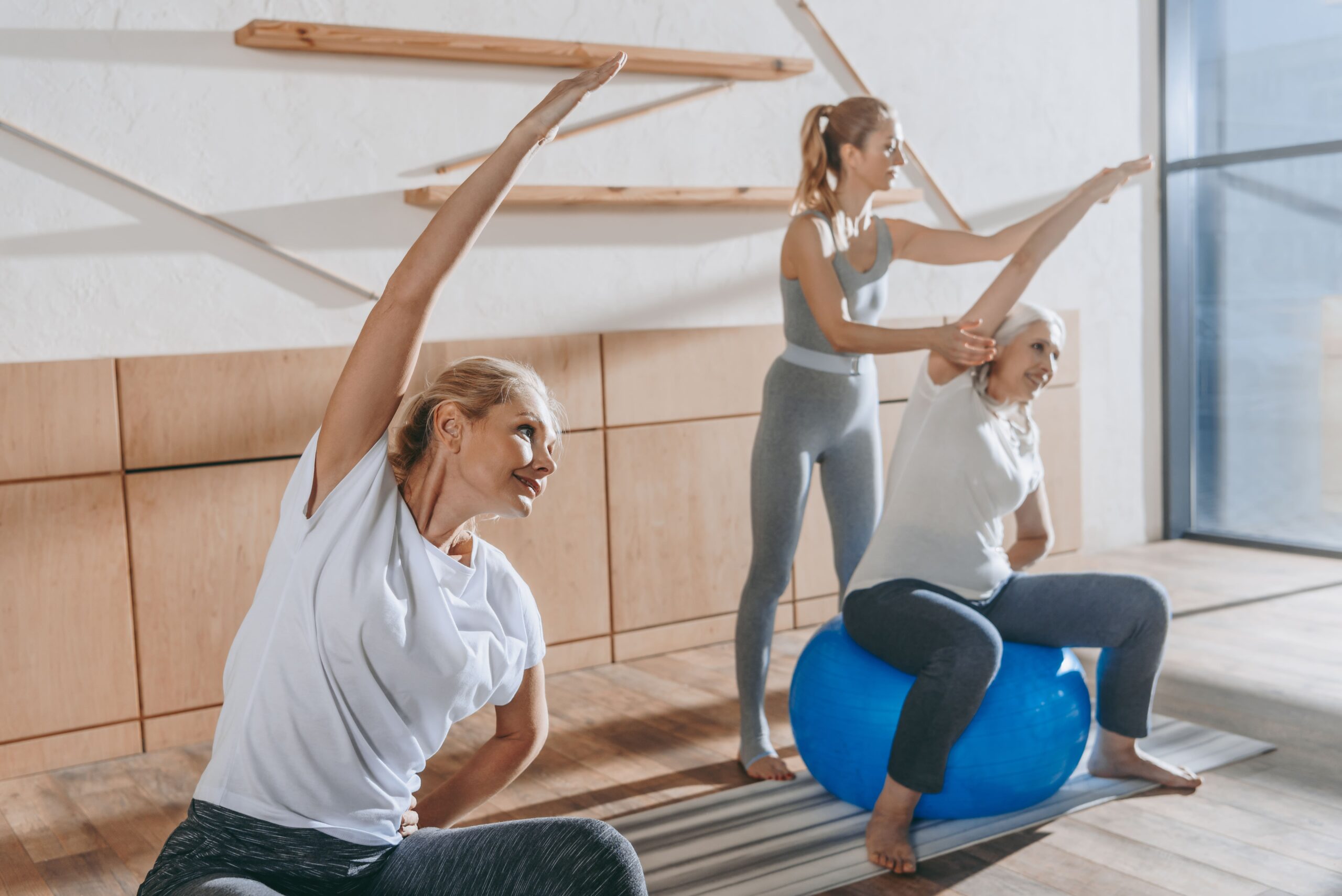 Pilates isn’t just exercise — it’s functional movement training. For older adults, that means movement that directly supports everyday tasks like standing up, reaching overhead, walking, and maintaining balance.
Key Benefits for Seniors
✅ Improves Balance and Reduces Fall Risk
Pilates enhances coordination, ankle stability, and proprioception — all critical for fall prevention. (Read more: Fall Prevention)
✅ Builds Joint‑Friendly Strength
Deep core muscles, hips, glutes, shoulders, and back are strengthened without high impact.
✅ Increases Flexibility & Mobility
Gentle stretching improves range of motion, making daily movements easier and more comfortable.
✅ Supports Posture & Spinal Alignment
Reverses the rounded upper back and forward head posture common with age.
✅ Promotes Calm, Mindful Movement
Breath‑led movement soothes the nervous system and supports relaxation.
✅ Enhances Functional Ability
Everyday actions — bending, lifting, reaching — become easier and safer.
Who Should Do Senior Pilates?
Pilates can be appropriate for most older adults, including those who:
- Are sedentary or re‑starting after a long break
- Experience mild joint stiffness
- Want to prevent falls or mobility loss
- Are managing mild chronic pain or postural discomfort
- Wish to build safe, sustainable strength
- Are aging with resilience and independence in mind
As always, if you have medical conditions, recent surgeries, or severe pain, check with your healthcare provider before starting any new exercise.
Core Principles for Senior Pilates
Safe and effective senior Pilates emphasizes:
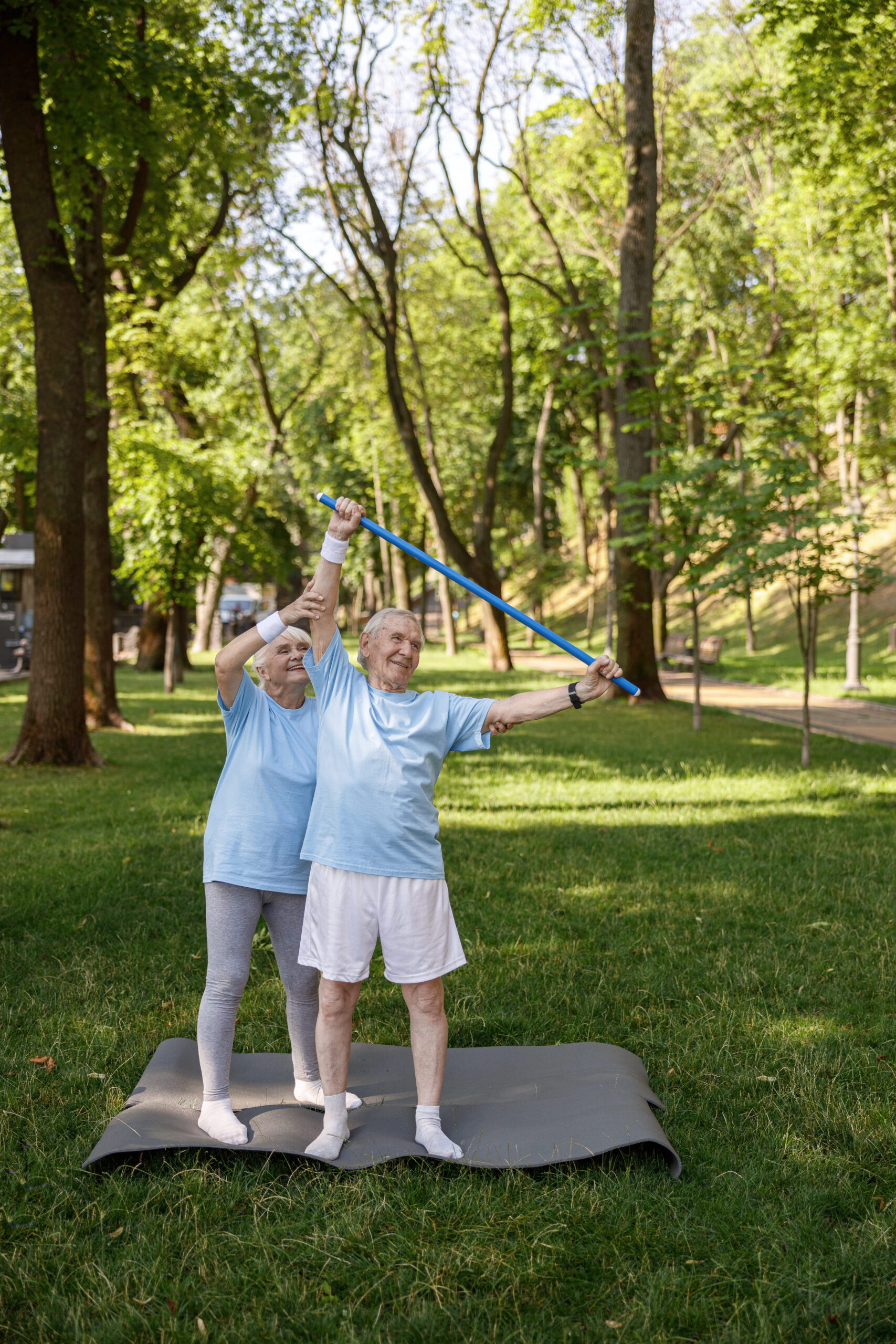 🟡 Low Impact Movement
Minimizes joint stress while maximizing stability.
🟡 Slow, Controlled Motion
Moves are deliberate, not rushed — this builds strength more effectively and protects joints.
🟡 Breath‑Centered Cues
Breathing patterns support core engagement and ease tension.
🟡 Balance and Stability First
Focus on upright posture, controlled transitions, and safe alignment.
🟡 Pain‑Free Movement
Any pain — sharp or persistent — is a signal to modify or stop that movement.
Warm‑Up for Seniors
Before strengthening, warm‑ups prepare the body.
🔹 Seated Breath & Spine Rolls
Sit tall in a chair:
- Inhale to expand ribs
- Exhale to draw belly in and gently roll the spine tall and upright
Benefits: Releases tension in back and encourages core awareness.
🔹 Ankle Circles (Seated)
Lift one foot slightly:
- Rotate ankle slowly in each direction
- Switch after 8–10 rotations
Benefits: Improves ankle mobility and circulatory flow.
🔹 Shoulder Rolls
Seated or standing:
- Inhale as shoulders lift
- Exhale as they roll back and down
Benefits: Reduces shoulder and neck stiffness.
Gentle Strength & Balance Exercises
Below are safe, senior‑friendly Pilates movements with explanations and modifications.
🟩 Seated March (Core + Hip Flexors)
How to do it:
- Sit tall in a chair
- Lift one knee toward chest gently
- Lower and switch
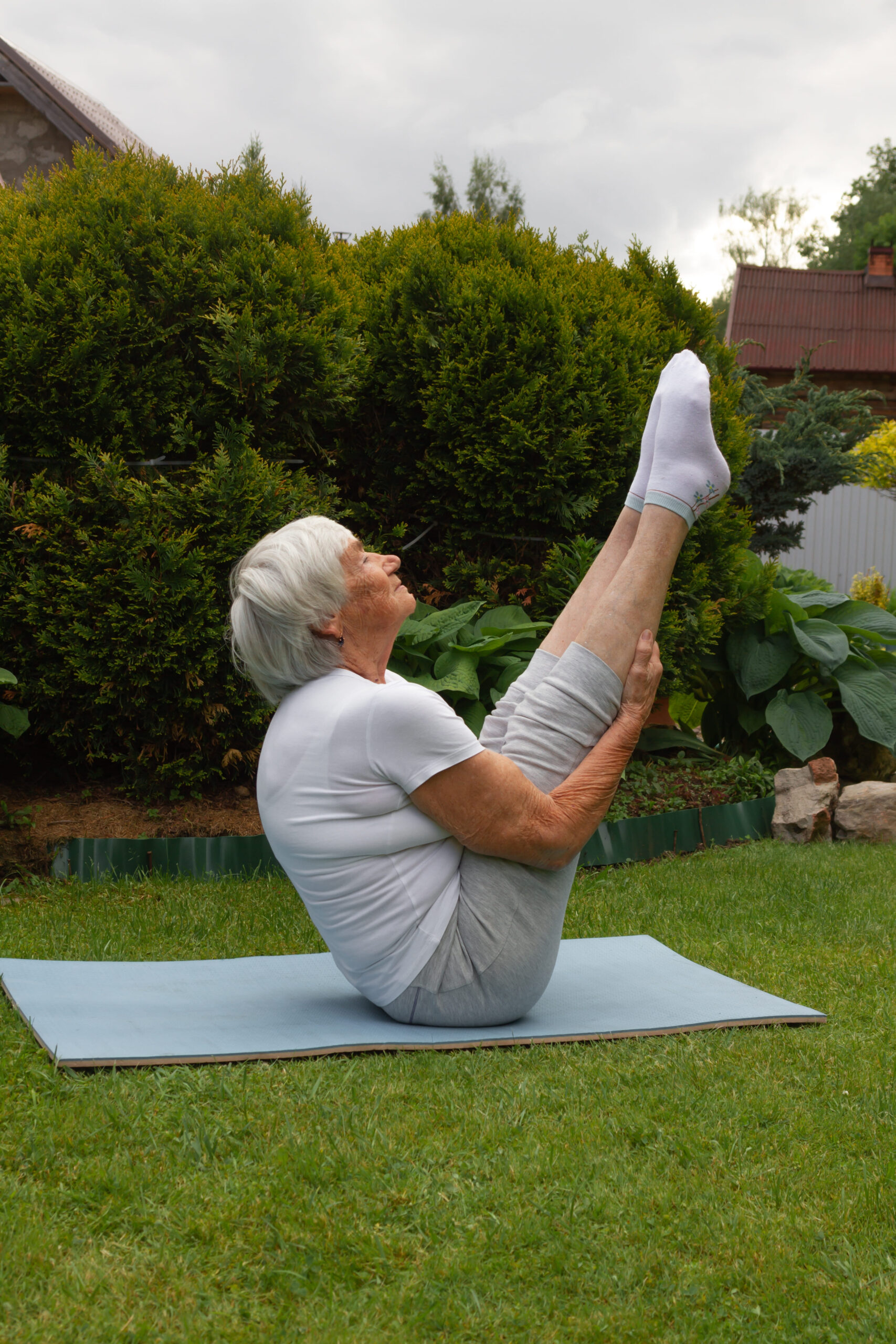 Modification: Keep movement small if hip flexors feel tight.
Why it helps: Activates deep core and hip flexors, builds balance.
🟨 Supported Standing Leg Lifts
How to do it:
- Stand behind a chair or near a wall
- Lift one leg slightly to the side
- Lower with control
Modification: Keep foot closer to the floor for support.
Why it helps: Strengthens glutes and improves side‑to‑side stability.
🟦 Bridge (Glute & Hamstring Strength)
How to do it:
- Lie on back with knees bent
- Exhale and lift hips toward ceiling
- Inhale and lower slowly
Modification: Place a pillow under hips for comfort.
Why it helps: Strengthens posterior chain, supports hip and low‑back stability.
🟥 Cat‑Cow on Hands & Knees
How to do it:
- On all fours, inhale to arch spine (cow)
- Exhale to round spine (cat)
Modification: Perform seated in a chair with gentle spine articulations.
Why it helps: Releases low‑back tension, improves spinal mobility.
🟪 Side‑Lying Leg Series
How to do it:
- Lie on your side, head supported
- Lift top leg with control
- Lower with breath
Modification: Bend bottom leg for balance.
Why it helps: Strengthens outer hips and improves pelvic stability.
🟫 Standing Toe & Heel Raises
How to do it:
- Stand with support (wall or chair)
- Raise up onto toes, then rock back onto heels
Modification: Small range of motion is fine — just keep it controlled.
Why it helps: Enhances ankle strength and balance.
Mobility & Stretching (Daily Options)
🌟 Seated Hamstring Stretch
- Sit at the edge of a chair
- Extend one leg forward
- Inhale tall, exhale to hinge from hips
Benefits: Eases hip and hamstring tightness.
🌟 Chest & Shoulder Opening
- Stand in a doorway
- Place forearms on frame
- Lean gently forward
Benefits: Opens chest and counteracts forward posture.
🌟 Neck Stretch (Gentle)
- Tilt head to one side
- Hold for 15–20 seconds
- Switch sides
Benefits: Relieves neck tension common in aging.
Senior Pilates Routine (20–30 Minutes)
Here’s a sample weekly routine that you can repeat or adjust based on comfort:
Monday — Foundation Flow (20 min)
- Warm‑up: Breath + Spine Rolls — 5 min
- Seated March — 3 sets of 12
- Supported Leg Lifts (each side) — 3 sets of 10
- Bridge — 2 sets of 10
- Cool‑down stretch — 5 min
Wednesday — Balance & Strength (25 min)
- Warm‑up: Ankle Circles + Shoulder Rolls — 5 min
- Side‑Lying Leg Series — 3 sets each leg
- Standing Toe/Heel Raises — 3 sets of 12
- Cat‑Cow (or seated variation) — 5 reps
- Stretch routine — 5 min
Friday — Full Body Integration (30 min)
- Warm‑up: Breath + Mobility — 5 min
- Seated March + Bridge combo — 10 min
- Supported Standing Work — 10 min
- Stretch + Relaxation — 5 min
Tips for Safe Practice
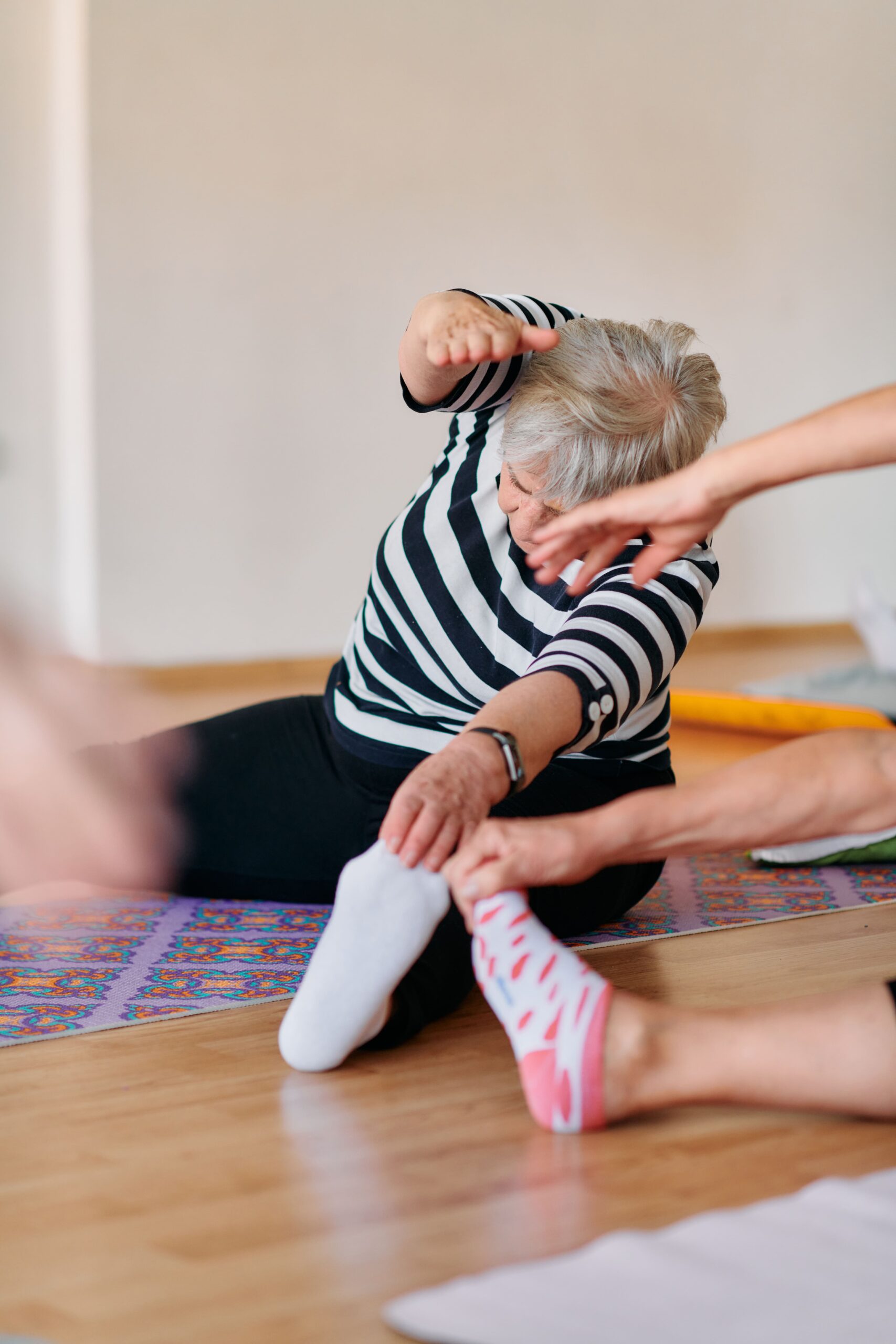 🔹 Breathe Through Movement
Exhale during effort, inhale during release — this supports diaphragmatic engagement and reduces tension.
🔹 Use Props
A chair, wall, pillow, or resistance band can provide stability and support.
🔹 Listen to Your Body
“Discomfort” is not the same as “pain.” If something feels sharp or unstable, modify or skip.
🔹 Build Gradually
Consistency matters more than intensity. Small, daily gains add up.
🔹 Stay Hydrated
Hydration supports joint health and circulation.
Common Misconceptions
❌ “Pilates is too hard for seniors.”
Pilates scales easily. Modifications make every move accessible.
❌ “I need equipment.”
Not at all — many senior Pilates sessions are bodyweight only.
❌ “Balance work is risky.”
With support and progression, balance exercises improve confidence and reduce fall risk.
Related Information
➡️ Pilates for Special Populations
➡️ Pilates for Men
➡️ Pilates for Kids
FAQs: Pilates for Seniors
- Can seniors with arthritis do Pilates?
Yes, with modifications that reduce painful ranges. Focus on mobility and gentle strengthening.
- How often should seniors practice Pilates?
Aim for 3–5 sessions per week, mixing strength, mobility, and rest days.
- Is Pilates good for posture?
Absolutely. Pilates strengthens the muscles that support upright posture and spinal alignment.
- What if I get dizzy or off‑balance?
Use a chair or wall for support. Start small and gradually challenge stability.
- Do I need a trainer?
Many seniors benefit from professionally guided programs, but many safe routines can be done at home with clear instruction and props.
Aging is a natural process — but how you age is shaped by how you move. Pilates for seniors is not about keeping score or pushing extremes — it’s about feeling better in your body, moving with confidence, and maintaining independence. With controlled movement, breath awareness, and intentional progression, Pilates can help you live stronger, stand taller, and enjoy each day with ease.