Giving birth — whether vaginally or by cesarean — brings profound changes to your body. Postnatal Pilates is a gentle yet powerful way to rebuild strength, restore function, and support your physical and emotional recovery in the weeks and months after delivery.
This page guides you through everything you need to know about postnatal Pilates: how it helps, when it’s safe to start, key exercises and modifications by phase, safety considerations, and tools for progression.
Why Postnatal Pilates Matters
 After pregnancy and birth, your body has gone through:
- Weighted changes in the torso and pelvis
- Hormonal shifts (including relaxin, which loosens connective tissues)
- Abdominal separation (diastasis recti)
- Altered posture due to nursing, carrying baby, and fatigue
- Weakened pelvic floor
Pilates is uniquely suited to:
- Rebuild core support without strain
- Restore pelvic floor strength
- Correct posture and alignment
- Increase overall mobility and ease of movement
- Reconnect breath with movement
It supports function, stability, and confidence — not just aesthetics.
Is Pilates Safe After Birth?
Yes — when introduced gradually and with appropriate modifications.
Before starting, it’s important to:
✔ Get medical clearance from your healthcare provider
✔ Ensure any major pain or surgical wounds are healed
✔ Recognize that recovery timelines differ from person to person
Most postpartum Pilates can safely begin around 6–8 weeks after a routine vaginal birth, or later if you had complications or a cesarean section. Listen to your body and consult your provider before beginning.
What Makes Postnatal Pilates Different?
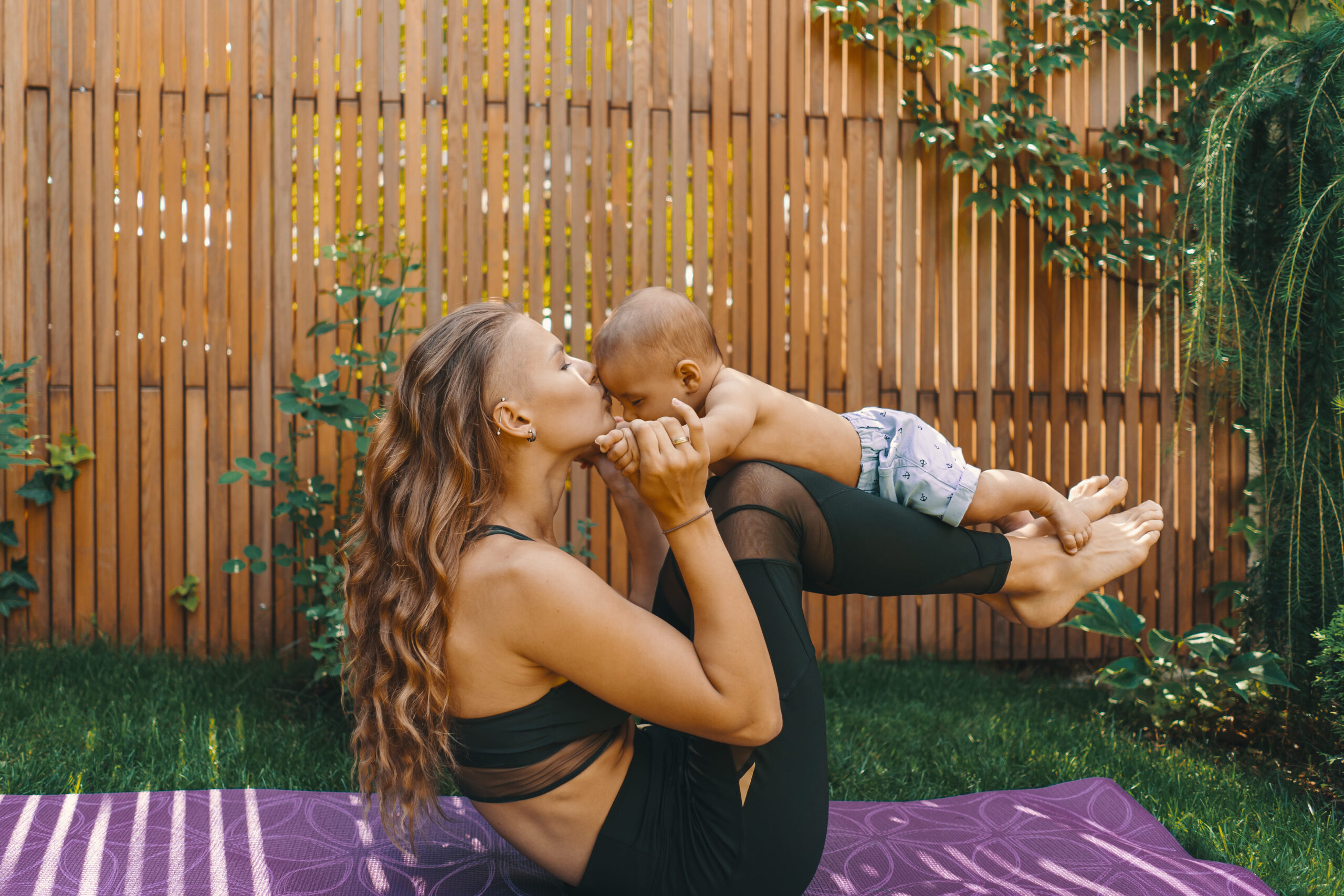 Unlike general Pilates workouts, postnatal Pilates emphasizes:
- Re‑establishing deep core connection (not crunches)
- Pelvic floor rehabilitation
- Joint‑friendly stability
- Progressive reintegration into full‑body strength
- Alignment over intensity
This means exercises are selected and modified based on your phase of recovery, comfort, and readiness.
Postnatal Phases: What to Expect
Here’s a general roadmap many certified postnatal Pilates instructors follow:
| Phase | Timeframe | Focus |
| Phase 1: Gentle Reconnect | Weeks 1–6+ | Breath + pelvic floor, gentle mobilization |
| Phase 2: Core Foundation | Weeks 6–12 | Deep core and alignment, low‑impact strengthening |
| Phase 3: Strength & Stability | Months 3–6 | Integrated full‑body strength |
| Phase 4: Progression & Performance | 6+ Months | More dynamic movement and endurance |
This timeline is flexible — individual needs vary based on birth experience, pre‑existing fitness, and recovery.
Phase 1: Gentle Reconnect (First Weeks Post‑Birth)
Goal: Support healing, calm the nervous system, and bring awareness back to the body.
At this stage:
- Avoid traditional ab exercises like crunches
- Avoid deep backbends or heavy load lifting
- Focus on controlled breath and pelvic floor activation
Foundational Movements
➤ Breath + Diaphragmatic Awareness
How to do it:
- Sit or lie comfortably with knees bent
- Inhale to expand belly and ribs
- Exhale gently, drawing lower belly toward spine
Helps reconnect core without strain.
➤ Pelvic Floor Awareness (Gentle Kegels)
How to do it:
- Inhale fully
- Exhale and gently lift pelvic floor muscles
- Hold briefly, then relax
Do not over‑contract. Ease into connection.
➤ Cat‑Cow (Gentle Spinal Mobility)
How to do it:
- On hands and knees
- Inhale arch (cow), exhale round (cat)
Relieves low back tension, encourages smooth spine movement.
➤ Supported Hip Rolls
How to do it:
- Lie on back with knees bent (or supported on a bolster)
- Exhale to lift pelvis slightly
- Inhale to lower slowly
Targets glutes and lower spine control.
Phase 2: Core Foundation (Weeks 6–12+)
Goal: Rebuild deep core strength with safe, controlled movement patterns.
This is a phase where Pilates truly shines, with an emphasis on:
- Transverse abdominis engagement
- Pelvic alignment
- Scapular stability
- Hip and glute development
Gentle Core Series
🔹 Modified Heel Slides
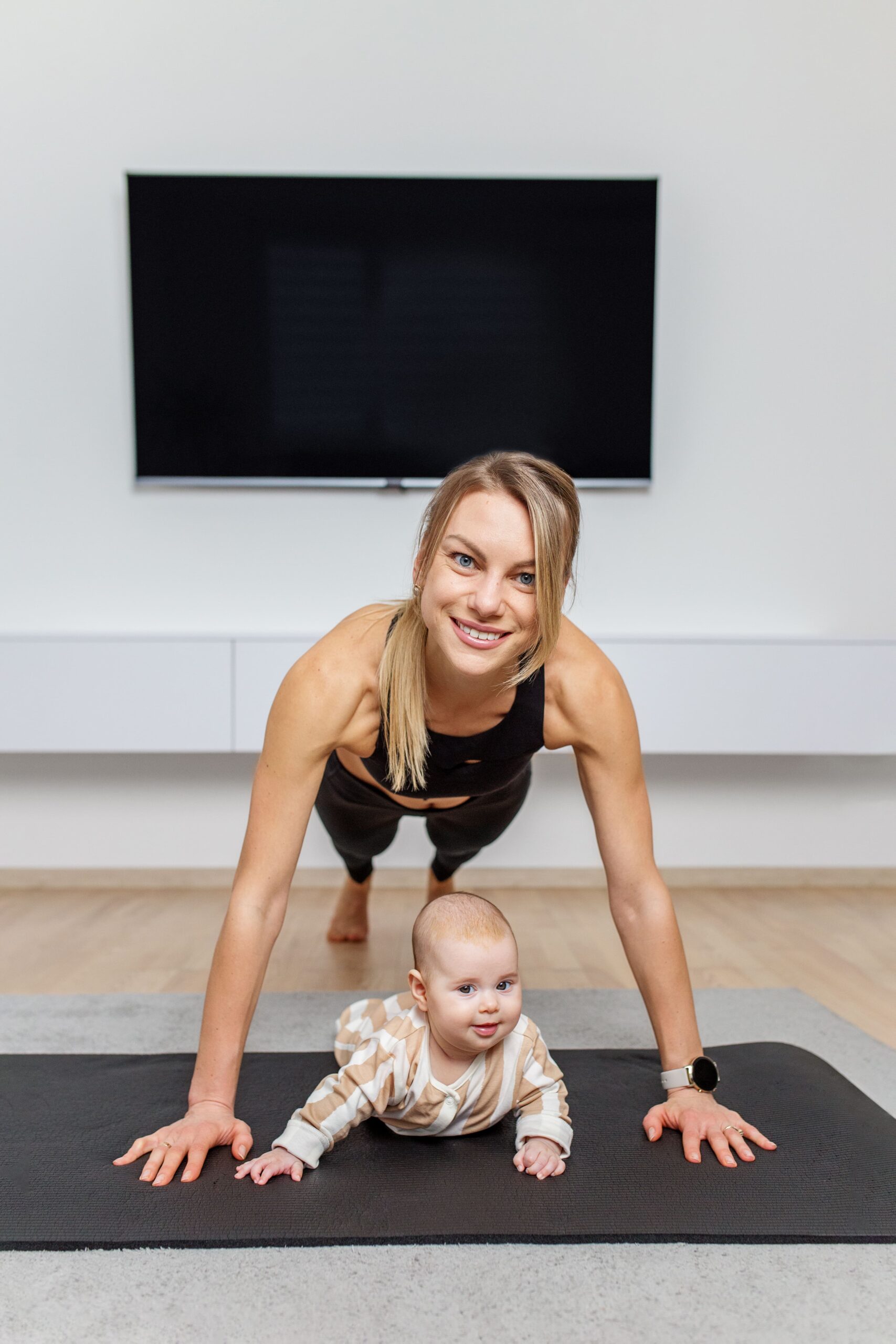 How to do it:
- Lie on back, knees bent
- Inhale to prepare
- Exhale as you slide one heel out slowly
- Inhale to return
No belly doming. Keep ribs down and pelvic neutral.
🔹 Side‑Lying Leg Lifts
How to do it:
- Lie on side with head supported
- Lift top leg with control
- Keep pelvis steady
Great for glute medius and hip stability.
🔹 Half Plank (Knee Support)
How to do it:
- Forearms on mat, knees down
- Exhale to lift belly and hold
Focus on breath, not duration.
🔹 Bridges (Supported)
How to do it:
- Lie on back, knees bent, feet flat
- Exhale to lift hips gently
- Inhale to lower
Emphasizes glute activation and low‑back support.
Phase 3: Strength & Stability (Months 3–6)
Goal: Move toward more integrated, functional movement.
This phase rebuilds deeper coordination and stamina — still with emphasis on alignment and pelvic support.
Build Foundation With These Movements
🟡 Standing Leg Series (Supported)
- Marching in place
- Supported squats
- Side leg lifts
Strengthens legs and hip stabilizers.
🟡 Rotational Work (Low Load)
- Seated or standing thoracic rotations
- Avoid deep twisting until core connection feels solid
Improves mobility with pelvic awareness.
🟡 Modified Single‑Leg Bridge
- As you get stronger, extend one leg into the bridge
Increase challenge without compromising control.
🟡 Bird‑Dog (Controlled)
How to do it:
- On hands and knees
- Extend opposite arm and leg with a stable core
Great for back, glutes, and core.
Phase 4: Progression & Performance (After 6 Months)
Goal: Safely increase muscular challenge and movement complexity — still with stability and control at the forefront.
You can begin:
- Deeper plank variations
- Controlled side planks with knee support
- Longer integrated flows
- Light resistance work with bands or light weights
Only progress to this phase with medical clearance and strong core awareness.
Common Modifications and Props
Props help with comfort and alignment throughout your recovery.
🟣 Bolsters or pillows
Support during supine work or hip‑opening stretches.
🎗️ Resistance bands
Add gentle resistance for standing and sidelying strength work once core is stable.
🪶 Chair or Wall Support
For balance during standing exercises.
Red Flags & Safety Cues
Stop or modify any movement that causes:
❗ Sharp or pulling pain
❗ Urinary urgency or leakage
❗ Low back pain during movement
❗ Worsening pelvic pressure
❗ Lightheadedness
If any of these occur, regress to simpler movement or rest — and consult a medical professional if symptoms persist.
Related Information
➡️ Pilates for Special Populations
➡️ Pilates for Seniors
➡️ Pilates for Men
➡️ Exercise During Pregnancy and the Postpartum Period
FAQs: Postnatal Pilates
- When is it safe to start Pilates after childbirth?
Most people begin modified Pilates around 6–8 weeks after a vaginal birth and 8–12 weeks after a C‑section, with medical clearance.
- Can Pilates help with diastasis recti?
Yes — especially with gentle, core‑specific work that emphasizes deep abdominal engagement without crunches.
- How often should I do postnatal Pilates?
Aim for 3–5 days per week of short, gentle sessions — gradually increasing as strength and comfort grow.
- Should I avoid certain movements?
Until core and pelvic floor feel strong:
- Avoid traditional crunches
- Limit deep back extensions
- Avoid high‑impact or abrupt movements
- Can I do Pilates while breastfeeding?
Yes — just be mindful of positioning, neck alignment, and comfort. Use props for support.
Postnatal Pilates is about honoring your body’s transformation and rebuilding strength with respect, patience, and precision. This isn’t about rushing back to where you were — it’s about learning how to move safely and confidently forward.
Start with gentle reconnection, build your foundation thoughtfully, and progress only when your body is ready. And always remember: your body has done something remarkable — give it the movement support it deserves.