Pregnancy is a time of profound change — physically, hormonally, and emotionally. For many women, staying active is one of the most empowering ways to support their changing bodies, ease discomfort, and prepare for labor. Prenatal Pilates offers a gentle, intentional movement practice that respects these changes while building strength, stability, and confidence.
This guide walks you through:
- The benefits and goals of prenatal Pilates
- What to expect in a safe prenatal Pilates session
- Key exercises and modifications by trimester
- Safety precautions and red flags
- FAQs and practical tips
Why Prenatal Pilates Is Helpful
Unlike high‑impact workouts, prenatal Pilates focuses on controlled movement, breath support, and structural alignment — all essential for a changing body.
Key Benefits
-
 Builds Functional Strength
Pilates strengthens deep support muscles — especially the core, pelvic floor, glutes, back, and hips — which helps with posture, lower back comfort, and daily movement. - Improves Posture & Alignment
As the belly grows, posture shifts. Pilates helps counteract forward tilt while reducing neck, shoulder, and low‑back strain. - Enhances Pelvic Floor Awareness
Gentle engagement supports pelvic health before, during, and after birth. - Encourages Efficient Breathing
Breathwork teaches diaphragmatic breathing for relaxation and endurance — useful during labor and in everyday comfort. - Eases Common Discomforts
Many women report less lower back pain, reduced pelvic pressure, and improved hip mobility. - Supports Mental Well‑Being
Mindful movement releases tension, encourages calm, and strengthens the mind–body connection.
Is Pilates Safe During Pregnancy?
Yes — when appropriately modified and guided by qualified instruction.
Before beginning or continuing prenatal Pilates:
- Get medical clearance (especially if you have complications or high‑risk factors)
- Choose an instructor experienced with prenatal movement or specialized classes
- Avoid any exercise that causes pain, dizziness, or shortness of breath beyond typical exertion
Most women can practice Pilates throughout pregnancy — each trimester just requires thoughtful adjustments.
How Prenatal Pilates Differs From Regular Pilates
Prenatal Pilates incorporates modifications such as:
- Avoiding exercises that compress the belly
- Reducing supine positions after the first trimester
- Supporting the pelvis and ribcage with props
- Focusing on joint stability over deep ranges of motion
- Emphasizing breath in ways that support pelvic and abdominal comfort
What to Expect in a Prenatal Pilates Class
A well‑designed prenatal session typically includes:
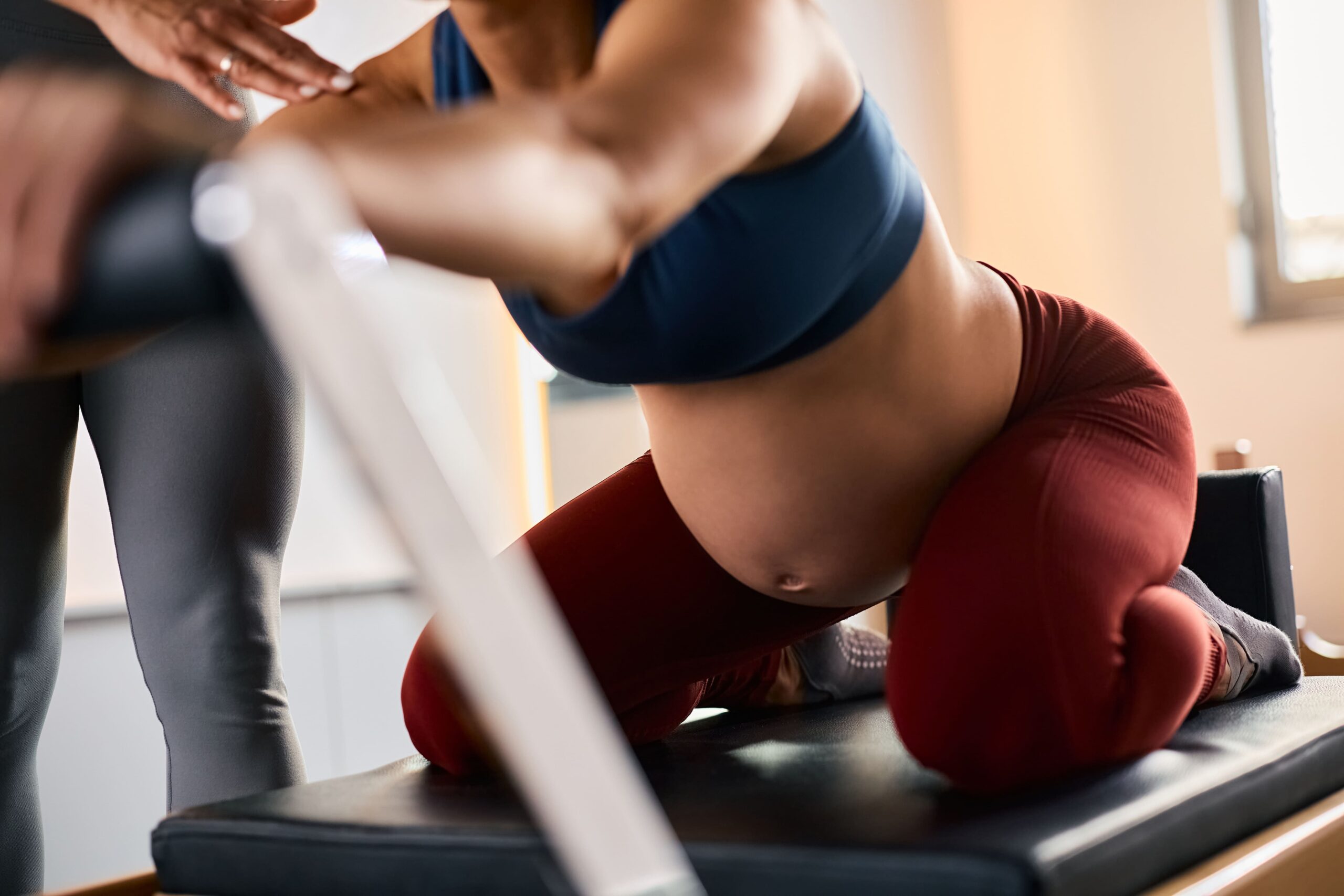 Warm‑Up & Breath Work
Starting with gentle breath and mobility prepares the nervous system and core.- Pelvic Floor & Core Activation
With safe engagement cues (not traditional crunches), the deep support muscles are strengthened. - Stability & Strength Training
Works legs, glutes, back, and arms in safe ranges. - Mobility & Stretching
Targets hips, shoulders, and the pelvis for daily ease of movement. - Cool‑Down & Relaxation
Encourages calm, reducing tension and promoting recovery.
The session’s pace is moderate, with attention to alignment, control, and comfort.
Prenatal Pilates by Trimester
Each trimester has unique considerations. Below are suggested focuses and modifications that many certified prenatal instructors use.
🍼 First Trimester (0–12 weeks)
Focus: Safe engagement, breath, gentle strength
Points to Remember:
- Core can still be engaged — but avoid any movements that strain the lower abs.
- Be mindful of nausea or fatigue. Shorter sessions can be great.
Suggested Movements:
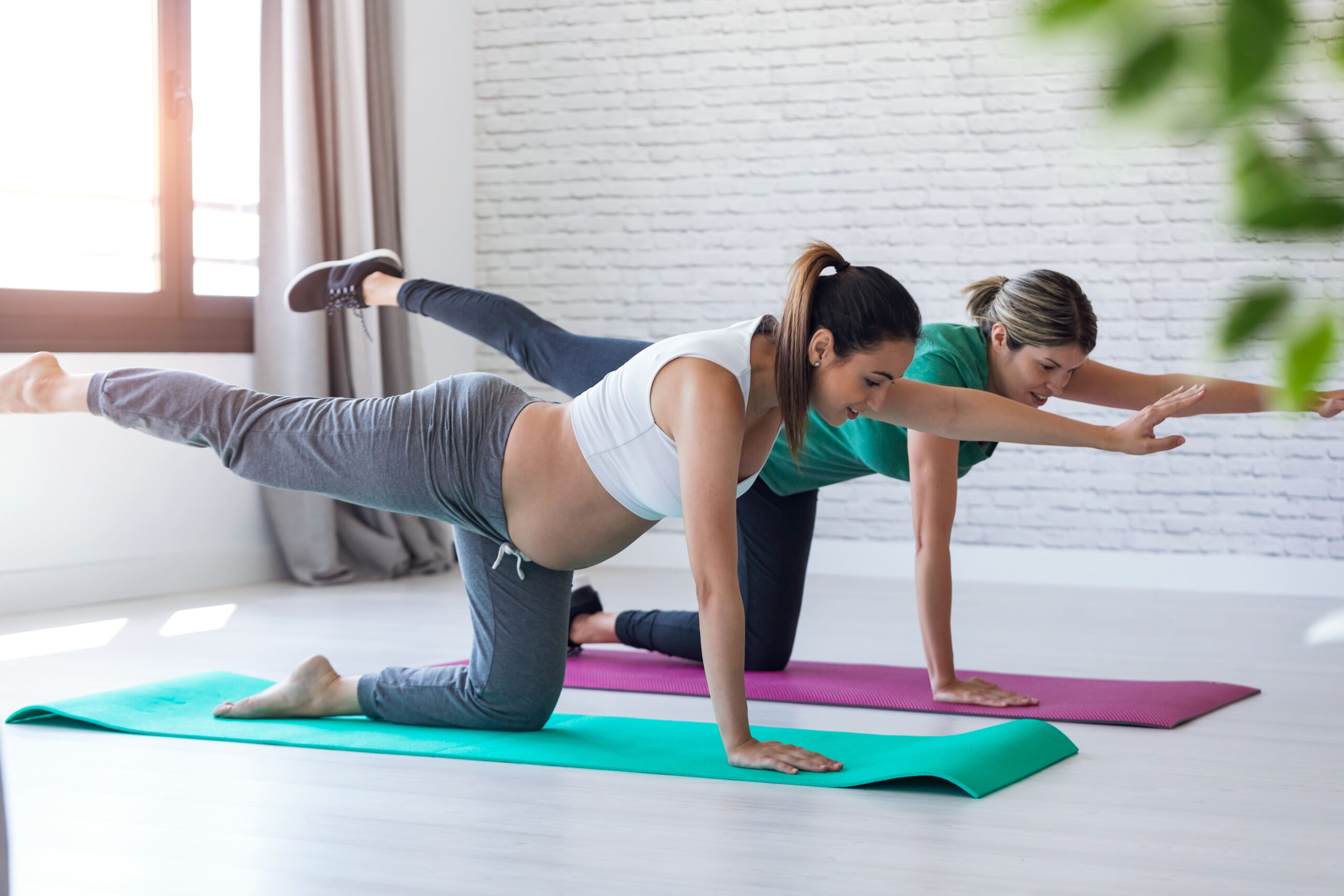
- Cat‑Cow on hands and knees
- Modified Hundred (gentle activation without belly compression)
- Glute bridges
- Clamshells or side‑lying leg lifts
- Seated spinal mobilizations
Modification Tip: If you feel tired, reduce intensity and focus on breath, connection, and alignment.
🤰 Second Trimester (13–27 weeks)
Focus: Stability and supportive strength
As the belly grows:
- Avoid extended supine work (lying flat on your back) for more than a few minutes — many instructors switch to supported or side‑lying positions.
- Begin to emphasize pelvic stability, hip strength, and low‑back support.
Suggested Movements:
- Side‑lying leg series (for glutes/hips)
- Standing Pilates work (supported by chair or wall)
- Seated core work (pelvic tilts with stability focus)
- Standing squats (with support)
- Modified plank variations (knees down, neutral spine)
Modification Tip: Use a firm pillow or wedge under your upper body if you need to work on the floor.
🤱 Third Trimester (28 weeks to birth)
Focus: Comfort, mobility & preparation for labor
With increased pelvic pressure and hormonal change (relaxin increases joint laxity), this trimester emphasizes mobility, alignment, and strength for daily comfort.
Suggested Movements:
- Gentle hip openers
- Seated or side‑lying stretches
- Supported standing strength
- Breath‑focused pelvic floor work
- Wall squats or supported bridges
Modification Tip: Avoid any balance exercises without support — use a chair, wall, or stable surface.
Safe Prenatal Pilates Exercises (Incl. Modifications)
Below are safe and commonly used prenatal Pilates moves, with tips for modifying them based on comfort and progression.
🔹 Pelvic Tilts (Supine or Supported)
Benefits: Teaches neutral pelvis, strengthens core and back
- Early pregnancy: Lie on back with knees bent
- Later pregnancy: Seated or supported on a wedge
How to do:
Inhale to prepare, exhale to tilt pelvis, engaging low belly gently.
🔹 Cat‑Cow (Quadruped)
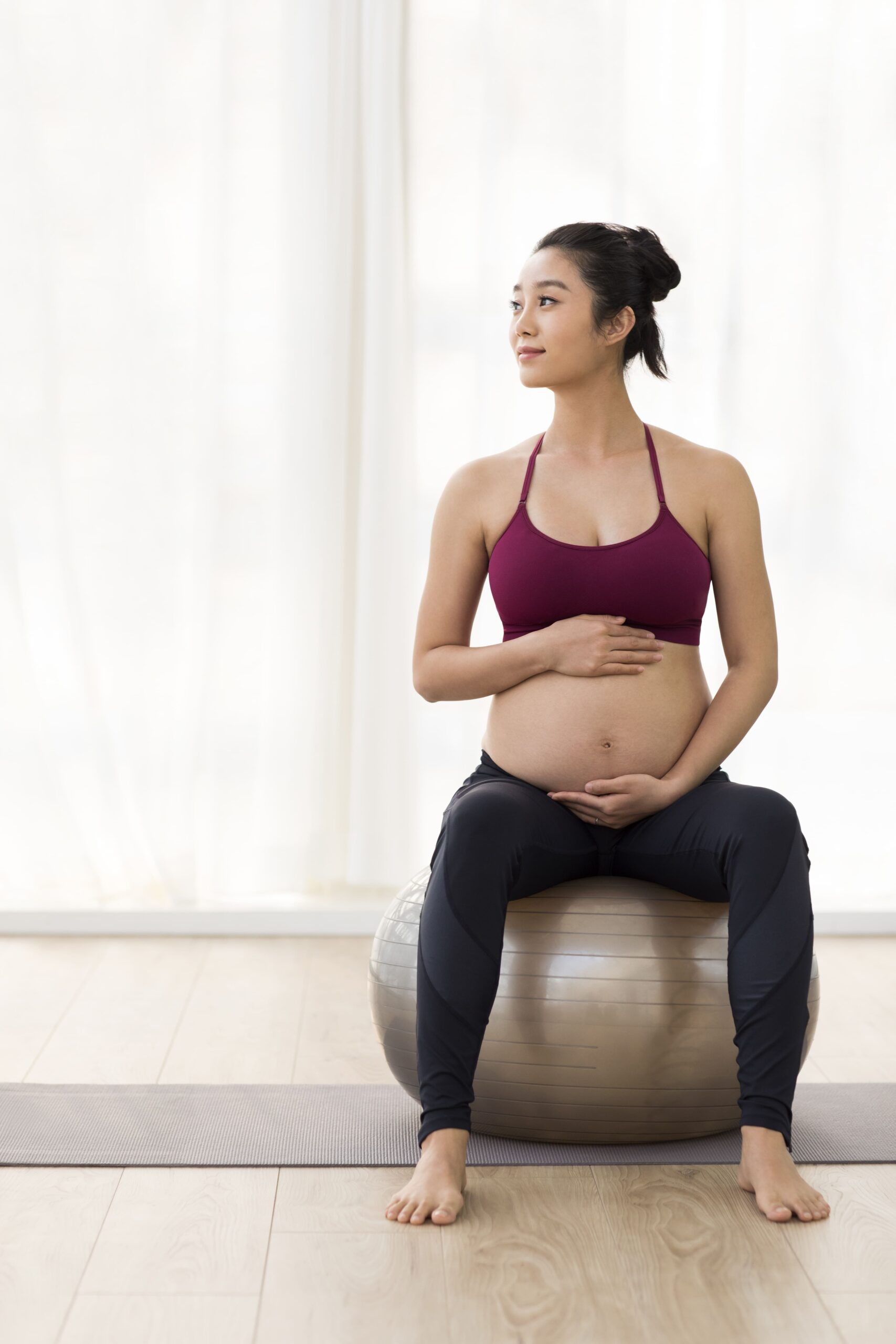 Benefits: Mobilizes spine, relieves back tension
- On hands and knees, inhale arch (cow), exhale round (cat)
- Move within comfort without force
🔹 Side‑Lying Leg Lifts
Benefits: Strengthens glutes, supports hip stability
- Lie on left side, support head
- Lift top leg with control, exhale up, inhale down
Modification: Use a pillow between knees for comfort.
🔹 Modified Bridge
Benefits: Glutes, hamstrings, pelvic stability
- Lie on back (early pregnancy) or supported (later)
- Press through feet, lift hips without over‑arching
Note: Keep movements small and controlled.
🔹 Seated Spine Stretch
Benefits: Spine mobility, posture support
- Sit tall with legs extended (or slightly bent)
- Exhale slowly into a gentle forward stretch
Modification: Bend knees to reduce hamstring tension.
🔹 Supported Squats
Benefits: Legs, hips, core support
- Stand with back to wall or hold sturdy chair
- Inhale down, exhale up — slow and controlled
🔹 Side Plank (Modified)
Benefits: Oblique strength, shoulder stability
- From side‑lying, prop on forearm with knees bent
- Hold for comfortable count
Modification: Keep bottom knee on the floor.
Breathing & Pelvic Floor: How They Work Together
Breath and pelvic floor engagement in prenatal Pilates are foundational:
- Inhale: Expand ribs and diaphragm gently
- Exhale: Softly engage lower abdominals and pelvic floor (not forcefully)
Avoid breath holds — steady breath enhances oxygen flow and calm.
Many instructors cue breath with movement: exhale on effort, inhale on release. Read more about breathing: Learning Diaphragmatic Breathing.
Safety Modifications & Red Flags
Safe Modifications
- Use props like pillows, bolsters, chairs, or wedges
- Switch to side‑lying or seated positions if supine feels uncomfortable
- Avoid deep twists or intense core lifts
- Decrease range of motion if joints feel loose
Stop or Modify If You Feel:
- Dizziness or faintness
- Numbness or tingling
- Sharp pain
- Shortness of breath beyond normal
- Pelvic pressure that feels uncomfortable
- Contractions that persist after rest
Related Information
➡️ Pilates for Special Populations
➡️ Pilates for Seniors
FAQs: Prenatal Pilates
- When can I start Pilates in pregnancy?
You can start anytime with medical clearance — even as early as the first trimester if comfortable. - Can Pilates help during labor?
Yes — breath control, pelvic mobility, and core awareness can contribute to better labor comfort. - Can I do Pilates every day?
Short, gentle sessions (10–20 min) are fine most days; longer sessions can be scheduled 3–5x/week. - Will Pilates help my posture?
Absolutely — especially as the body adapts and center of gravity shifts. - Is Pilates safe if I had a C‑section?
Postnatal Pilates (covered in the child page) includes safe progressions when your provider clears you.
Prenatal Pilates is not about perfect performance — it’s about joyful, supported movement through one of life’s most transformative experiences. With mindful breath, safe alignment, and gentle progression, Pilates becomes both a nurturing practice and a powerful way to stay strong through pregnancy.