If you’re fluent in footwork, confident with coordination, and crave the next challenge in your Pilates journey, welcome to the world of Advanced Reformer Sequences. These high-level routines demand everything you’ve built so far — strength, control, balance, flexibility, and refined breathwork — and then take it further.
This guide helps you understand what defines an advanced Reformer routine, how to prepare for the challenge, and which videos and techniques push your practice to its edge (and beyond).
What Makes a Reformer Sequence “Advanced”?
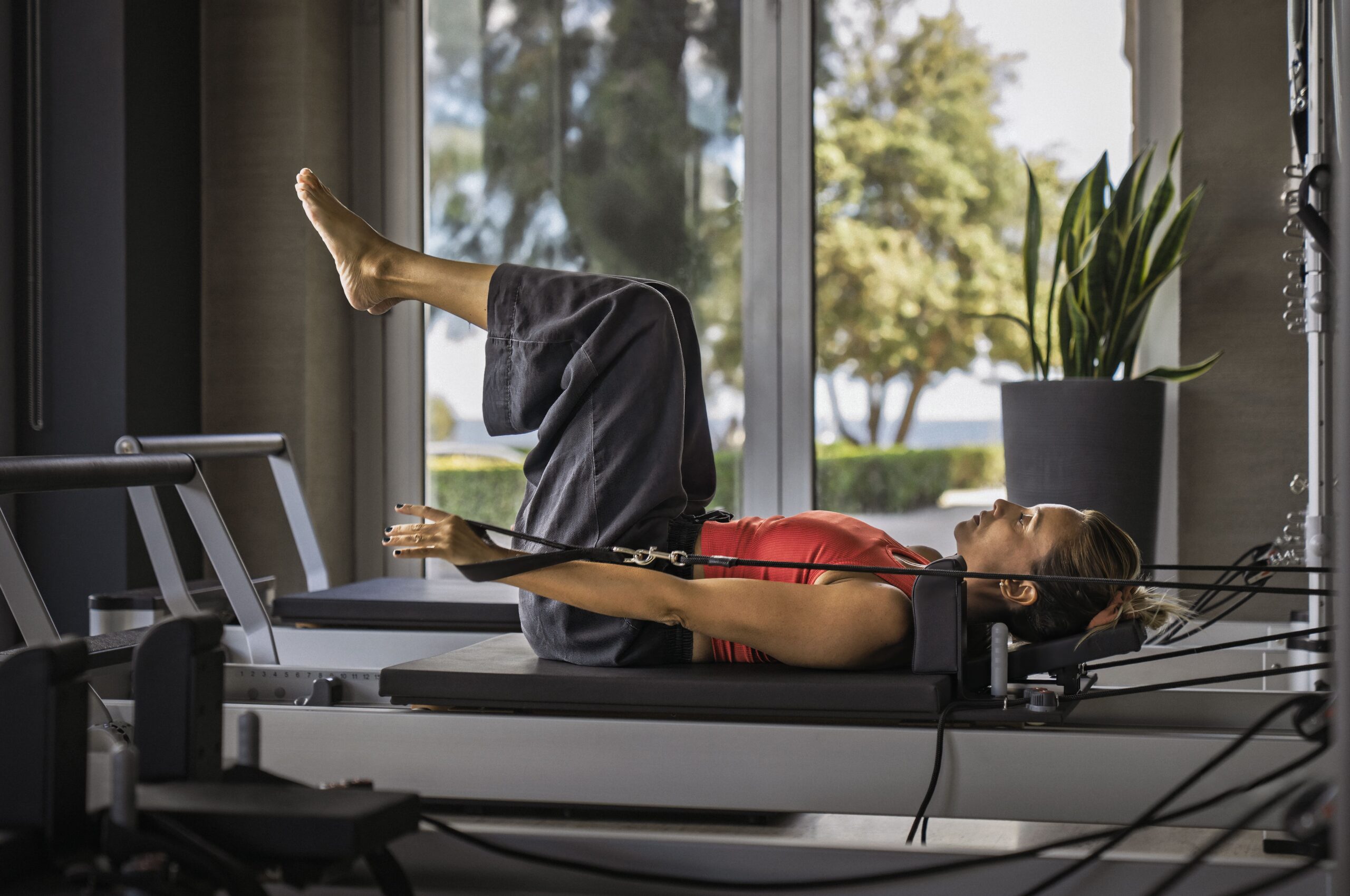 Advanced doesn’t just mean harder — it means more complex integration of movement, breath, and flow (See more here: Advanced Reformer Sequences). You’ll use the entire machine, across all planes of motion, often transitioning quickly while maintaining impeccable alignment.
Key Characteristics:
- High level of body awareness
- Minimal instructor cues — you’re expected to know the setup
- Continuous flow with few rests
- Unstable positions like kneeling, standing, or side-lying on the carriage
- Challenging transitions between exercises
- Control on light springs, requiring deep core and stabilization
Are You Ready for Advanced Reformer Work?
You’re likely ready if you can:
- Maintain form under fatigue
- Self-correct without cues
- Adjust springs mid-routine smoothly
- Transition between exercises without breaking flow
- Control light spring loads without relying on momentum
What to Expect in Advanced Reformer Pilates Videos
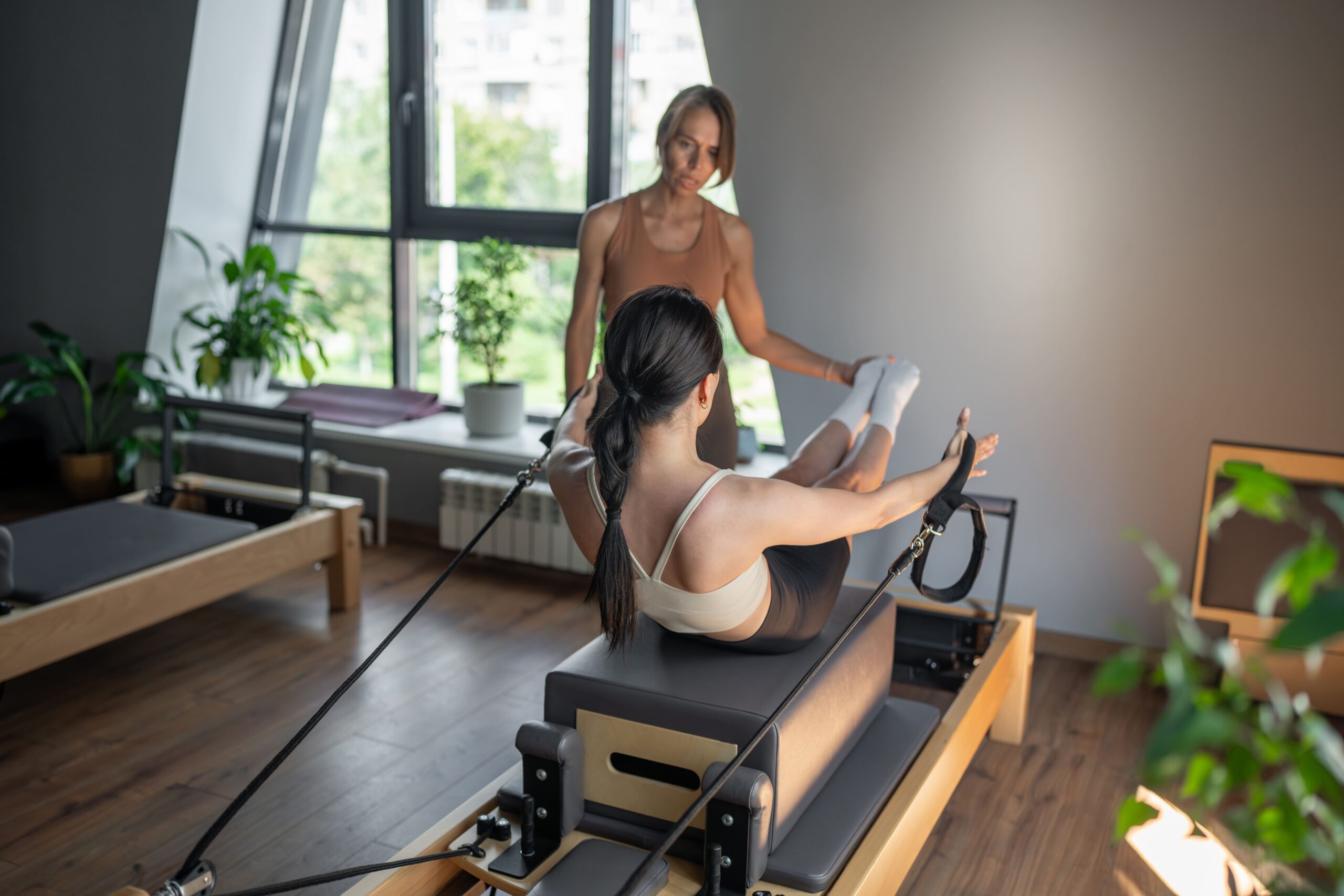 Most advanced video classes are 40–60 minutes and combine strength, endurance, and precision.
You’ll Encounter:
- Long Box series: Pull-ups, backstroke, and teaser variations
- Jumpboard or Plyometric work
- Standing or kneeling splits
- Plank-to-pike flows
- Unilateral strap and box sequences
- Minimal verbal breakdowns — fluency is assumed
💡 Choose instructors with strong classical or contemporary credentials to ensure safety and quality.
Advanced Reformer Moves (Common in High-Level Videos)
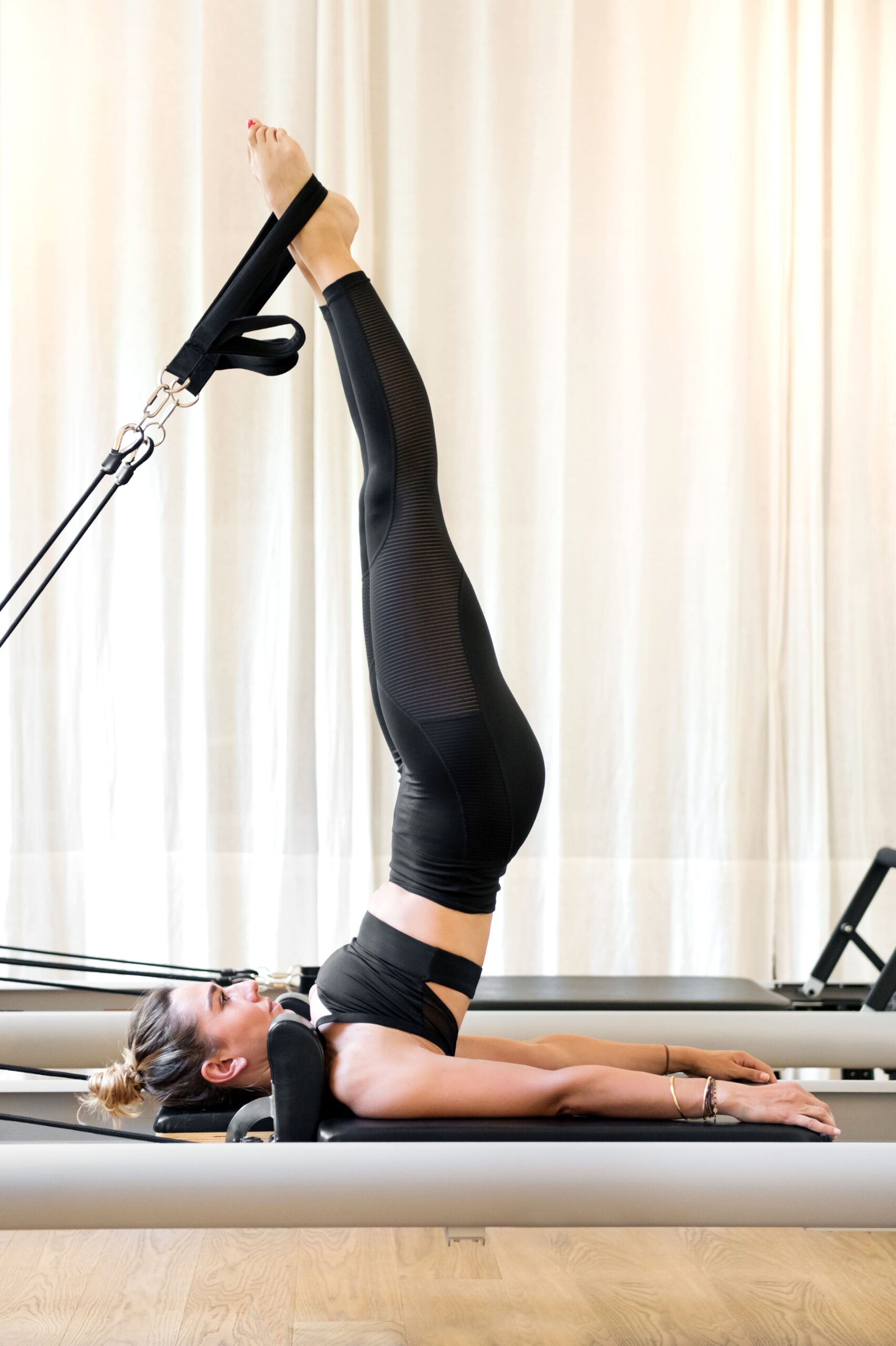
🔹 Long Spine Massage
Focus: Spinal articulation, core control
- Feet in straps, hips lift and roll spine off carriage
- Open legs at the top, roll down with control
💡 Requires deep abdominals and precise control — not momentum.
 🔹 Tendon Stretch (Standing)
Focus: Shoulder strength, hamstrings, balance
- Hands on footbar, feet on moving carriage
- Press carriage out and pull back in from core
💡 Classic move, tough on stability and flexibility.
🔹 Teaser on the Box
Focus: Core strength, spinal mobility
- Sit on long box, arms in straps
- Roll back and lift into V position, arms moving overhead or to legs
💡 Master this slowly before adding speed or resistance.
🔹 Arabesque + Standing Glute Series
Focus: Glutes, balance, posterior chain
- One foot on carriage, other leg extended behind
- Move in small pulses or full range glute extensions
💡 Control is everything — even a slight shift can throw off balance.
🔹 Plank-to-Pike Flow
Focus: Core, shoulders, flexibility
- Start in plank on footbar, feet on carriage
- Exhale to lift hips into pike, then return to plank
💡 A full-body burner that demands breath coordination.
Sample Advanced Reformer Routine (45 Minutes)
| Time | Exercise |
| 0–5 min | Jumpboard Warm-Up (or Footwork) |
| 5–10 min | Long Spine Massage |
| 10–15 min | Tendon Stretch |
| 15–20 min | Teaser on Box + Arm Flow |
| 20–25 min | Standing Glute Work + Arabesque |
| 25–30 min | Plank-to-Pike Flow |
| 30–35 min | Backstroke on Long Box |
| 35–40 min | Mermaid Twist + Side Splits |
| 40–45 min | Roll-Down + Stretch |
Benefits of Advanced Reformer Practice
- Functional total-body strength
- Deeper breath control
- Peak coordination and balance
- Improved athletic performance
- More fluid, expressive movement
- Heightened proprioception (body awareness)
Tips for Navigating Advanced Reformer Workouts
🔸 Don’t Rush Complexity
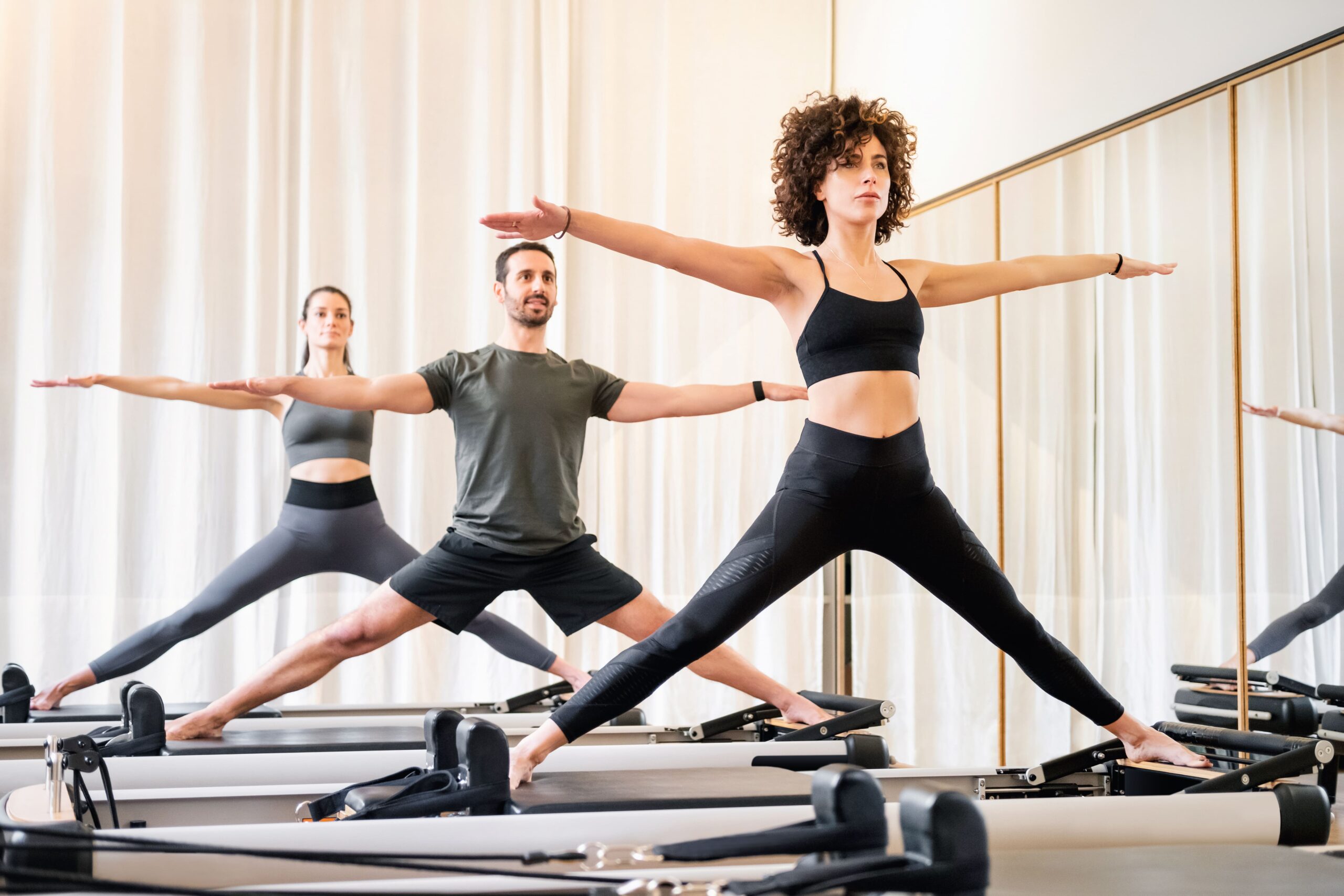 It’s okay to repeat intermediate routines until you master transitions.
🔸 Modify When Needed
You’re still in control — regress when necessary, especially in single-leg or inversion moves.
🔸 Film Your Practice
Use video playback to check form and alignment during complex flows.
🔸 Take Breaks
These routines challenge endurance. Pause if your form breaks down.
🔸 Stay Curious
Advanced doesn’t mean perfect — keep learning, adjusting, and refining.
Safety Considerations
Advanced Reformer work is exciting, but it also carries increased risk without proper control. To stay safe:
- Check your machine’s stability and spring tension before every session.
- Don’t attempt inversions or kneeling standing splits until fully comfortable.
- Always warm up — advanced routines assume your body is prepped.
- Avoid distractions — these movements require full focus.
More Information
➡️ Reformer Pilates Videos
➡️ Reformer for Core Stability
➡️ Home Reformer Workouts
FAQs: Advanced Reformer Sequences
- How do I know I’m ready for advanced Pilates?
You feel confident adjusting springs, maintaining flow, and self-correcting form — and you’ve been practicing consistently for at least 3–6 months.
- Can I go back to easier classes sometimes?
Absolutely. Repeating foundational classes improves form and supports recovery.
- Will advanced classes help me get stronger?
Yes — you’ll build lean, functional muscle, especially in the core, glutes, shoulders, and spine.
- Are these routines safe to do alone at home?
Yes, if you’ve built strong foundational control and follow trusted, well-instructed videos. Listen to your body and modify when needed.
- How often should I do advanced workouts?
2–3 times per week is ideal, balanced with intermediate flows and restorative sessions.
Advanced Reformer sequences are more than just a harder workout — they’re a celebration of your progress. Every precise movement, seamless transition, and breath-aligned flow reflects the time, dedication, and focus you’ve built along the way.
Embrace the challenge, stay humble, and enjoy the full expression of Pilates in motion.