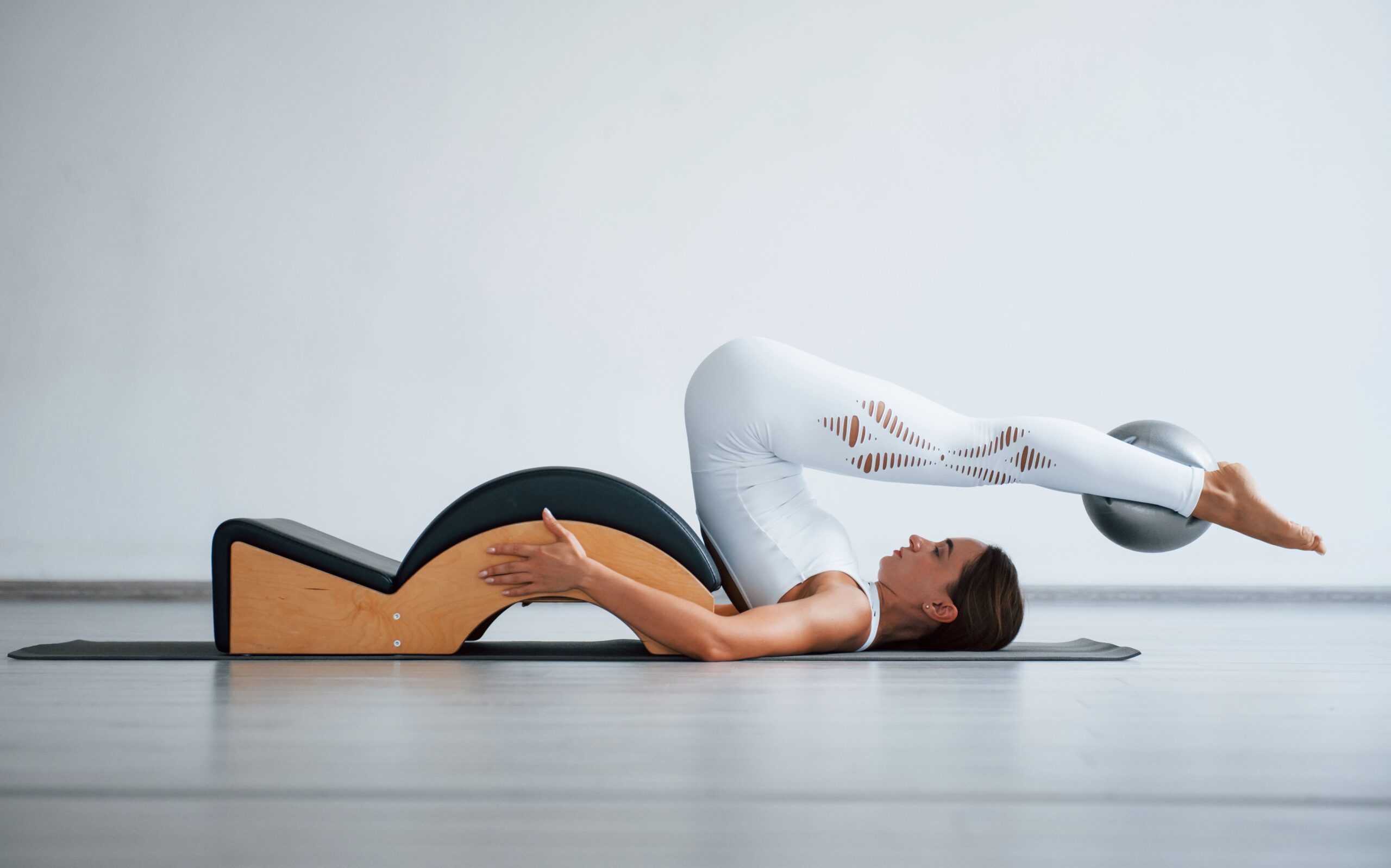
You’ve built the foundation. You’re comfortable with the carriage, springs, and straps. Now it’s time to take things up a notch. Intermediate Reformer Pilates workouts offer a deeper challenge, combining strength, coordination, and dynamic flow — all while maintaining the mindful control that makes Pilates so powerful.
This guide explores how to safely and effectively transition into intermediate Reformer workouts using guided videos. You’ll learn how to identify your readiness, what to expect in these sessions, and how to progress intelligently while minimizing injury risk.
Are You Ready for Intermediate Reformer Pilates?
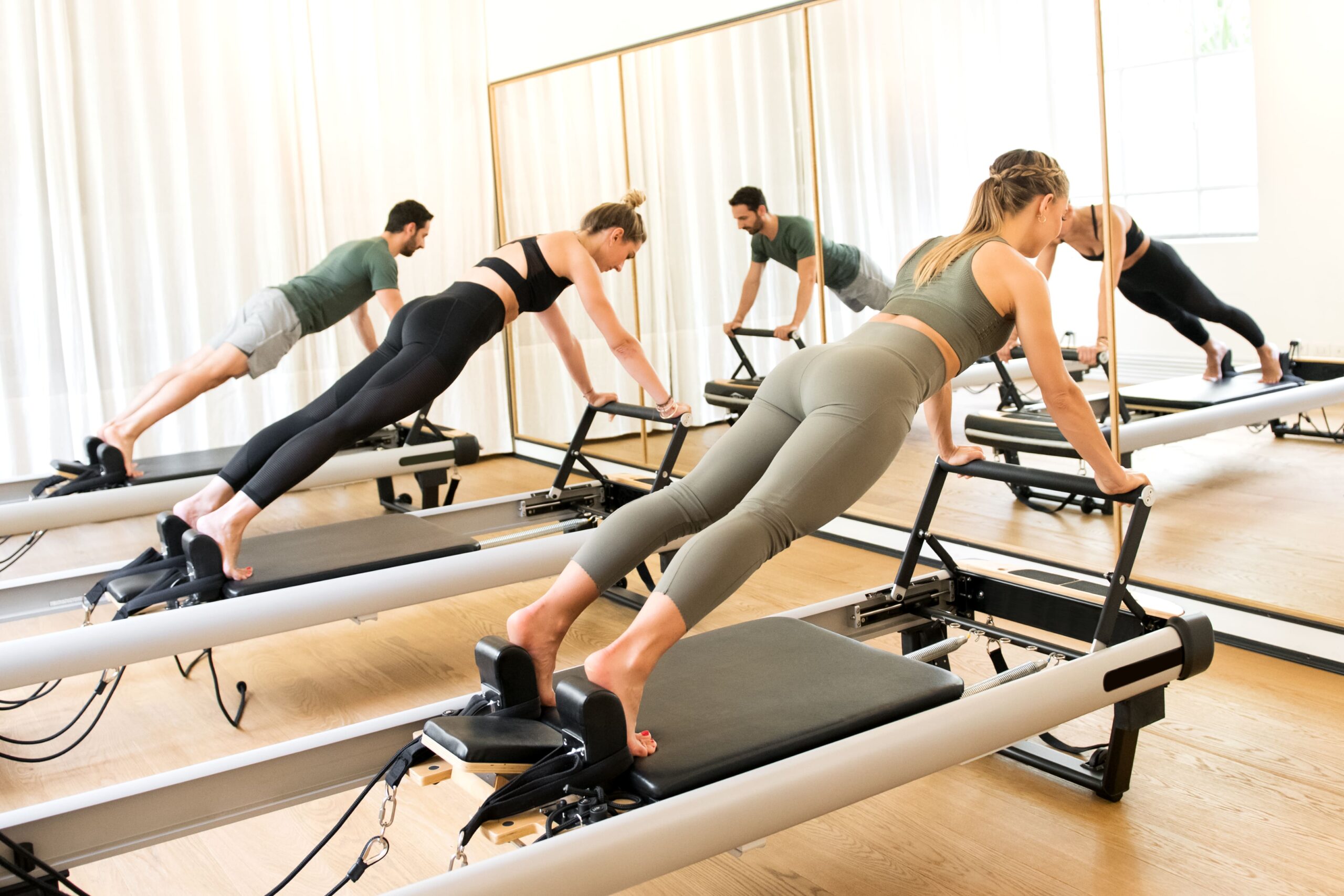 Moving into intermediate territory doesn’t mean mastering every move — it means you’re comfortable with:
- Adjusting springs and Reformer settings
- Basic transitions between exercises
- Controlling movement with breath and core engagement
- Familiar foundational exercises like Footwork, Bridging, Arm Presses, and Straps Work
If you’ve been practicing beginner-level Reformer for at least 6–8 weeks, and you’re ready for more complex coordination and increased resistance, you’re ready to progress.
What Makes a Reformer Workout “Intermediate”?
Intermediate sessions introduce multi-plane movement, transitional flow, and greater load control. You’ll begin to:
- Work with lighter springs that demand more stability
- Combine movements into flowing sequences
- Add more dynamic movements like standing work or jumpboard (if available)
- Integrate unilateral (one-sided) work to challenge balance and symmetry
- Transition more smoothly between exercises
These workouts are about increasing precision under pressure — not simply doing more reps (Read more: Intermediate Reformer Pilates).
What to Expect in Intermediate Reformer Pilates Videos
Intermediate videos usually run 30–45 minutes and offer:
 ✅ Full-Body Integration
Expect the whole body to be involved — even in “targeted” workouts.
✅ Progressive Sequences
Movements build upon one another with transitional flow.
✅ Coordination Challenges
Cross-body and multi-directional work becomes more common.
✅ Light Spring Load for Deep Core Work
Less resistance = more instability, which forces better core recruitment.
✅ Instructor Cues Focus on Refinement
Greater attention to subtle alignment, breath patterns, and flow rhythm.
Key Exercises in Intermediate Workouts
These movements require more strength, awareness, or control than their beginner counterparts.
🔄 Elephant
Focus: Hamstrings, shoulders, core
- Standing on carriage, hands on footbar
- Push carriage out with heels, pull back using abs
💡 Great for spinal articulation and posterior chain engagement.
✂️ Standing Splits (or Scooter)
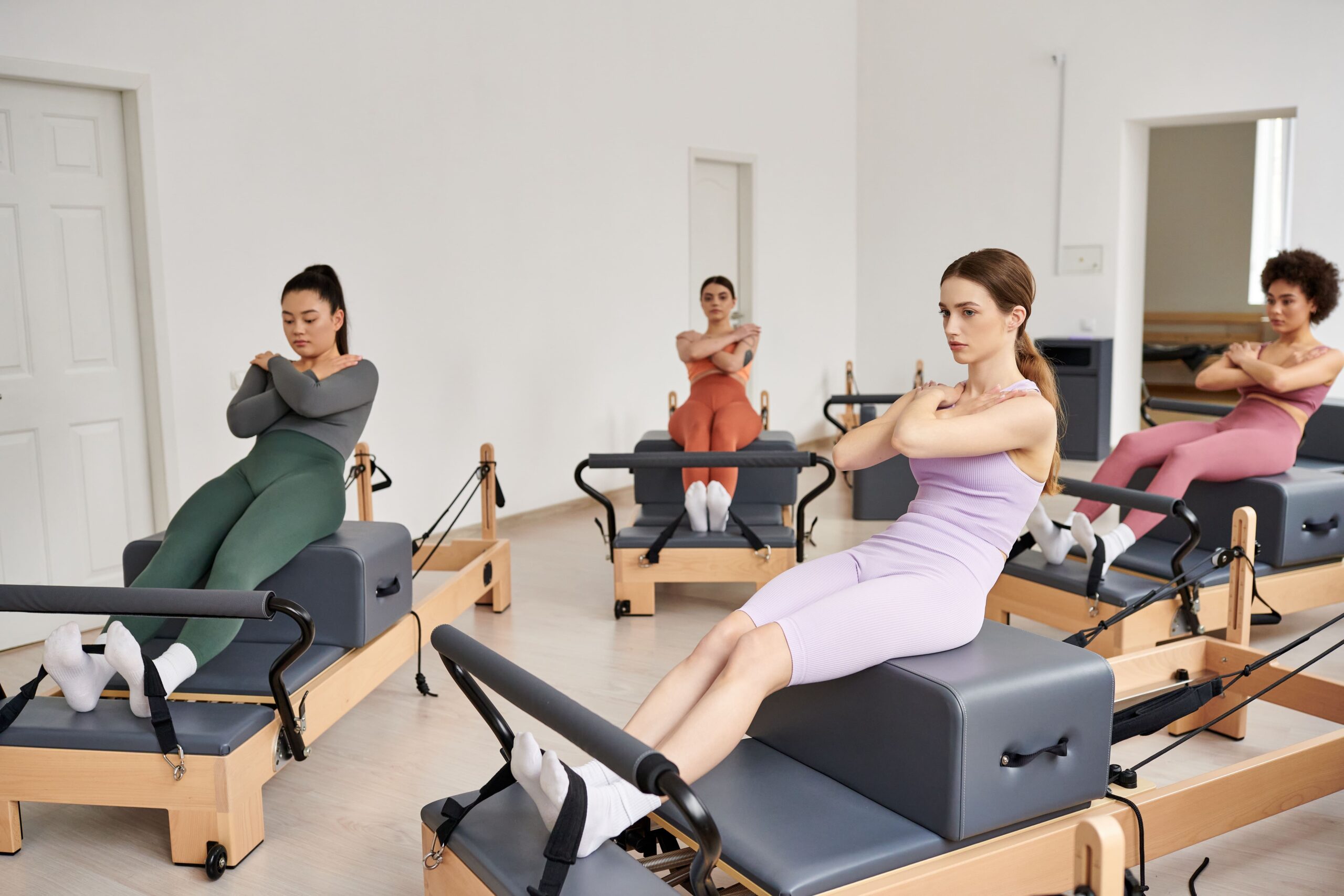 Focus: Balance, glutes, hip mobility
- One foot on stationary platform, other foot on carriage
- Push carriage out and in using controlled movement
💡 Requires core stability and hip alignment awareness.
🪵 Long Box Pulling Straps
Focus: Upper back and shoulder strength
- Lying prone on box, pull straps toward hips
- Strengthens postural muscles
🔁 Reverse Abs with Straps
Focus: Lower abs, spinal control
- Lying on back, feet in straps
- Perform reverse crunch with control, hips lifting slightly
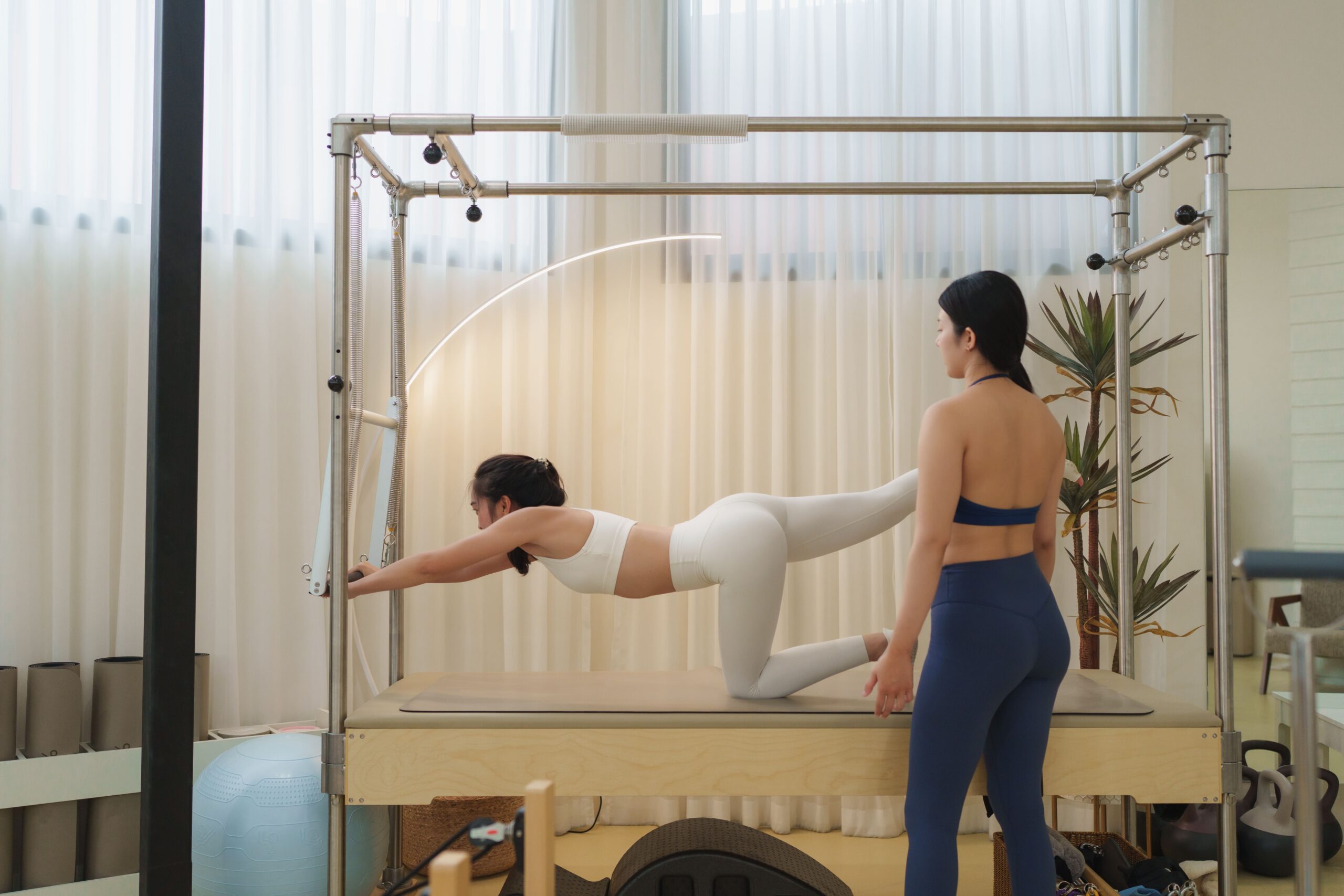
🧍 Up Stretch / Down Stretch
Focus: Plank flow, spinal articulation
- Start in inverted “V” on carriage
- Transition into plank, then up and back again
💡 Flow-intensive and demands precision.
Sample Intermediate Reformer Routine (40 Minutes)
| Time | Exercise |
| 0–5 min | Breathing + Footwork Warm-Up |
| 5–10 min | Elephant + Plank Flow |
| 10–15 min | Long Box – Pulling Straps |
| 15–20 min | Standing Splits + Scooter |
| 20–25 min | Feet in Straps – Advanced Series |
| 25–30 min | Reverse Abs in Straps |
| 30–35 min | Up Stretch + Down Stretch Flow |
| 35–40 min | Mermaid + Spine Twist |
💡 Repeat up to 3x per week for best results.
Benefits of Intermediate Reformer Workouts
- Improved neuromuscular coordination
- Increased muscle tone and strength
- Greater spinal mobility and hip control
- Stronger mind-body connection
- Enhanced breath capacity and focus
These workouts build real functional fitness — strength you can use in real life.
Tips for Making the Leap to Intermediate
🔹 Don’t Abandon the Basics
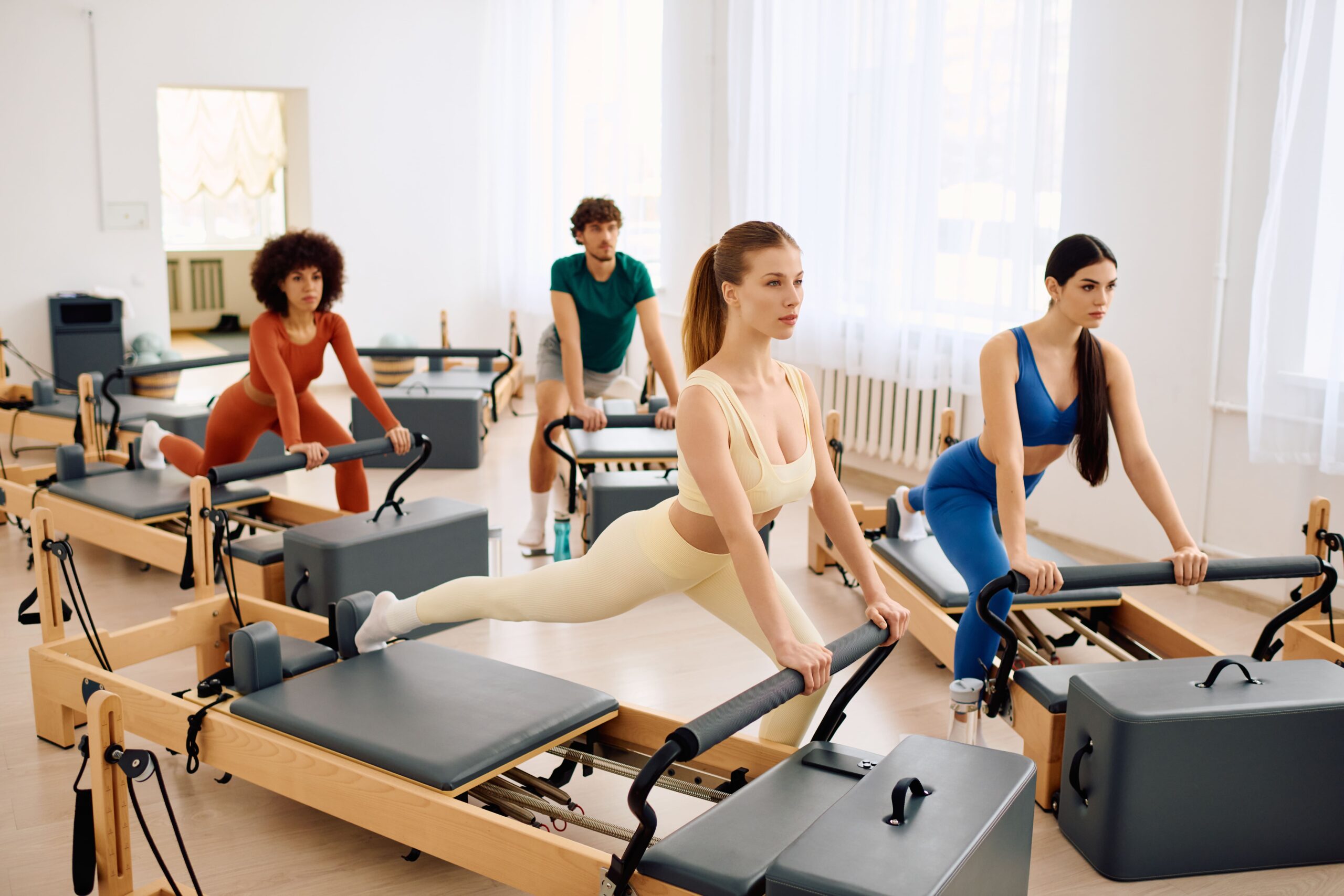 Revisit beginner flows to refine alignment and activate support muscles.
🔹 Focus on Control, Not Complexity
Slower = stronger. Precision matters more than tricky transitions.
🔹 Film Yourself Occasionally
Watching playback helps you catch alignment errors or compensation habits.
🔹 Listen to Your Body
If something feels too fast, unstable, or painful, modify. Mastery is earned with time.
Common Challenges (And How to Work Through Them)
❌ Fatigue in Smaller Muscles
New muscles may activate — especially in feet, glutes, and shoulders. Allow rest and recovery.
❌ Over-Reliance on Straps
Use resistance intentionally — avoid yanking through the movement.
❌ Losing Flow Between Moves
It’s okay to pause and reset. Flow develops with repetition.
Continue to The Next Level
➡️ Advanced Reformer Sequences
FAQs: Intermediate Reformer Pilates
- How often should I do intermediate workouts?
2–4 times per week is optimal. Pair with flexibility or posture-focused flows to balance intensity.
- Should I increase spring resistance now?
Not necessarily. Lighter springs challenge stability more. Increase resistance only when form is secure.
- How do I avoid plateauing?
Switch up video styles weekly. Try new instructors, focus areas, and flows. Add cardio (e.g., jumpboard) or more advanced sequencing gradually.
- Can I still use beginner videos sometimes?
Absolutely. They’re perfect for active recovery, precision work, or re-centering your practice.
- What’s the next level after intermediate?
Advanced Reformer introduces more complex choreography, heavier resistance control, and challenging transitions — we’ll cover this in the next child page.
Intermediate Reformer workouts are where your Pilates practice truly comes alive. These sessions challenge your control, strength, and flow — pushing you to activate your body and breath in deeper, more refined ways.
Trust your foundation. Tune into your form. And remember: progress in Pilates doesn’t come from rushing forward — it comes from mastering the in-between.