Slumped shoulders. Tight neck. Rounded upper back. Sound familiar? In the digital age, poor posture is more common than ever — and it’s doing more than making you look tired. It’s affecting how you breathe, move, and even feel.
The good news? Pilates offers one of the most effective, long-lasting ways to correct poor posture and build a strong, supported body. In this guide, we explore how Pilates for Posture works, what movements help most, and how you can use video routines to retrain your alignment from head to toe.
Why Posture Matters More Than You Think
 Posture isn’t just about appearances — it impacts your physical health and energy levels every day.
Poor Posture Can Lead To:
- Chronic neck, shoulder, and lower back pain
- Shallow breathing
- Core weakness
- Reduced mobility and stability
- Tension headaches and fatigue
Pilates works by strengthening the muscles that support good posture, stretching the ones that pull us out of alignment, and building awareness around how you hold your body — both on and off the mat.
How Pilates Improves Posture
What makes Pilates so effective is that it’s not just about strengthening — it’s about rebalancing your body through coordinated movement.
Key Postural Benefits of Pilates:
- Spinal elongation through controlled articulation
- Scapular stability (support for shoulder blades)
- Core activation to support upright alignment
- Breathwork that reinforces ribcage and diaphragm expansion
- Neck and upper back release to reduce tension
Key Muscles That Support Better Posture
To stand and sit tall, your body relies on several postural muscle groups:
- Deep abdominals (transverse abdominis)
- Spinal erectors and multifidus (backline support)
- Glutes and hamstrings (pelvic alignment)
- Shoulder stabilizers (serratus anterior, traps)
- Neck flexors and extensors (head positioning)
Pilates helps retrain these muscles to fire in sync — instead of leaving some overworked and others asleep (See more: Pilates for Posture correction).
Best Pilates Exercises for Posture
These mat-based movements are specifically designed to stretch, strengthen, and realign.
 🧱 Pelvic Tilt + Imprint
Focus: Pelvic alignment and core connection
- Lie on your back, knees bent
- Inhale to prepare, exhale to tilt the pelvis and flatten the spine
- Return to neutral with control
💡 Improves awareness of pelvic positioning — key to standing tall.
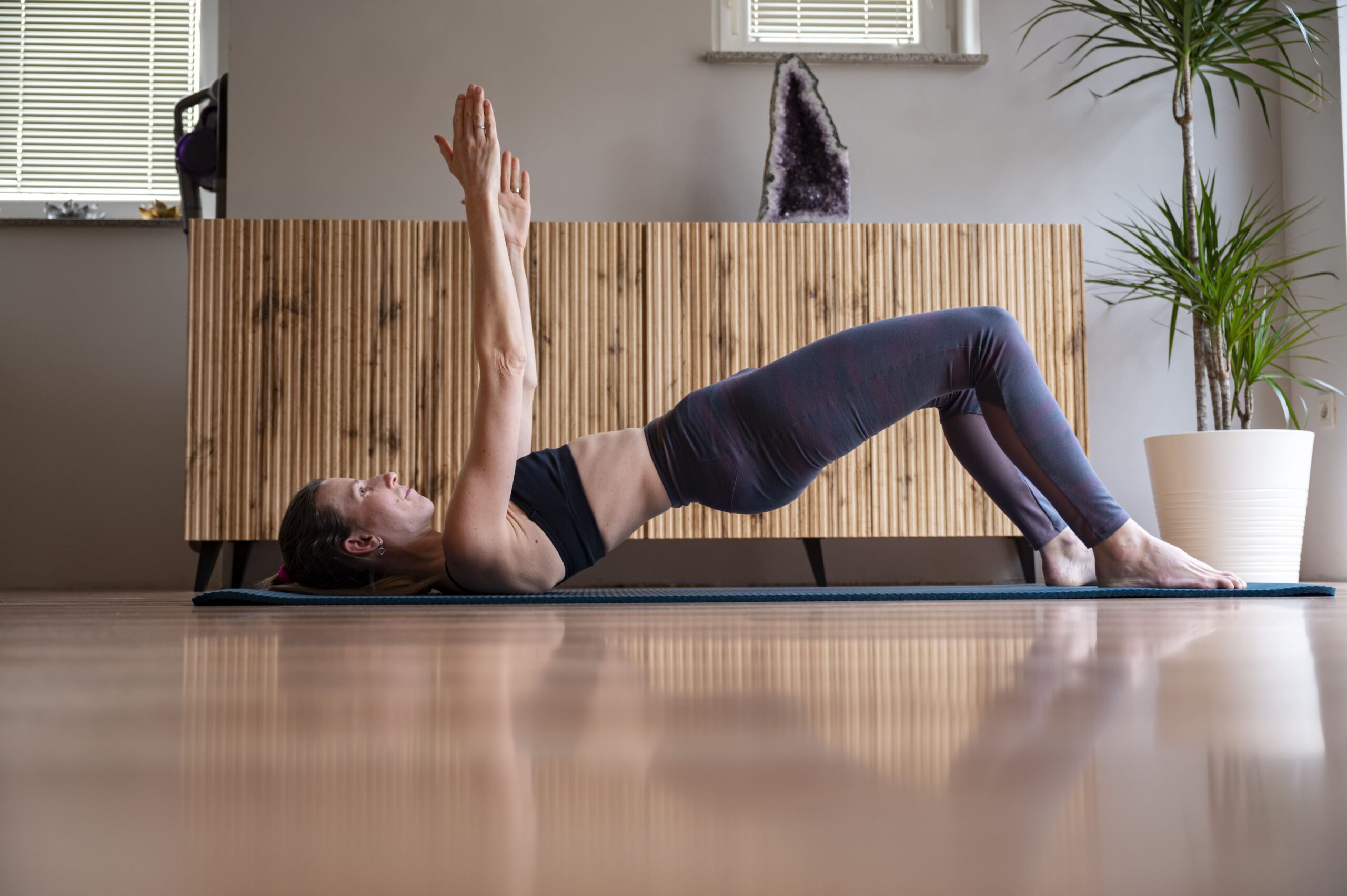
🧍♀️ Shoulder Bridge
Focus: Glutes, hamstrings, and spine
- Lift hips into a bridge
- Engage glutes, keep shoulders grounded
- Lower slowly
💡 Strengthens lower body and stretches the hip flexors — often tight from sitting.
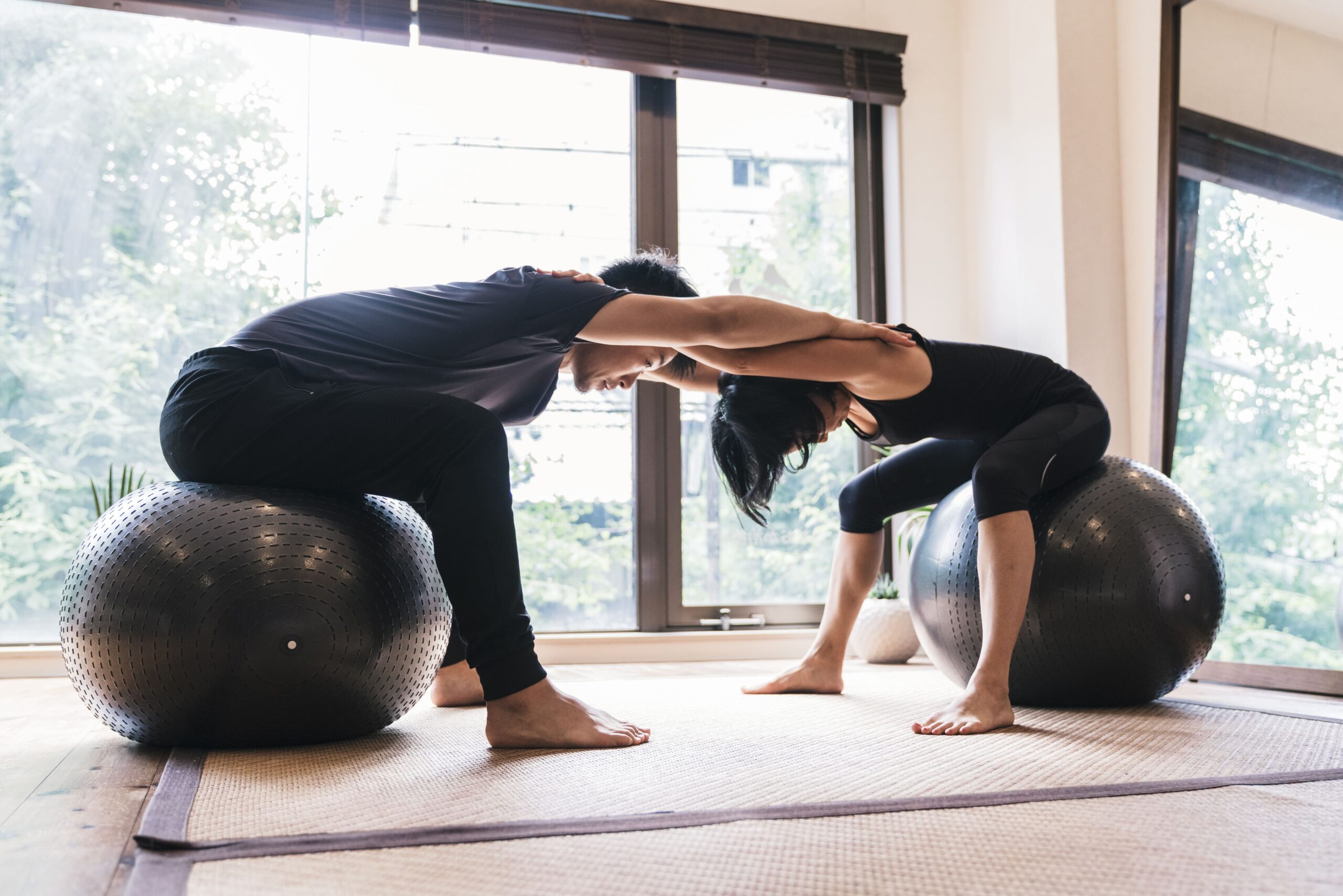
🧘 Spine Stretch Forward
Focus: Upper back release and spinal articulation
- Sit tall with legs extended
- Inhale to grow tall, exhale to round forward
- Maintain alignment from sit bones
💡 Creates space in the spine and teaches active elongation.
🧠 Wall Roll-Down (or Floor Variation)
Focus: Vertical posture and controlled spinal flexion
- Stand or sit tall
- Slowly roll down vertebra by vertebra
- Inhale at the bottom, exhale to roll up
💡 Enhances spinal mobility and body awareness.
🧍 Arm Circles (Supine or Standing)
Focus: Shoulder mobility and scapular awareness
- Move arms in smooth circles
- Focus on shoulder blade glide
- Avoid shrugging or locking elbows
💡 Strengthens and stabilizes shoulders for better posture.
🧠 Swimming
Focus: Upper back and glute strength
- Lie on your stomach
- Alternate lifting opposite arm and leg
- Engage abs to support low back
💡 Balances the often-overused front body with neglected backline muscles.
Sample Pilates Posture Routine (25 Minutes)
| Time | Exercise |
| 0–3 min | Breath + Pelvic Tilt |
| 3–5 min | Shoulder Bridge |
| 5–7 min | Spine Stretch Forward |
| 7–10 min | Wall/Floor Roll-Downs |
| 10–12 min | Arm Circles + Reaches |
| 12–15 min | Swimming |
| 15–20 min | Cat-Cow + Child’s Pose |
| 20–25 min | Seated Posture Reset |
Everyday Postural Habits to Pair With Pilates
- Sit tall with feet flat and hips level
- Adjust your screen so it’s at eye level
- Use a lumbar pillow if sitting for long hours
- Take frequent movement breaks (every 30–60 minutes)
- Practice diaphragmatic breathing to engage deep core muscles
How Often Should You Practice?
Start with 2–4 posture-focused sessions per week, paired with short daily check-ins (1–2 minutes of posture resets).
Even short sessions create real shifts over time, especially if you’re consistent and apply the awareness off the mat.
Posture Progression Over Time
After 1–2 Weeks:
 Increased awareness of how you sit and stand
- Subtle reduction in neck or shoulder tension
After 3–4 Weeks:
- Noticeable posture changes in photos or mirrors
- Stronger back and more upright sitting or walking
After 6+ Weeks:
- Natural upright posture even when not “trying”
- Better breathing, fewer headaches, and reduced slouching
Common Mistakes in Posture Training
❌ Forcing Upright Posture
Bracing or pulling shoulders back leads to tension. Think “lift” from the crown, not “push” the chest forward.
❌ Ignoring the Core
Posture starts with pelvic alignment and core strength. Don’t just focus on the upper body.
❌ Overdoing Neck Flexion
Overly tucking the chin or jutting it forward can create more strain. Aim for neutral head alignment.
Watch More Pilates Videos
➡️ Mat Pilates Videos
➡️ Mat Pilates Routine by Duration
➡️ Full Body Mat Pilates
FAQs: Pilates for Posture
- Can Pilates fix poor posture?
Yes, over time. Pilates retrains your muscles and builds the awareness needed to maintain better posture both during and outside of workouts.
- Do I need props or a reformer?
Not at all. Mat-based routines are highly effective for postural correction and strength.
- How quickly will I see posture improvement?
Most people notice subtle changes in 2–4 weeks with consistent practice and daily awareness.
- What’s the best time to do posture Pilates?
Any time works — but adding a short session before or after sitting for long periods is especially helpful.
- Will this help with tech neck or forward head posture?
Yes. Pilates strengthens the neck and upper back while opening the chest and teaching spinal alignment.
Improving your posture isn’t about standing like a soldier or pulling your shoulders back — it’s about training your body to move and support itself naturally. With Pilates for Posture, you’ll learn to balance strength, flexibility, and awareness — helping you stand taller, breathe deeper, and move through life with greater ease.
All it takes is a mat, a few minutes a day, and the willingness to reconnect with how your body holds itself.