When it comes to Pilates, everything starts with the core. Unlike other workout styles that isolate abs with crunches, Pilates takes a more integrated, body-conscious approach. This guide explores the foundational core exercises that every beginner should learn, practice, and eventually master.
Whether you’re hoping to support your posture, ease back pain, or simply feel stronger, these core-focused movements will lay the groundwork for lasting results.
Why the Core Matters in Pilates
 Pilates practitioners often refer to the core as the “powerhouse” — a term coined by Joseph Pilates himself. But what exactly is the core?
The Core Includes:
- Abdominals (rectus abdominis, transverse abdominis, obliques)
- Lower back muscles
- Pelvic floor
- Glutes
- Hip stabilizers
Rather than training one area in isolation, Pilates activates the entire center of the body to promote stability, control, and strength across all movements (See more: Core Exercises).
Key Benefits of Strengthening Your Core with Pilates
- Improved posture and alignment
- Less strain on your lower back
- Increased flexibility in the spine
- Stronger mind-muscle connection
- Enhanced balance and coordination
Unlike traditional ab workouts, Pilates exercises emphasize control and precision — making them ideal for anyone looking for long-term results without injury.
Foundational Core Pilates Exercises (Step-by-Step)
These beginner-friendly exercises are designed to build deep core strength, focusing on breath, form, and muscular engagement.
🧱 Pelvic Tilt / Imprint
Purpose: Teaches pelvic awareness and gentle activation of the lower core.
How to Do It:
- Lie on your back, knees bent, feet flat on the floor.
- Inhale to prepare.
- Exhale and gently tilt your pelvis so your lower back presses into the mat.
- Inhale to return to a neutral spine.
Tip: This movement is small but important — it trains the foundational connection between breath and core engagement.
💯 The Hundred (Modified)
Purpose: Builds endurance in the transverse abdominis and teaches breath control.
How to Do It:
- Lie on your back, knees in tabletop or feet on the floor.
- Curl head and shoulders off the mat.
- Reach arms forward, just above the mat, and pulse them up and down.
- Inhale for 5 pulses, exhale for 5 pulses — repeat for 10 rounds (100 pulses total).
Tip: If your neck feels strained, keep your head down and focus on stabilizing your core.
✂️ Single-Leg Stretch
Purpose: Trains coordination and strengthens the deep core while stabilizing the pelvis.
How to Do It:
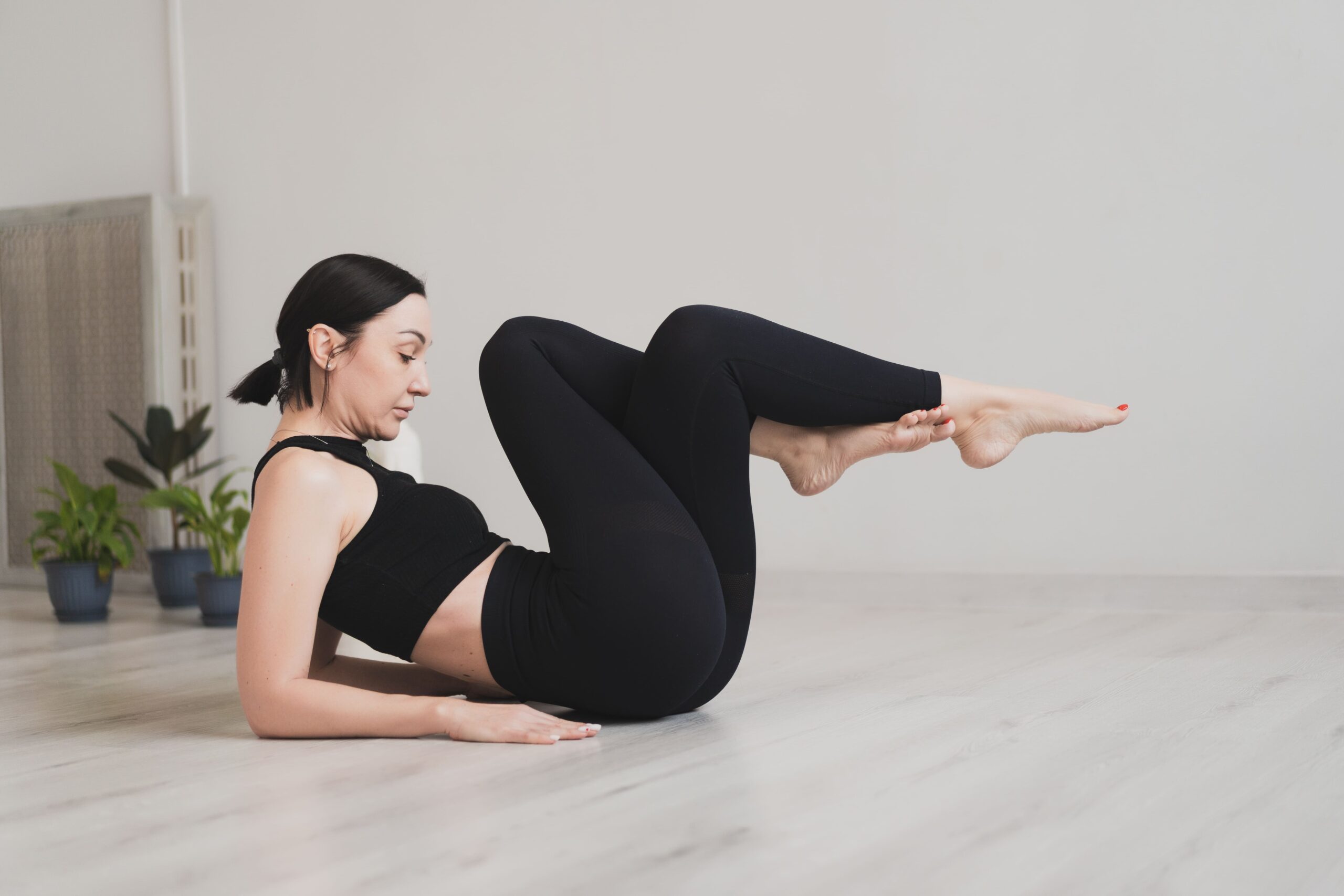
- Begin on your back with both knees in toward your chest.
- Curl up your head and shoulders.
- Extend one leg at a time while holding the opposite knee.
- Alternate legs, keeping the movement smooth and the core engaged.
Tip: Think of pulling the belly button down and in with every switch.
🔄 Dead Bug (Pilates Variation)
Purpose: Encourages core stability during limb movement.
How to Do It:
- Lie on your back with arms extended toward the ceiling, knees in tabletop.
- Slowly extend opposite arm and leg away from your center.
- Return to start, then switch sides.
Tip: Maintain a neutral spine throughout. If your back arches, limit your range of motion.
🎯 Toe Taps
Purpose: Strengthens lower abdominals and promotes pelvic control.
How to Do It:
- Lie on your back, knees in tabletop.
- Inhale, and as you exhale, lower one foot to tap the mat.
- Inhale to lift it back up.
- Alternate legs.
Tip: Avoid letting your back arch — only go as low as you can maintain control.
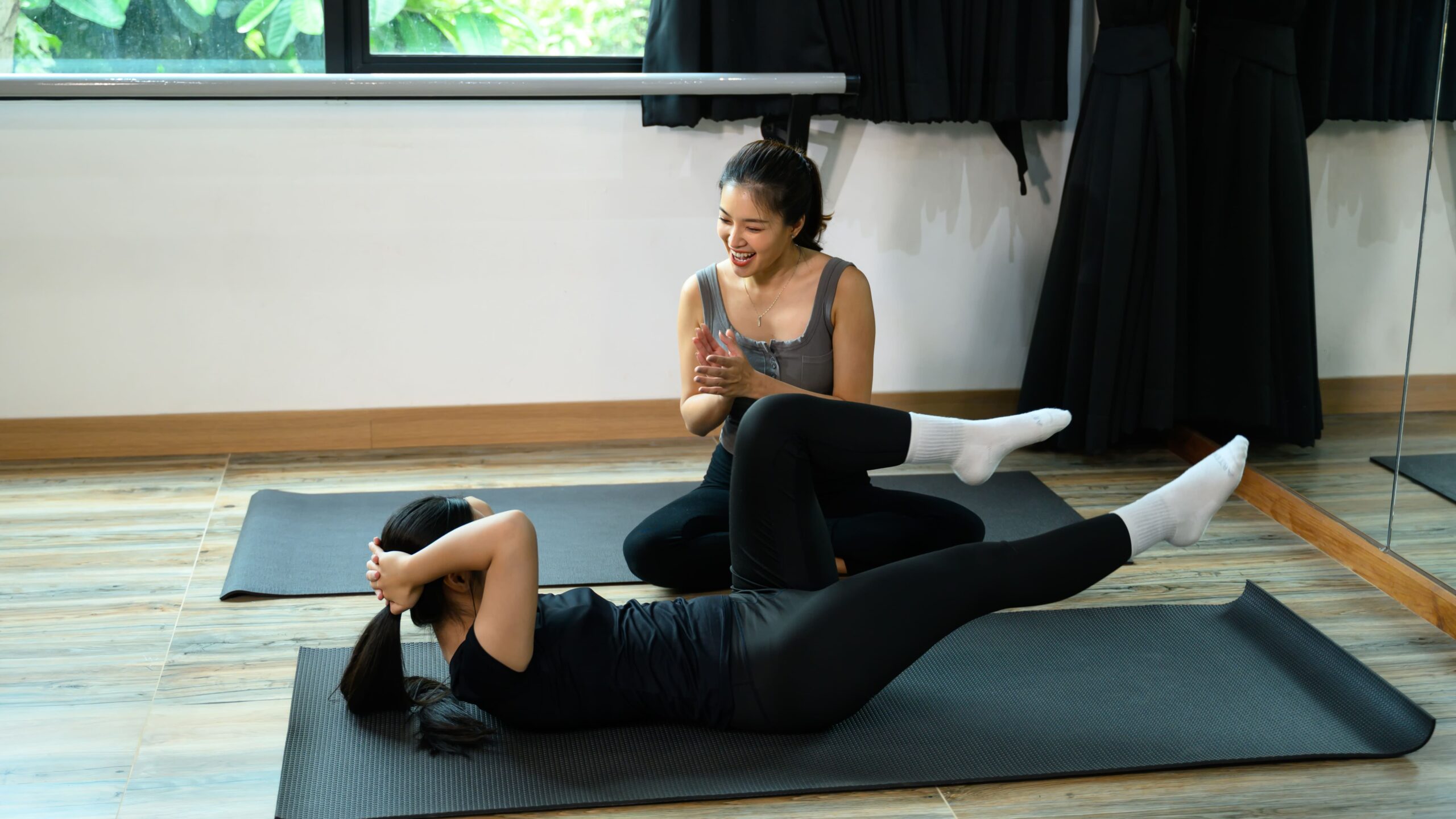 🔄 Knee Folds
Purpose: Introduces controlled movement through the hip joint without disturbing the core.
How to Do It:
- Start with both feet on the floor, knees bent.
- Exhale to lift one knee to tabletop.
- Inhale to lower it back down.
- Repeat on the other side.
Tip: The pelvis should stay stable — no rocking or shifting.
📏 Plank Prep (Forearms or Hands)
Purpose: Builds total core tension and stability, working deep abdominal and shoulder muscles.
How to Do It:
- Start on your forearms and knees (or hands and knees).
- Engage your abs and draw your belly up toward your spine.
- Hold for 20–30 seconds, breathing steadily.
Tip: Focus on keeping a long spine — avoid sagging in the hips or rounding the upper back.
Creating a Core-Centered Routine
 When working with Pilates core exercises, consistency and precision are more effective than high volume. Here’s a sample routine for beginners:
🔁 Beginner Core Routine (15–20 Minutes)
- Pelvic Tilt (1–2 min)
- Toe Taps (2 min)
- Dead Bug (2 min)
- Single-Leg Stretch (2 min)
- Plank Prep (2×30 sec holds)
- Rest & Repeat Entire Circuit
Common Mistakes to Watch Out For
❌ Overarching the Lower Back
This often happens when the core disengages. Use pelvic tilt or imprint to maintain proper alignment.
❌ Holding Your Breath
Breath supports every Pilates movement. Inhale to prepare, exhale to move.
❌ Leading with the Neck
Always lift with the chest and keep the neck neutral — hands behind the head can help.
❌ Rushing Through Reps
Control is more important than speed in Pilates. Quality > quantity.
Related Information
➡️ Common Mistakes for Beginners
➡️ 15 Pilates Exercises to Develop Your Powerhouse
 How to Progress Over Time
Once you’ve mastered the basic core exercises, you can progress by:
- Increasing repetitions or time under tension
- Adding resistance (e.g., bands, small weights)
- Moving into more complex movements like Double-Leg Stretch or Teaser Prep
- Practicing standing core activation in Pilates-inspired functional moves
FAQs: Foundational Core Exercises
- How often should I do core Pilates exercises?
Aim for 3–5 times per week. Daily is fine if you’re not overexerting the same muscles without rest.
- Can I do these exercises if I have back pain?
Yes — in fact, many are great for back health. Focus on movements that emphasize pelvic control and avoid any that cause discomfort.
- How long before I feel results?
Most beginners feel a difference in core engagement within 2–3 weeks of consistent practice.
- Do I need any equipment for these exercises?
No equipment is necessary. A supportive mat is all you need to get started. See more exercises here: Equipment-Free Pilates
- What’s the most important core cue to remember?
Draw your navel inward (not just “suck in your stomach”) — this activates the deep abdominals that support your spine and posture.
The foundation of a strong Pilates practice is — quite literally — built from the core. These exercises aren’t flashy, but they create deep internal strength, support your spine, and prepare you for more advanced work down the road.
Remember: control, alignment, and breath are your allies. Practice them consistently, and you’ll soon notice a body that’s stronger, more centered, and more capable in everything you do.